 By Admin
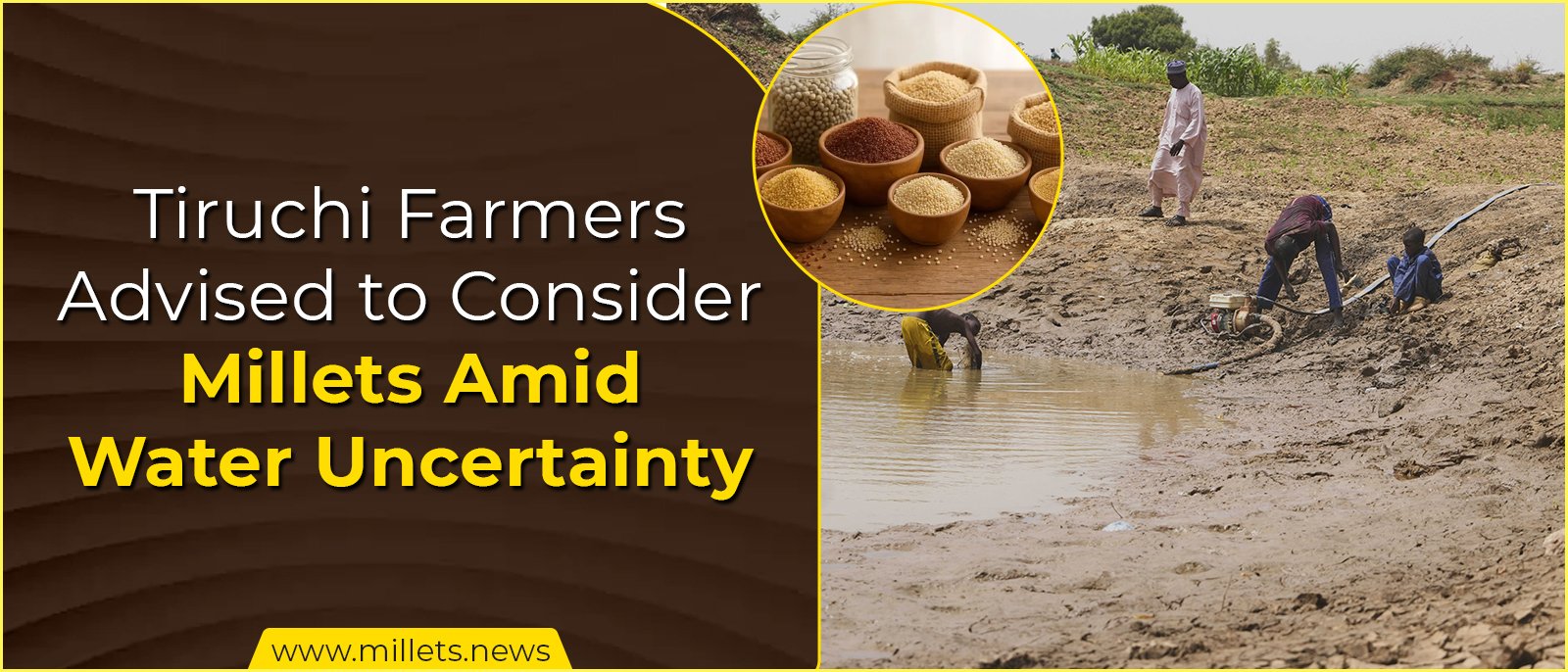
Farmers in the non-delta areas of Tiruchirappalli district in Tamil Nadu are being encouraged to consider millets and other alternative crops as uncertainty over irrigation water creates concerns for the upcoming samba cultivation season.
The issue emerged during a monthly farmers' grievance meeting chaired by Tiruchi Collector Pratik Tayal. Farmers sought guidance from agriculture officials on whether they should proceed with paddy nurseries given current water availability and weak inflows into the Cauvery system.
Joint Director of Agriculture M. Shanthamani advised farmers operating in non-delta areas to consider alternative crops such as millets. The situation is less straightforward for farmers in delta areas, where officials said cultivation decisions would depend heavily on access to irrigation water.
According to information shared at the meeting, the Water Resources Department indicated that releases from Mettur dam for irrigation could continue until October 15 under the prevailing storage situation. Farmers with their own reliable water sources may therefore be better positioned to cultivate samba paddy, while those facing water constraints may need to evaluate alternative crops.
Rainfall conditions are adding to the uncertainty. Tiruchirappalli has experienced deficient monsoon rainfall, while concerns over El Niño-related weather extremes are increasing the importance of risk management and appropriate crop selection. Agriculture officials also encouraged farmers to obtain crop insurance.
The recommendation gives millets renewed relevance in water-constrained farming systems. Crops such as millets generally have lower water requirements than paddy and are already an important component of rainfed agriculture in Tamil Nadu. The state's 2026–27 agricultural programme is also supporting pearl millet, sorghum, finger millet and several minor millets through dedicated millet missions.
For Tiruchirappalli's non-delta farmers, the current advisory demonstrates how water availability and changing rainfall conditions could influence crop choices. Millets may provide one alternative where maintaining water-intensive paddy cultivation becomes increasingly difficult.