 By Admin
US Forage Millet Plantings Rise 27% in 2026 Amid Drought Concerns
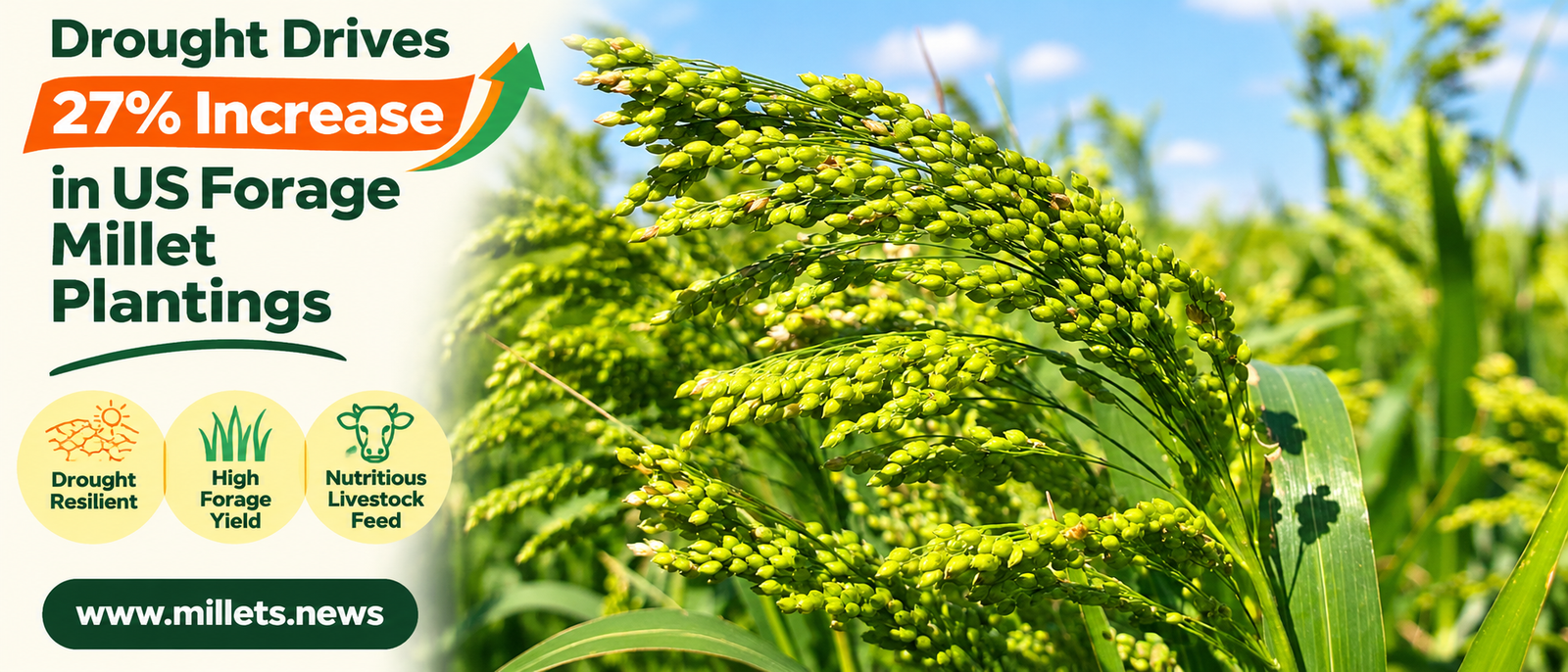
Farmers and livestock producers across the United States increased their cultivation of forage millets in 2026 as drought conditions created challenges for pasture availability and livestock feeding.
According to an October 30 press release from the North American Millets Alliance, planting of common forage millets increased by approximately 27% compared with 2025.
The organisation attributed the increase to concerns about dry weather, which encouraged ranchers and hay producers to seek crops capable of producing livestock feed within a relatively short growing period.
Millets are annual grasses that can provide forage within approximately two to three months of planting, depending on the variety and growing conditions.
Their relatively short growing cycle makes them useful in farming systems where producers need additional feed following poor pasture growth.
Foxtail Millet Records Strongest Increase
Among the millet types discussed in the report, foxtail millet recorded a 33% increase in plantings during 2026.
Foxtail millet is commonly cultivated for hay and livestock feed in the United States, although its grain is also consumed as food in other parts of the world.
Pearl millet plantings increased by more than 18%, while Japanese millet recorded a 13.6% rise.
Teff cultivation also expanded, with the report indicating that planting increased by approximately 14% across 31 US states.
The different millet varieties provide farmers with options suited to their soil conditions, seasonal requirements and livestock feeding needs.
Drought Influences Livestock Feed Decisions
Dry conditions across parts of the US Plains reportedly forced some livestock producers to begin feeding stored hay earlier than usual.
This increased interest in alternative forage crops capable of producing usable biomass during the growing season.
Forage millets can be harvested as hay, grazed by livestock or incorporated into other feed systems.
Pearl millet is particularly valued for its ability to regrow after cutting when sufficient moisture is available.
Unlike sorghum and some sorghum–Sudangrass hybrids, pearl millet does not present the same prussic acid risk. However, appropriate forage management and testing remain important because nitrate accumulation can still occur under certain conditions.
Growing Interest in Millet-Based Forage Systems
The United States commercially cultivates several millet types, including proso, foxtail, Japanese, pearl, teff and browntop millet.
While proso millet is an important grain crop, several other millet varieties are primarily grown domestically for forage, grazing and wildlife habitat.
The increase in forage millet planting highlights the crop group's potential contribution to livestock feed planning in drought-prone agricultural regions.
The North American Millets Alliance also encouraged producers to plan ahead for 2027 seed requirements following increased planting activity in 2026.
Although the report documents expanded planting, it does not establish that total forage production increased by the same percentage.
Actual forage yields depend on rainfall, soil conditions, variety selection and management practices.
The reported growth demonstrates how farmers are adjusting crop choices to respond to climate-related agricultural challenges.
For the wider millet sector, the development highlights the importance of millets beyond human food consumption, particularly in livestock agriculture and drought-adaptation strategies.