 By Admin
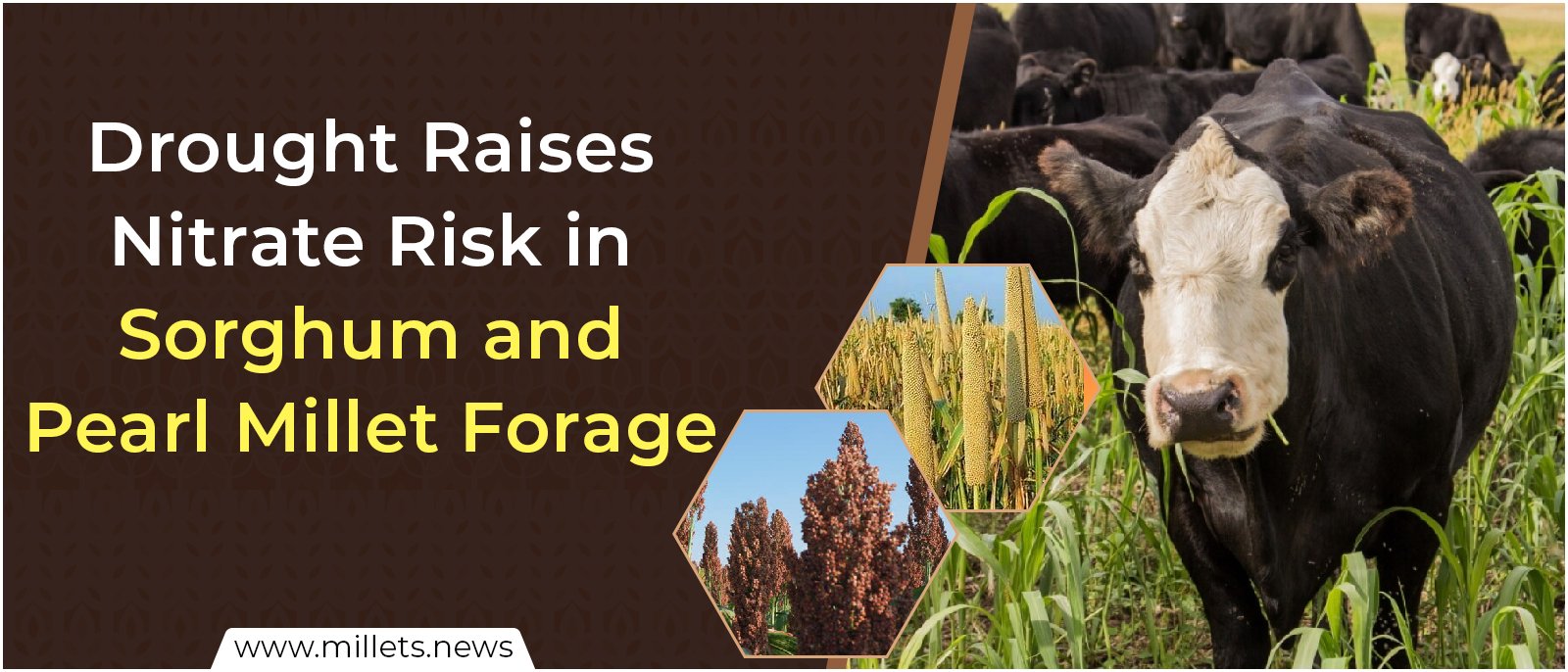
Drought conditions are creating an important livestock-management challenge for farmers relying on sorghum and pearl millet for forage. Although these crops are valued for their ability to remain productive under comparatively dry conditions, severe environmental stress can cause nitrate concentrations to accumulate to levels potentially dangerous for cattle and other livestock.
Plants normally absorb nitrate through their roots and convert it into amino acids and proteins as they grow. During drought, however, plant growth can slow dramatically while nitrate uptake continues. The imbalance can result in nitrate accumulating within plant tissues rather than being incorporated normally into proteins.
Several forage crops are susceptible, but forage sorghum, grain sorghum, sorghum-sudan hybrids and pearl millet deserve particular attention. K-State specialists note that nitrate concentrations are generally greatest in the lower leaves and stalks, meaning harvest height can influence the amount of nitrate entering livestock feed.
Excessive nitrate consumption can have serious consequences for livestock. Rumen microorganisms convert nitrate into nitrite, and excessive nitrite interferes with haemoglobin's ability to transport oxygen through the bloodstream. Severe exposure can result in respiratory distress, weakness, staggering, reproductive problems and potentially death.
Producers should also recognise an important distinction between pearl millet and sorghum. Both can accumulate nitrates, but pearl millet does not produce the prussic acid associated with sorghum-family forages. Sorghum, sorghum-sudan hybrids and sudangrass can therefore present separate nitrate and prussic-acid concerns depending on crop and environmental conditions.
Rain following drought should not automatically be interpreted as an immediate return to safe forage conditions. NDSU specialists warn that nitrate concentrations can actually increase during the first two or three days after rainfall as recovering plants absorb nitrogen faster than they convert accumulated nitrate into proteins.
NDSU consequently recommends allowing approximately seven to 12 days of favourable growing conditions after rainfall before grazing or harvesting drought-stressed forage. Even after that recovery period, however, producers should not assume nitrate concentrations have fallen sufficiently; testing remains important before feeding potentially affected forage.
Forage testing is therefore one of the most valuable risk-management measures available to livestock producers. Testing can identify potentially problematic material before cattle consume it and help producers determine whether forage should be diluted with lower-nitrate feed, harvested differently or managed through another feeding strategy.
Ensiling can also reduce nitrate concentrations. K-State reports that microbial activity during proper ensiling can metabolise potentially around half of the nitrate present in forage, although testing remains advisable before feeding the resulting silage. Leaving approximately six inches of stubble can further reduce exposure because nitrate tends to concentrate toward the lower portion of the stem.
The situation highlights an important qualification when discussing millet and sorghum as climate-resilient crops. Their capacity to tolerate drought provides substantial agricultural advantages, but resilience does not eliminate management risks. Understanding how environmental stress changes forage chemistry is essential for safely integrating these crops into climate-resilient crop-livestock systems.