 By Admin
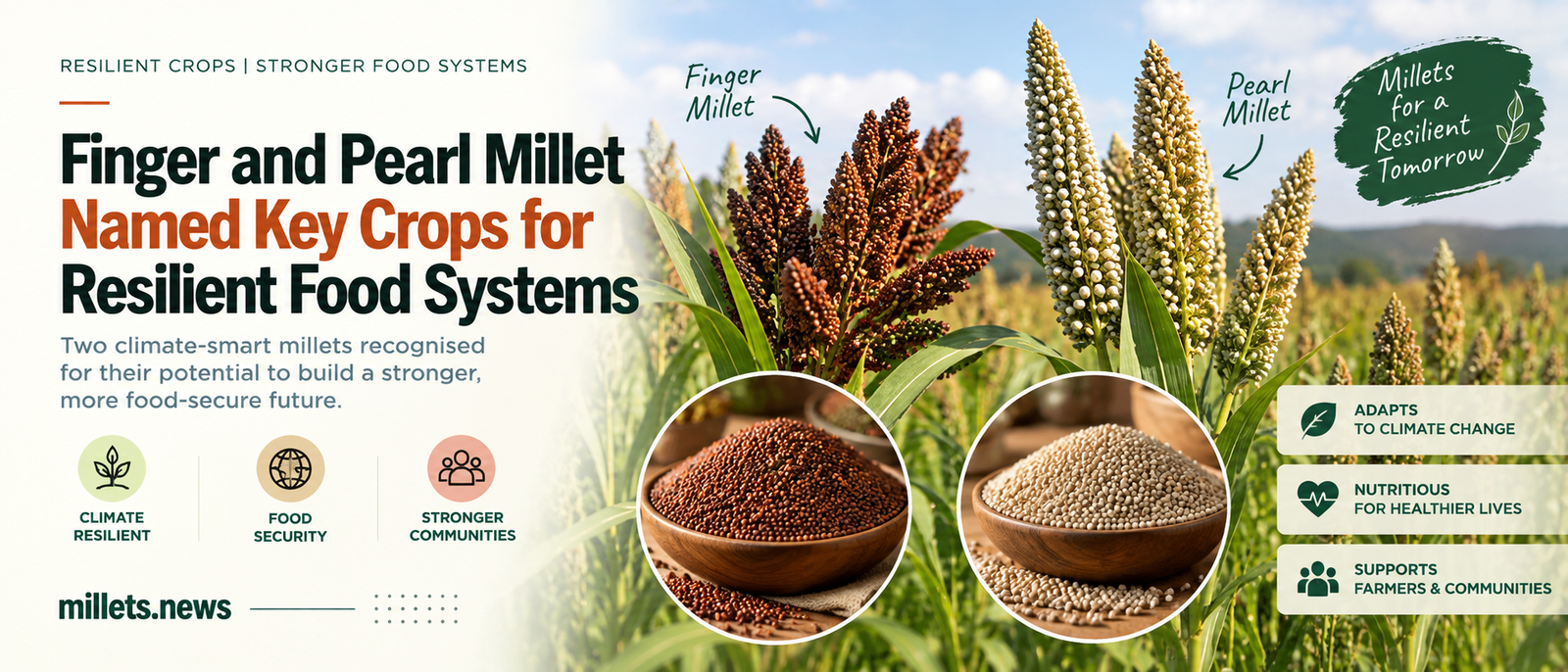
Finger millet and pearl millet have been identified among 15 promising crops that could contribute to more diverse and resilient food systems, according to a new publication highlighted by the Crop Trust.
The publication, Opportunity Crops for Sustainable Food Systems, was developed through the BOLDER initiative with partners in Benin, Ghana, Tanzania and Uganda. It examines crops that already have strong connections with local farming and food traditions but remain comparatively overlooked within food systems dominated by major staples such as wheat, rice and maize.
Alongside finger millet and pearl millet, the portfolio includes amaranth, Bambara groundnut, baobab, cowpea, fonio, jackfruit, jute mallow, miracle berry, moringa, pumpkin, sesame, sweetpotato and turkey berry.
The selection process incorporated input from more than 250 farmers, researchers, genebank specialists, private-sector representatives and government stakeholders. Their participation helped identify crops aligned with local priorities and opportunities across the four participating African countries. Genebanks involved in the initiative are now placing greater attention on these crops.
Rather than focusing exclusively on agricultural productivity, the publication examines multiple dimensions of each crop, including its history, biology, nutritional characteristics, cultivation practices, conservation status, market opportunities and development constraints.
For the millet sector, the inclusion of finger millet and pearl millet reinforces their relevance within discussions about agricultural diversification and climate adaptation. Both crops have longstanding roles in African farming and food cultures, while their inclusion in the initiative creates opportunities for further conservation, research and investment.
The Crop Trust's approach does not advocate replacing established global staples. Instead, it argues for broadening the range of crops available to farmers and consumers by conserving and developing species that communities already cultivate and understand.
For Millets.news, the development is particularly significant because it positions millets within a larger international effort to create more diversified, locally rooted and adaptable food systems, while connecting crop conservation with nutrition, livelihoods and future market opportunities.