 By Admin
Foxtail millet is emerging as more than a climate-resilient grain in Uganda—it is also becoming a symbol of agricultural knowledge exchange between countries of the Global South.
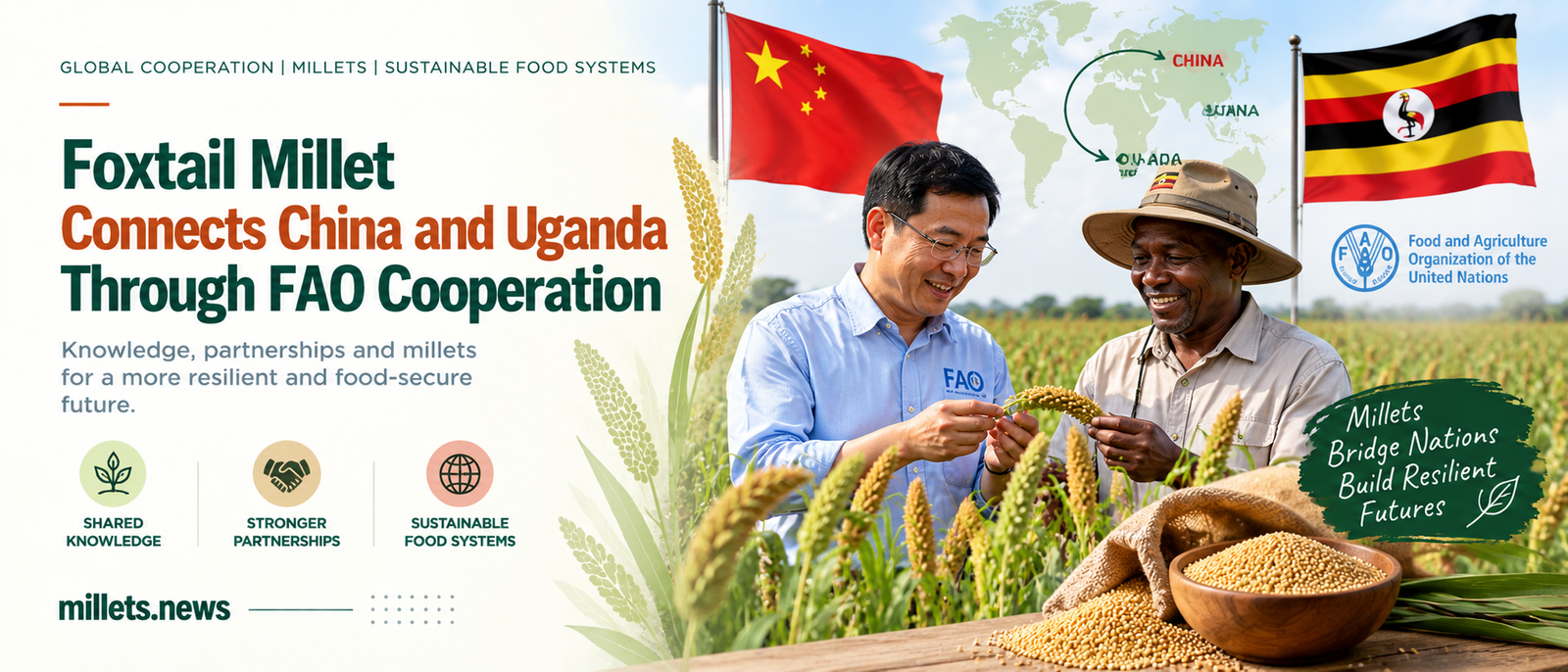
In its 2026 video “What Food Connects the Global South?”, the Food and Agriculture Organization of the United Nations highlights the journey of grains across cultures, connecting traditional African crops such as fonio with foxtail millet introduced in Uganda through the FAO-China South-South Cooperation project.
The video is presented by Chef Fatmata Binta, FAO Regional Goodwill Ambassador for Africa, who explores the relationship between grains, communities, agricultural traditions and sustainable food systems.
FAO describes both fonio and foxtail millet as nourishing and climate-resilient crops capable of supporting smallholder farmers while contributing to healthier and more sustainable agrifood systems. Their importance extends beyond production: these grains also carry cultural knowledge and demonstrate how agricultural practices can move between countries through international cooperation.
The Uganda example is particularly significant for the millet sector. Rather than presenting foxtail millet solely as a traditional crop of Asia, the FAO initiative demonstrates how knowledge and agricultural resources associated with the grain can contribute to farming systems in another region.
The programme sits within FAO's broader South-South and Triangular Cooperation framework, which promotes knowledge sharing, partnerships, capacity building and the adoption of agricultural innovations among developing countries.
FAO has positioned the video around the United Nations Day for South-South Cooperation on September 12, using food and grains to illustrate how countries can exchange knowledge, traditions and practical solutions.
For the global millet community, the story demonstrates how climate-resilient grains can serve several purposes simultaneously: supporting smallholder agriculture, diversifying food systems, preserving culinary traditions and facilitating international agricultural cooperation.
Foxtail millet's journey between China and Uganda therefore represents a wider opportunity for millets—not merely as commodities, but as vehicles for agricultural innovation, cultural exchange and resilient food-system development across the Global South.