 By Admin
Presenting millet dishes and other nutritious foods attractively on social media could help encourage teenagers to make healthier food choices, according to research involving scientists from the ICMR–National Institute of Nutrition in Hyderabad.
Researchers initially presented 150 food photographs to 43 school-going teenagers. The selection included commonly promoted foods such as pizza, burgers and ice cream, alongside fruits, pulses, millet preparations and other nutritious options.
Based on the teenagers’ ratings, the researchers selected 15 photographs for the main intervention. These consisted of five images of less healthy foods, five visually enhanced images of nutritious foods and five plainly presented healthy-food images.
The selected photographs were shared daily through Instagram over 15 days with 203 adolescents aged between 13 and 19 from different parts of India. Approximately half of the participants also received short nutrition messages accompanying the images.
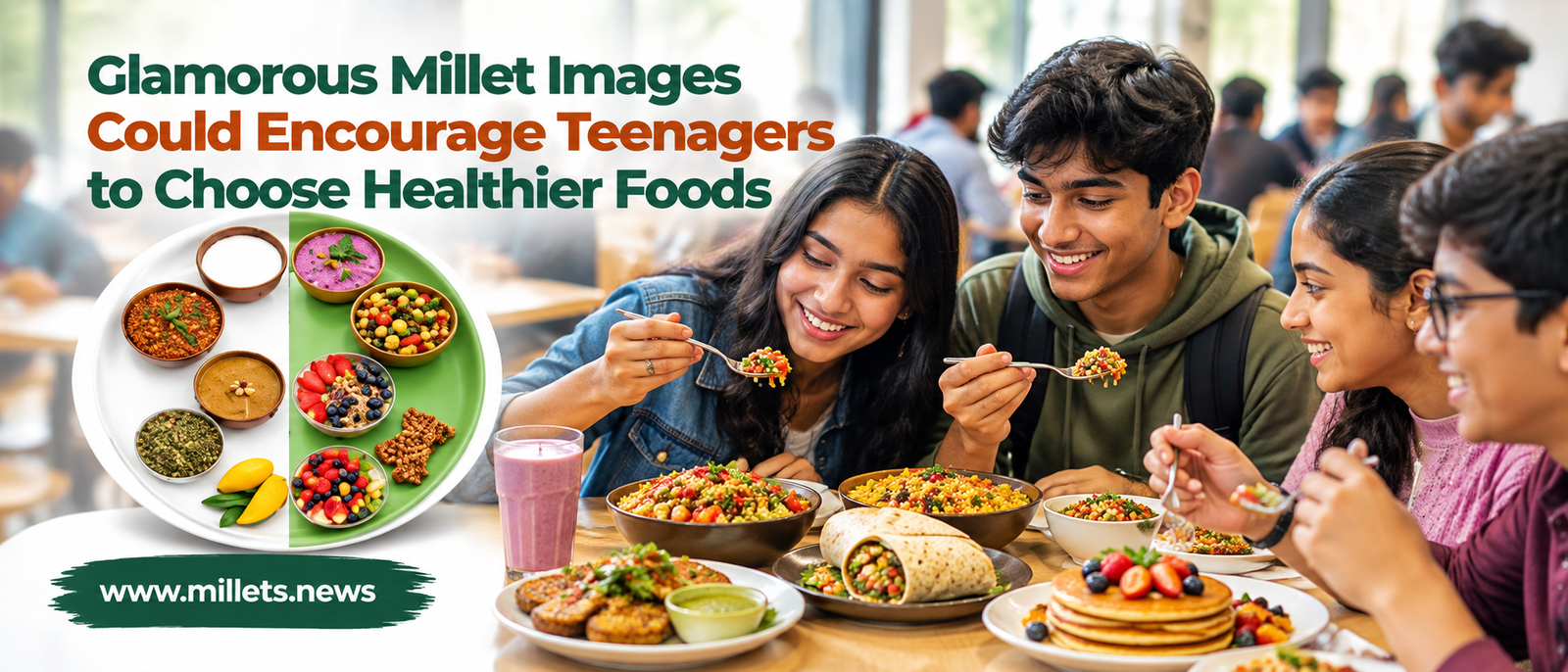
The findings indicated that carefully styled photographs of healthy foods could be as visually appealing as—and sometimes more attractive than—images of popular energy-dense foods. A polished photograph of millet porridge reportedly received a more positive response than a plainly presented millet cereal dish.
Similarly, an attractively arranged chickpea salad was preferred over a simple serving of boiled dal.
Some participating teenagers reported consuming more fruits and pulses during the intervention. Others said the images encouraged them to look for the foods featured in the posts. However, these behavioural changes were self-reported and should not be interpreted as proof of sustained dietary improvement.
The researchers also observed that brief nutrition captions had relatively little influence compared with the photographs themselves. Many participants focused more closely on the visual presentation than the accompanying information.
This finding is particularly relevant because teenagers regularly encounter visually persuasive promotions for fast food, sugary drinks and packaged snacks through advertisements, influencers and peer-generated social-media posts. Applying comparable visual creativity to millet dishes, fruits, pulses and vegetables could help healthy foods compete more effectively for attention.
The researchers suggested that schools, canteens, public-health programmes and responsible food companies could use appealing photography as a relatively affordable nutrition-communication strategy.
Nevertheless, the intervention was short, involved a limited participant group and relied partly on daily surveys and interviews. Larger and more diverse studies are needed to determine whether attractive healthy-food imagery produces lasting changes in purchasing and eating behaviour.