 By Admin
A woman entrepreneur from Odisha's Koraput district has demonstrated how traditional millet grains can become the foundation of a growing food-processing enterprise, creating employment opportunities while introducing indigenous foods to modern markets.
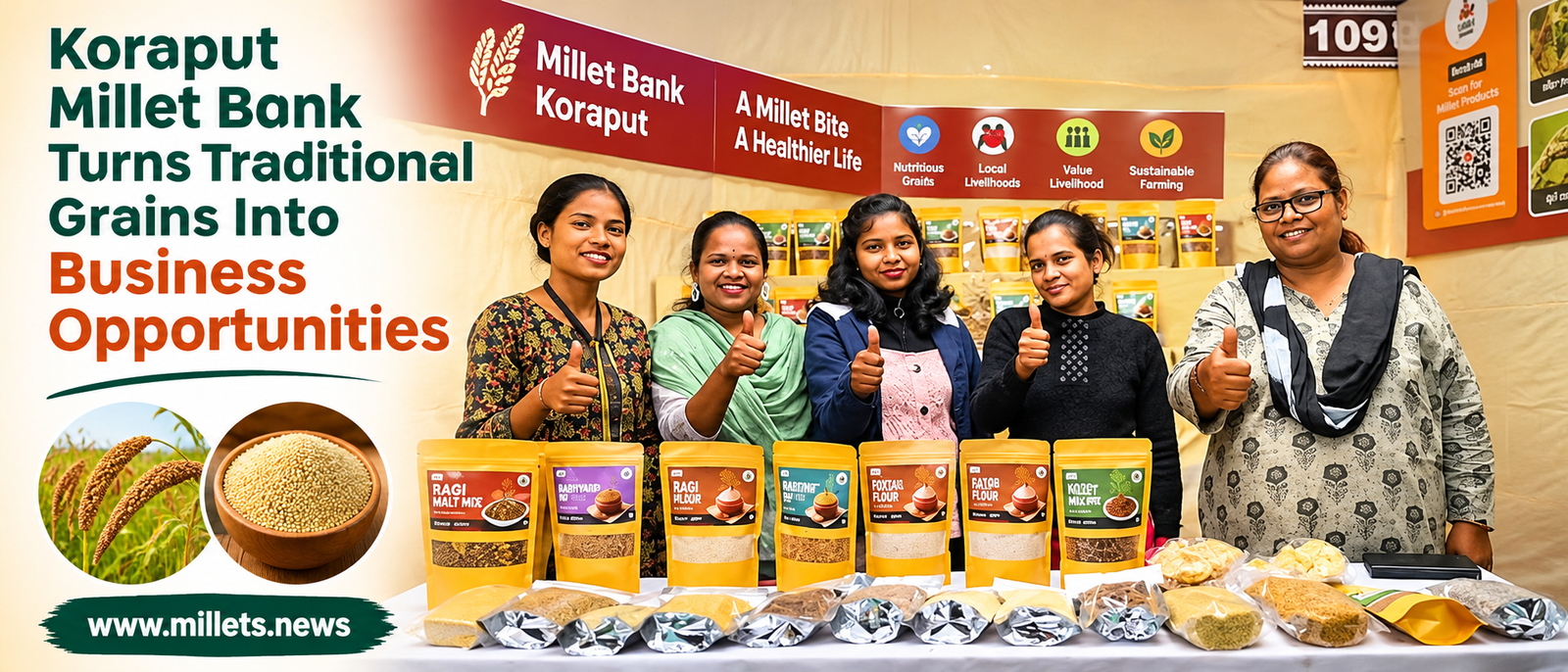
C.H. Sumitra Patro, together with her husband Jagannath Chinnari, established the Koraput Millet Bank initiative to promote the consumption and commercial use of traditional millets.
Koraput has a long history of millet cultivation, particularly among tribal farming communities. However, changing food preferences and agricultural practices have contributed to a decline in the everyday use of these traditional grains.
Recognising the need to reconnect consumers with millet-based foods, the couple began developing products that combine local food heritage with modern convenience.
Their enterprise introduced a range of value-added millet products, including millet tea, cookies, snacks and ready-to-cook preparations.
The product portfolio also includes pongal, khichdi and biryani premixes, demonstrating how millets can be incorporated into familiar meals.
The business operates under the brand Jagannath Millet Foods, with Koraput Millet Bank serving as the initiative through which traditional grains are promoted.
One of the enterprise's major challenges was expanding its processing capacity.
Support through the Government of India's Pradhan Mantri Formalisation of Micro Food Processing Enterprises (PMFME) Scheme helped address this limitation.
According to Deccan Chronicle, Palladium, which serves as the scheme's State Project Unit in Odisha, facilitated a loan of ₹8.10 lakh for the purchase of modern food-processing equipment.
The investment helped increase the enterprise's monthly production capacity from 150 kilograms to 1,500 kilograms, representing a tenfold expansion.
The business has also reported significant commercial growth.
During the 2025–26 financial year, Jagannath Millet Foods recorded turnover of ₹1.10 crore and provided employment to 40 people.
Its products are distributed through 10 local outlets and reach markets in Bhubaneswar, Cuttack, Rourkela, Hyderabad, Visakhapatnam and Bengaluru.
Beyond production and sales, Sumitra Patro and her husband are involved in training women's self-help groups, non-governmental organisations and community groups.
Their mentoring activities cover millet processing, packaging and marketing, helping other groups develop the skills required to establish small food businesses.
Some participants have subsequently started their own enterprises, according to the report.
Sumitra Patro's contribution has also received recognition through the Best Women Entrepreneur (Micro Enterprise) Award at the Odisha Assembly of Small and Medium Enterprises (OASME) Awards 2026.
The recognition highlights her role in building a food-processing business around traditional agricultural resources.
For the millet industry, the enterprise illustrates the potential of value addition to create commercial opportunities beyond the sale of raw grains.
Processing millets into convenient food products can help businesses reach consumers seeking ready-to-cook and packaged alternatives.
However, sustainable business growth also depends on reliable raw material supplies, food safety, product quality and consistent market demand.
The Koraput Millet Bank initiative offers an example of how entrepreneurship, access to finance and technical training can contribute to the development of millet-based food enterprises.
Its growth also demonstrates the role of women entrepreneurs in connecting traditional food knowledge with modern processing and distribution systems.
By combining millet heritage with business development, Sumitra Patro's initiative contributes to efforts to strengthen rural livelihoods and expand the market for indigenous grains.