 By Admin
Odisha's Rayagada district has emerged as one of the state's leading centres for finger millet procurement, securing second place with approximately 6,000 metric tonnes purchased during the previous year.
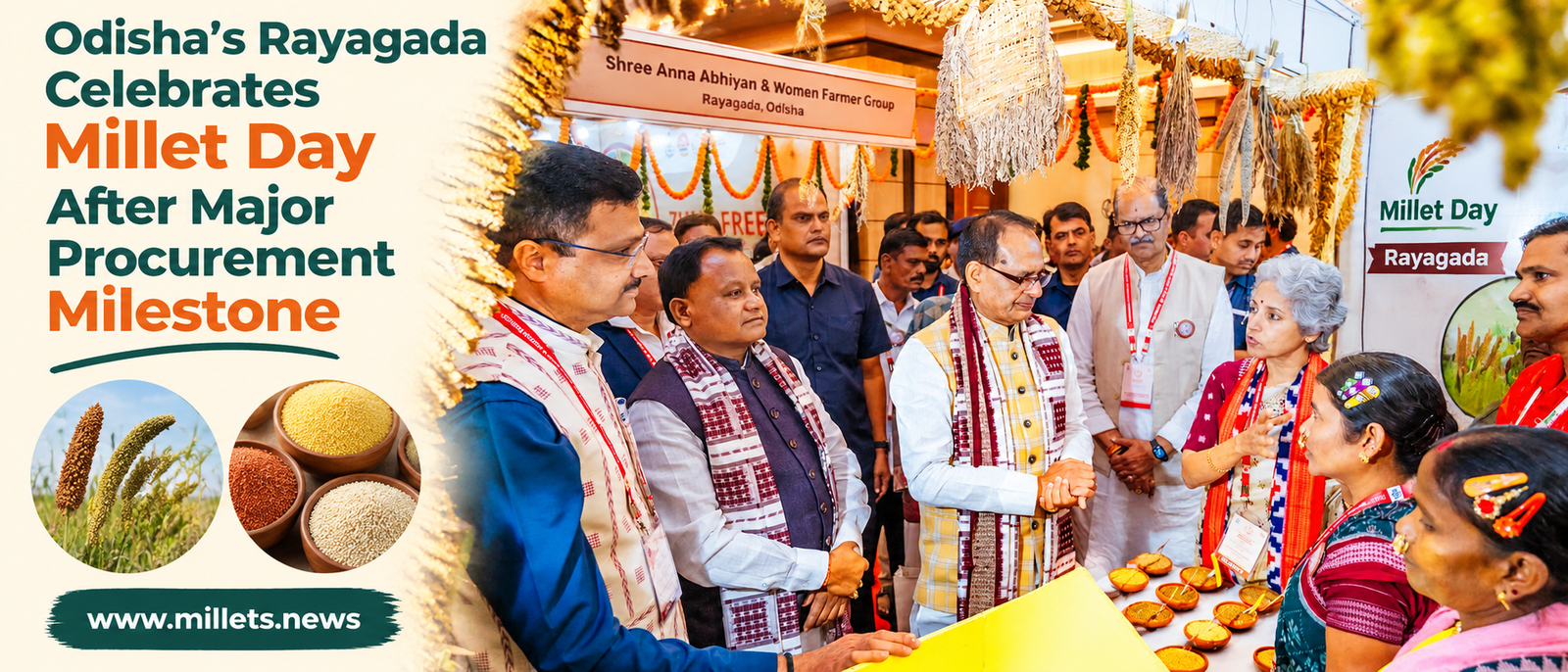
The achievement was highlighted during a district-level Mandia Divas (Millet Day) celebration held on November 7, 2026, at the Biju Patnaik Auditorium in Rayagada.
The event was organised by the District Agriculture and Farmers' Empowerment Department under the state's Shree Anna Abhiyan, an initiative supporting millet cultivation, procurement and consumption.
Addressing the gathering, Chief District Agriculture Officer Nakshatra Mohan Raula reported that finger millet, locally known as mandia or ragi, is cultivated across approximately 12,000 hectares in the district.
He attributed Rayagada's procurement performance to the implementation of government agricultural schemes, the efforts of field-level staff and the participation of farmers and women's self-help groups.
The district's reported procurement volume reflects the importance of organised purchasing systems in connecting millet growers with institutional markets.
Government procurement can provide farmers with an additional marketing channel, particularly in areas where smallholders may face challenges accessing reliable buyers.
The celebration also highlighted the nutritional and agricultural characteristics of finger millet.
Officials discussed its dietary fibre, mineral content and suitability for cultivation under challenging environmental conditions.
Many millet varieties are valued for their adaptability to relatively low-water agricultural systems, although their actual performance depends on local growing conditions and farming practices.
Rayagada MLA Kadraka Appala Swamy, who attended as chief guest, encouraged farmers to adopt scientific cultivation techniques to improve productivity.
He also recognised the role of women farmers in conserving indigenous crops and maintaining agricultural biodiversity.
The MLA urged households to include millet-based foods in their regular diets, linking local agricultural production with broader food and nutrition awareness.
The event brought together elected representatives, agricultural scientists, government officials, farmers and community organisations.
Participants included Zilla Parishad President Saraswati Majhi and Bissam Cuttack MLA Nilamadhab Hikaka, alongside representatives from agricultural and allied departments.
A millet exhibition and food fair formed part of the programme, showcasing value-added products made from traditional grains.
Such activities can help introduce consumers to millet-based foods while creating opportunities for small-scale processors and local entrepreneurs.
The programme also recognised outstanding farmers, women's self-help groups, Farmer Producer Organisations and Farmer Producer Companies for their contributions to millet agriculture.
The recognition reflected the collective nature of Rayagada's millet development efforts, involving growers, community institutions and government agencies.
At the state level, Odisha has continued to expand its millet procurement system through minimum support price arrangements and agricultural support programmes.
According to the Odisha Economic Survey 2025–26, the state procured approximately 87,800 metric tonnes of ragi during 2024–25 from around 73,000 farmers across 30 districts.
This broader procurement framework provides context for Rayagada's reported district-level performance.
However, the district's 6,000-tonne figure refers to the previous year as described by the local official, and should not automatically be treated as the current 2026–27 procurement total.
For the millet sector, Rayagada's achievement demonstrates the importance of connecting cultivation with procurement infrastructure, farmer participation and opportunities for value addition.
The district's Mandia Divas celebration also highlights how agricultural awareness programmes can recognise farmers while encouraging continued interest in traditional grains.
As Odisha strengthens its millet initiatives, the experience of districts such as Rayagada offers a useful example of the role institutional procurement and community participation can play in supporting millet farming.