 By Admin
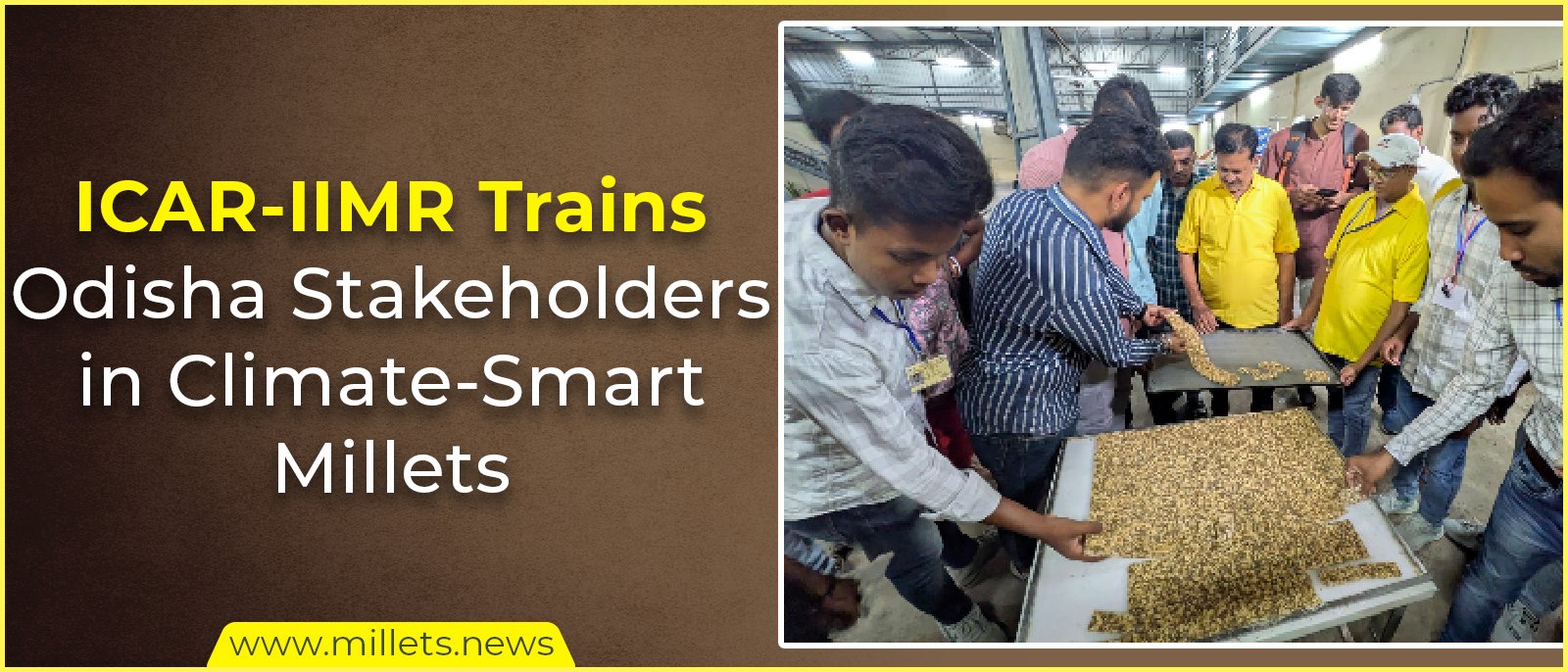
The ICAR–Indian Institute of Millets Research (ICAR–IIMR) in Hyderabad is strengthening technical expertise among millet stakeholders from Odisha through an intensive programme focused on sustainable and climate-resilient production. The four-day initiative, running from August 11–14, brings participants from different blocks of Odisha together with scientists and technical specialists.
Conducted through the Global Centre of Excellence on Millets under the Odisha Millet Mission Phase-II Project, the programme aims to strengthen the ability of field-level stakeholders to support farmers. Rather than limiting training to theoretical instruction, the initiative connects scientific knowledge with practical conditions encountered in millet-growing communities.
A major focus is improving the foundations of millet production through better varieties, quality seed and scientific crop management. Participants are being introduced to approaches that can enhance productivity while making cultivation systems more capable of responding to environmental stress and increasingly variable climatic conditions.
Climate resilience has become particularly important as farmers encounter moisture stress, irregular rainfall and declining soil fertility. Pest and disease pressures and inefficient resource use create additional challenges. By equipping frontline stakeholders with research-based solutions, the programme seeks to improve the quality of technical guidance ultimately reaching millet farmers.
The curriculum extends beyond cultivation to encompass a broader millet ecosystem. Participants are receiving exposure to FPO activities, millet processing and value addition, alongside interactions with scientists and technical experts. Practical exposure involving ICRISAT is also included, connecting stakeholders with wider expertise in dryland and climate-resilient agriculture.
Field demonstrations and training in integrated pest and disease management are intended to make scientific recommendations easier to implement under actual farming conditions. This “learning by doing” approach is designed to help participants understand not only which technologies are available, but also where and how those technologies can be applied effectively.
The longer-term objective is to establish a network of technically capable stakeholders who can function as knowledge multipliers across Odisha. After receiving specialised training, participants can carry improved millet technologies and management practices from research institutions into farming communities, potentially expanding the programme's impact far beyond those attending directly.
For Odisha's millet sector, this emphasis on capacity building is significant. Climate-resilient varieties and advanced production technologies can generate meaningful impact only when farmers can access reliable guidance on their implementation. Strengthening the connection between research institutions, extension stakeholders and farming communities can therefore accelerate adoption while reducing production risks.
The initiative also demonstrates the evolving direction of millet development in India. Alongside expanding cultivation and consumer demand, programmes are increasingly addressing the entire pathway from seed and climate-smart production to processing, value addition and farmer organisations. Such integrated capacity building could strengthen both the resilience and economic sustainability of millet farming.