 By Admin
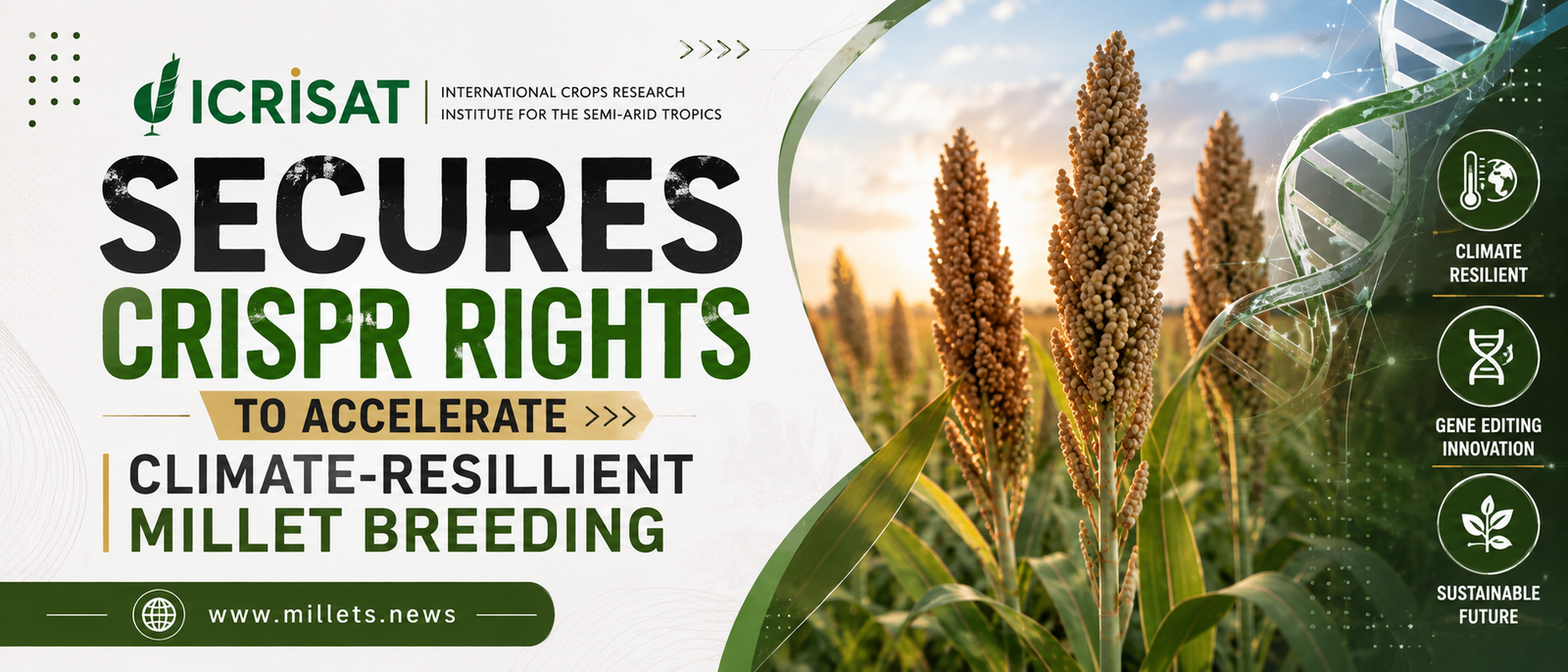
The International Crops Research Institute for the Semi-Arid Tropics (ICRISAT), headquartered in Hyderabad, has secured long-term humanitarian rights to use CRISPR-Cas9 gene-editing technology through a licensing agreement with Corteva and The Broad Institute. The agreement enables the institute to develop and deploy improved crop varieties across its mandate crops, including sorghum, pearl millet, other millets, chickpea, pigeon pea and groundnut.
The technology allows researchers to make precise genetic improvements without introducing DNA from unrelated species, significantly reducing the time required to develop new crop varieties compared with conventional breeding. Scientists expect the approach to accelerate the development of crops with improved tolerance to drought, heat, pests and diseases while enhancing productivity and nutritional quality.
For millet crops, the agreement represents a major opportunity to strengthen breeding programmes aimed at improving climate resilience and supporting smallholder farmers in dryland regions. By integrating CRISPR technology with its existing expertise in genomics, breeding, phenomics and seed systems, ICRISAT aims to speed up the delivery of improved millet varieties suited to changing environmental conditions.
The initiative is expected to benefit farming communities across Asia and Africa by supporting food security, improving farmer livelihoods and advancing sustainable agricultural systems capable of withstanding climate-related challenges.