 By Admin
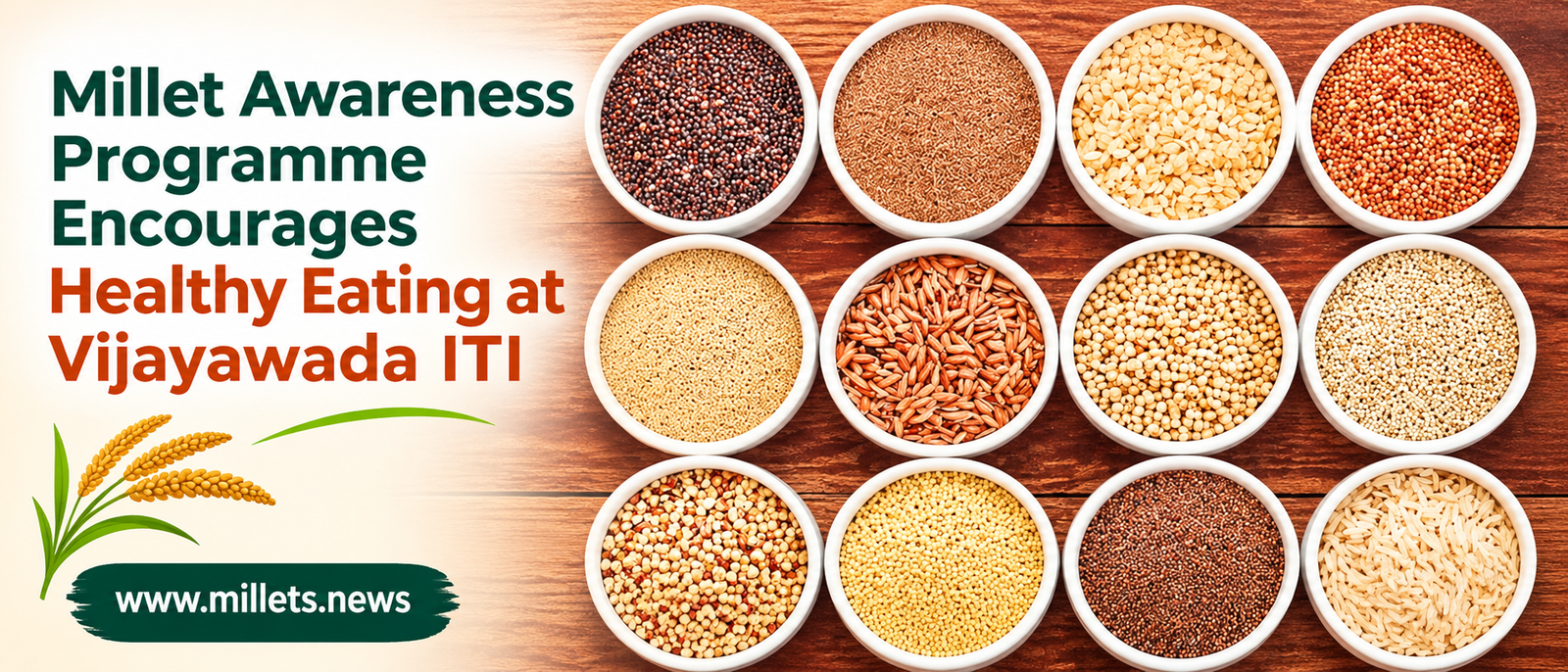
A millet awareness programme held at Government Industrial Training Institute (ITI), Vijayawada, encouraged students and staff to adopt nutritious traditional foods and understand the relationship between dietary habits and environmental sustainability.
The programme took place on November 4, 2026, as part of BRICS Sustainable Lifestyle Week, organised by the Andhra Pradesh Environment Management Corporation.
The event focused on promoting healthy food habits through millets and encouraging participants to make more sustainable dietary choices.
Addressing the gathering, Government ITI Principal M. Kanaka Rao emphasised the importance of incorporating traditional nutritious foods into everyday meals.
He encouraged students to give greater attention to millets within modern dietary patterns.
The awareness session also highlighted the environmental characteristics of millet cultivation.
Participants were informed that many millet crops can grow under comparatively low-water conditions, making them relevant to discussions about resource-efficient agriculture.
The programme connected food choices with broader concerns about environmental protection and responsible consumption.
Students and staff were encouraged to recognise the value of locally available foods, reduce food waste and adopt more sustainable eating practices.
The initiative also discussed how millet cultivation can support farmers while providing consumers with additional grain choices.
By introducing these ideas in an educational institution, the programme sought to strengthen awareness of traditional foods among younger generations.
The event demonstrated how educational institutions can participate in conversations about nutrition, agriculture and sustainability.
Although the programme encouraged millet consumption, the report did not describe a permanent millet-meal programme, a new institutional food policy or measured changes in students' dietary habits.
For the millet sector, the Vijayawada initiative represents a local awareness-building effort connecting traditional grains with responsible food consumption.
The programme reinforces the role of public education in helping students understand the relationship between agriculture, food choices and environmental conservation.