 By Admin
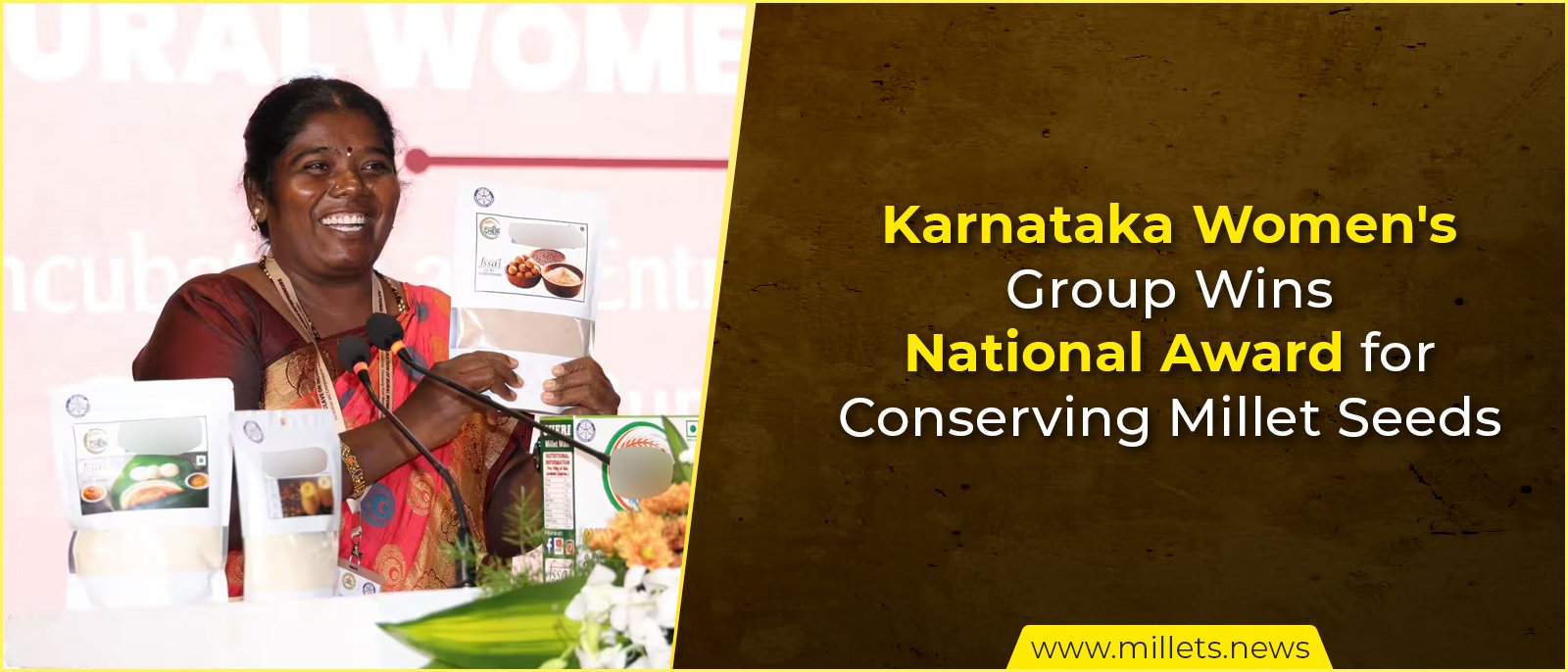
A women-led agricultural collective in Karnataka has received national recognition for its contribution to conserving indigenous millet varieties and protecting traditional agricultural biodiversity.
The Bibi Fatima Women's Self-Help Group, based in Teertha village of Kundgol taluk in Dharwad district, has been selected for the Plant Genome Saviour Community Award.
The group was established in 2018 by farmer Bibijaan Maulasaab Halemani, who brought together 14 other women to preserve traditional seeds and strengthen local farming systems.
According to The New Indian Express, the initiative began with a determination to protect indigenous crop varieties that were disappearing from cultivation.
With guidance from Sahaja Samrudha, an organisation promoting sustainable and organic farming, the collective established a community seed bank and encouraged farmers to return to traditional millet-based cropping systems.
The group's activities have contributed to the revival of mixed cropping practices in approximately 30 villages across rainfed farming areas.
One of its most significant achievements is the conservation of a diverse collection of indigenous millet seeds.
The seed bank currently holds more than 250 varieties of seeds from millets, pulses, paddy, oilseeds and vegetables.
Among the millet collections are approximately 70 varieties of finger millet, 25 varieties of little millet, 10 varieties of foxtail millet and two varieties of browntop millet.
These collections help maintain agricultural diversity and provide farmers with access to traditional planting material adapted to local conditions.
The group's activities also extend beyond seed conservation.
Members promote diversified farming, livestock rearing, horticulture and household food security while encouraging women's participation in agricultural decision-making.
The initiative has helped demonstrate how community-managed seed banks can support crop conservation while strengthening local livelihoods.
The collective's work has attracted recognition at both national and international levels.
In 2025, the Bibi Fatima Women's Self-Help Group was recognised through the United Nations Development Programme's Equator Initiative for its contribution to biodiversity conservation, climate-resilient agriculture and women's leadership.
Its latest recognition, the Plant Genome Saviour Community Award, is instituted by the Protection of Plant Varieties and Farmers' Rights Authority under India's Ministry of Agriculture and Farmers' Welfare.
The community award carries a cash prize of ₹10 lakh, along with a certificate and memento.
The award presentation is scheduled for November 12, 2026, in New Delhi.
The recognition highlights the importance of community-led conservation in protecting crop diversity.
Traditional millet varieties represent valuable agricultural resources, but their continued availability depends on farmers who cultivate, maintain and exchange seeds.
By connecting seed conservation with local farming knowledge, the Bibi Fatima collective demonstrates how women's groups can contribute to preserving agricultural heritage.
For the wider millet sector, the initiative offers an example of how community participation, farmer networks and seed banks can support the long-term conservation of indigenous crops.
The group's recognition also reinforces the importance of safeguarding agricultural biodiversity alongside efforts to increase crop productivity and develop new millet-based markets.