 By Admin
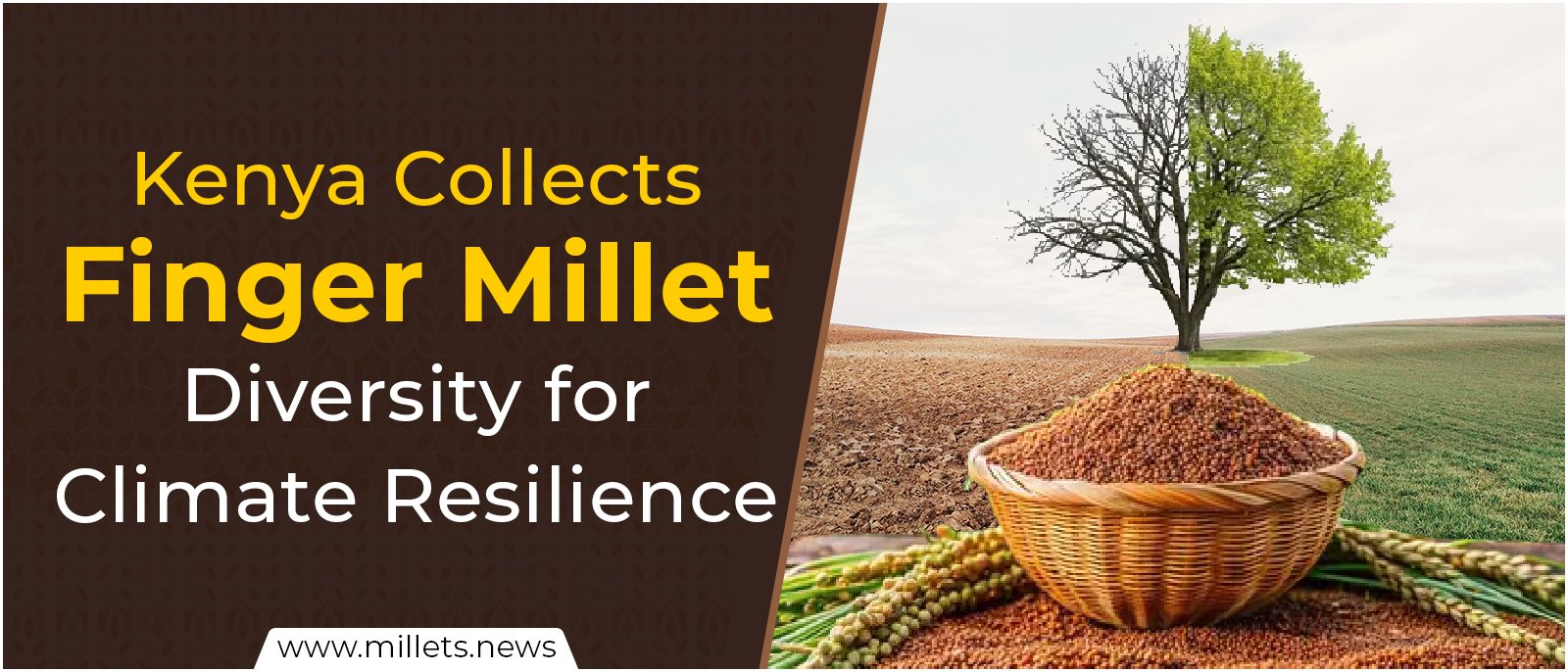
Kenya is intensifying efforts to safeguard its traditional crop diversity as climate change places growing pressure on agricultural production. A collecting mission led by Dr. Peterson Wambugu is searching farms and community seed banks for finger millet and amaranth varieties that remain in cultivation but are not yet represented in the country's national genebank.
Wambugu manages the genebank at the Genetic Resources Research Institute, part of the Kenya Agricultural and Livestock Research Organization (KALRO). Working with custodian farmers, his team is travelling through villages in western Kenya to identify distinctive seed samples that can be conserved for research, crop improvement and future restoration.
Finger millet occupies a particularly important position in this conservation effort. Traditional varieties have adapted to local environments through generations of farmer selection and cultivation. Such genetic diversity could contain characteristics that breeders will increasingly require as agriculture confronts higher temperatures, prolonged drought, shifting rainfall and new pest and disease pressures.
The urgency is reinforced by increasingly unpredictable weather. During the latest collecting mission, researchers encountered an unusual challenge because rains had arrived earlier than anticipated. By the time the team reached some farming communities, crops had already been harvested, demonstrating how changing seasonal patterns can complicate both agriculture and the conservation of crop diversity.
Researchers are working closely with farmers such as Magret Ngeso, whose harvested finger millet provided material for the national collection. The initiative also underscores the central role of women in conserving agricultural biodiversity. In Kenya, women farmers frequently maintain traditional varieties, select seed and transmit knowledge that enables valuable crop diversity to survive from one generation to another.
The need for conservation has grown as Kenyan agriculture has become increasingly dependent on maize. Wambugu recalled farming landscapes that once contained cassava, sorghum, groundnuts and numerous other crops. As maize gained dominance, traditional species including finger millet and amaranth gradually lost ground, reducing the diversity that once helped farming households spread production risks.
Yet the characteristics that contributed to these crops' traditional importance are becoming increasingly relevant again. Finger millet can tolerate drought substantially better than maize, while amaranth can produce nutritious grain and leafy vegetables with relatively few external inputs. Diversifying production with such crops can provide farmers with additional options under uncertain climatic conditions.
Conservation continues after seeds leave the farm. At Kenya's national genebank in Muguga, collected samples are cleaned, dried, germination-tested, photographed and documented before being vacuum-sealed and stored at approximately -20°C. The KALRO genebank currently safeguards more than 55,000 samples representing around 2,000 plant species.
Community institutions provide another layer of protection. At the Kabudi-Agoro Community Seed Bank in Kisumu County, farmers can obtain traditional seeds and return a larger quantity following harvest. The collecting mission recovered five finger millet samples and two amaranth samples there, demonstrating how community seed systems and national genebanks can complement each other.
By the end of the mission, researchers had secured 70 new samples of locally adapted finger millet and amaranth from western Kenya. Their long-term importance could extend well beyond conservation itself. Once catalogued, the material can become available to researchers and plant breeders seeking varieties capable of meeting future agricultural challenges.
For the global millet community, Kenya's initiative demonstrates why farmer-maintained diversity is an invaluable resource for future crop improvement. Protecting traditional finger millet today could provide breeders with genetic solutions for tomorrow, connecting indigenous farming knowledge with modern science to build more resilient and nutritious food systems.