 By Admin
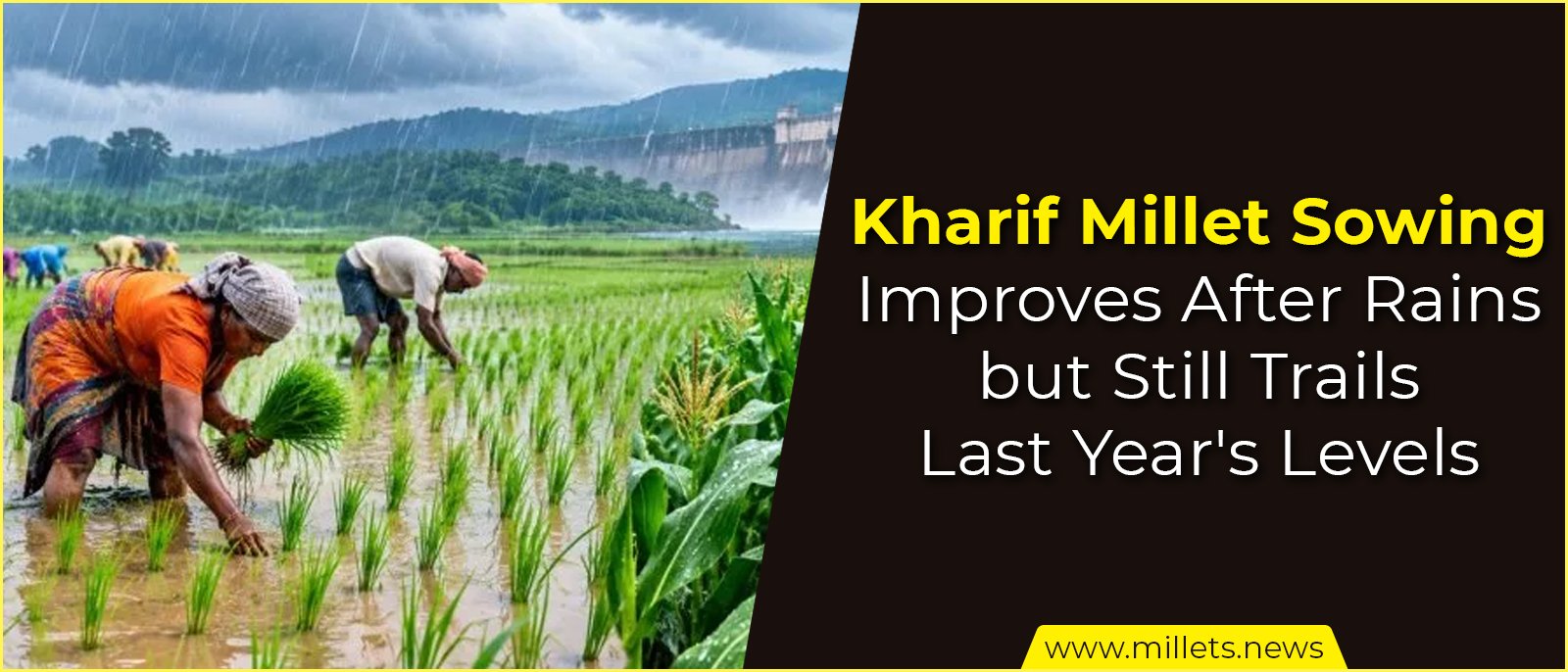
Recent monsoon rainfall has accelerated Kharif sowing across India, significantly reducing the gap between this year's and last year's cultivated area. While paddy acreage has nearly caught up with 2025 levels, sowing of pulses, coarse cereals, oilseeds, and cotton continues to remain below the corresponding period of last year.
The latest government data shows that coarse cereals have been sown over approximately 11.9 million hectares, compared with 13.4 million hectares during the same period last year. Among the millet crops, pearl millet (bajra) has recorded the largest decline in acreage, while sorghum (jowar) and finger millet (ragi) have also seen lower sowing compared with the previous season. Despite these declines, the shortfall has narrowed considerably over the past week following improved rainfall.
Agriculture experts expect sowing activity to continue improving as the Kharif planting window remains open and favourable weather conditions persist. Continued rainfall in key agricultural regions could help recover part of the remaining acreage gap and support production of climate-resilient crops, including millets.
The sowing trends underline the importance of a timely monsoon for millet production. Monitoring acreage during the remaining Kharif season will be critical in assessing potential output, market supply, and food security prospects for India's millet sector.