 By Admin
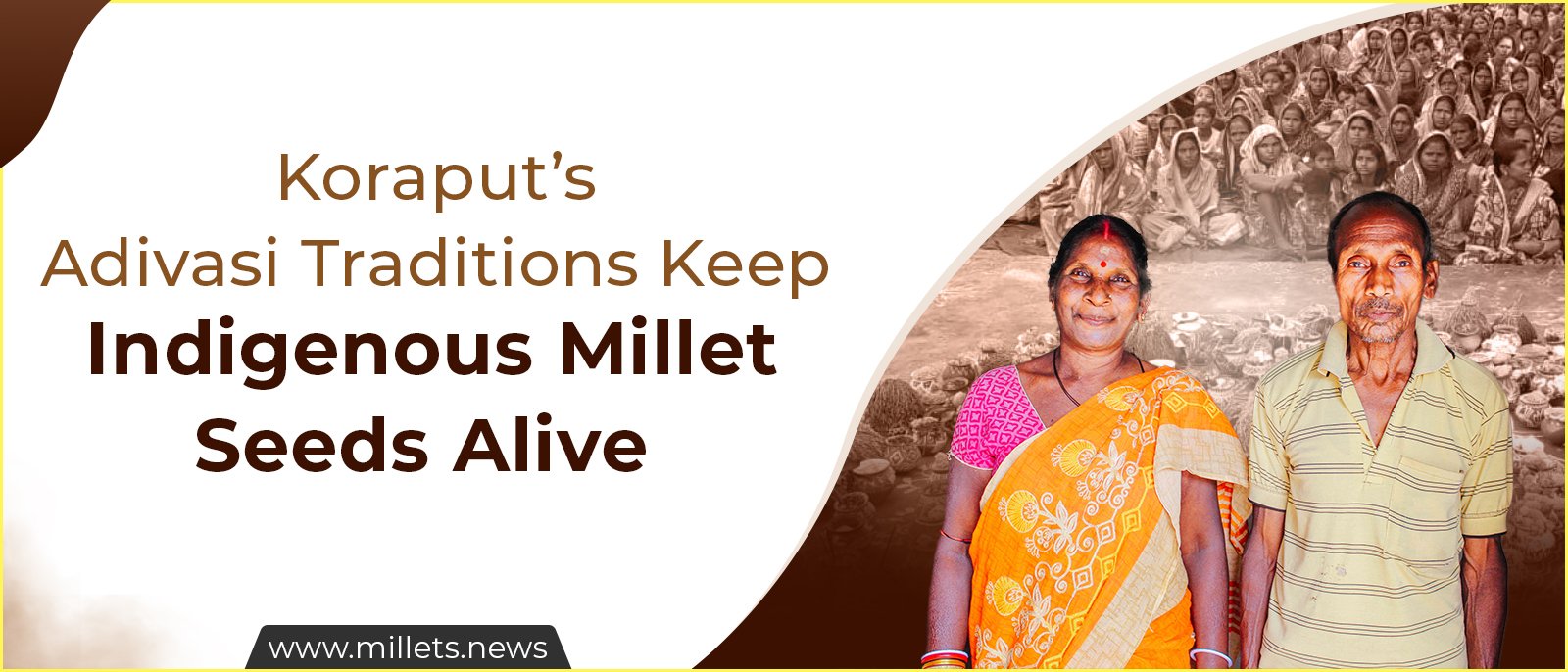
In the Eastern Ghats of Odisha, agriculture is deeply intertwined with culture, spirituality and community life. Adivasi communities across Koraput have maintained an exceptionally diverse agricultural landscape where indigenous rice, finger millet, little millet, pulses, oilseeds, vegetables and wild foods continue to be cultivated. Their traditions demonstrate how cultural practices can become powerful mechanisms for conserving agricultural biodiversity.
Koraput's farming systems differ considerably from conventional monocultures. Farmers cultivate diverse combinations of crops and varieties, including grains that mature at different times, helping households distribute production risks throughout the season. Such diversity becomes particularly valuable when rainfall is delayed or irregular because farmers are not dependent on the performance of a single crop or variety.
Finger millet and little millet form part of this rich agricultural heritage. Traditional varieties are maintained not merely for their productive value but also because of their connections with local diets, ceremonies and community identity. Families routinely save, exchange and replant seeds, allowing locally adapted genetic diversity to remain active in farmers' fields rather than surviving only in formal conservation collections.
Many indigenous crops possess characteristics that have become increasingly significant under changing climatic conditions. Farmers value particular varieties for attributes including drought tolerance, flood resilience, pest resistance and adaptation to local environments. Maintaining multiple crops and varieties therefore provides households with an important layer of resilience when weather conditions become less predictable.
Festivals throughout Koraput's agricultural calendar reinforce this conservation system. Ceremonies mark activities ranging from preparing fields and praying for rainfall to identifying promising plants for future seed and celebrating the arrival of a new harvest. During Puni Parab, for example, farmers identify healthy rice plants whose seeds will be retained for the following season, linking cultural observance directly with crop selection and continuity.
Millets also maintain an important place within traditional food culture. During the winter festivals of Pusha and Magha Parab, households prepare pancakes incorporating finger millet alongside sesame, niger and jaggery. Women play a particularly important role by preparing ceremonial foods, conserving recipes, managing household seed traditions and transmitting agricultural knowledge to younger generations.
Yet this living agricultural heritage faces mounting pressure. Erratic rainfall and extreme temperatures are making cultivation increasingly unpredictable, while hybrid and high-yielding varieties are gradually replacing some traditional seeds. Changing diets, commercial agriculture and evolving aspirations among younger generations are creating additional challenges for the continuation of indigenous crop diversity.
Koraput consequently offers an important lesson for the global millet community: conserving crop diversity also requires sustaining the people, knowledge and traditions that keep those crops alive. Protecting indigenous millet varieties is not solely a matter of preserving genetic material; it involves supporting living farming systems in which seeds, cuisine, biodiversity and cultural identity remain interconnected across generations.