 By Admin
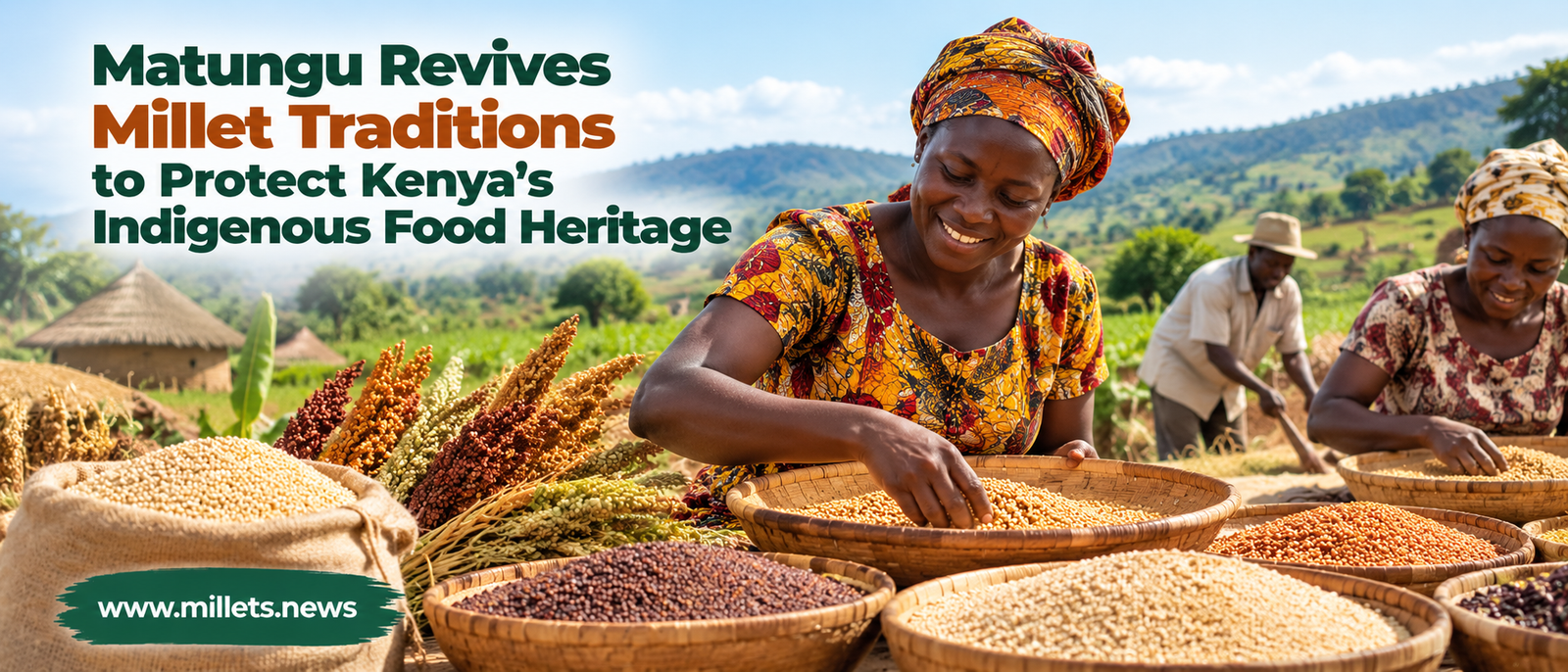
Communities in Matungu, western Kenya, are seeking to restore indigenous foods that once played a central role in local diets, culture and household food security.
Traditional meals in the region previously reflected seasonal availability. Families prepared porridge from home-ground millet and sorghum, combined indigenous vegetables with groundnut or sesame pastes, and consumed locally available mushrooms, fish and edible termites.
However, many of these foods are gradually disappearing from household meals, community markets and the memories of younger generations. They are increasingly being replaced by sugary beverages, refined-flour products, fried snacks and heavily salted packaged foods that are widely available in roadside kiosks and trading centres.
The Green Action Week 2026 campaign, organised around the theme “Sharing Community for Food Sovereignty,” is attempting to reverse this trend. Activities involving storytelling, seed sharing and village-market engagement are encouraging communities to reconsider the cultural, nutritional and agricultural value of traditional foods.
During an awareness programme for traders in Matungu, Youth Education Network director Michael Mung’oma called on county departments responsible for agriculture, health and culture to collaborate in promoting indigenous foods. He also encouraged the inclusion of food-heritage awareness in schools so children can understand how local crops are grown, harvested, preserved and prepared.
Millet and sorghum are particularly relevant to this revival because they provide locally familiar whole-grain alternatives. Groundnuts and sesame contribute plant-based nutrients, while indigenous vegetables, fish and safely harvested wild foods can improve dietary diversity.
Campaigners say the movement should not be viewed simply as an attempt to recreate the past. It responds to concerns about changing diets, climate pressure, biodiversity loss and the increasing burden of lifestyle-related illnesses.
Another important challenge is changing the perception that indigenous foods represent poverty or outdated lifestyles. Making traditional dishes accessible, desirable and economically viable will be necessary to attract younger consumers.
The campaign also highlights the importance of conserving traditional seed varieties. Community seed banks and responsible seed-sharing systems could help farmers continue cultivating locally adapted crops while protecting genetic diversity.
County governments could support this transition through agricultural extension, indigenous-food programmes, school education, research and local procurement. Creating stronger demand could encourage farmers to maintain millet, sorghum and other traditional crops that might otherwise disappear.
For Matungu, restoring indigenous foods is therefore about more than changing the menu. It involves preserving seeds, biodiversity, culinary knowledge and community identity while building healthier and more locally resilient food systems.