 By Admin
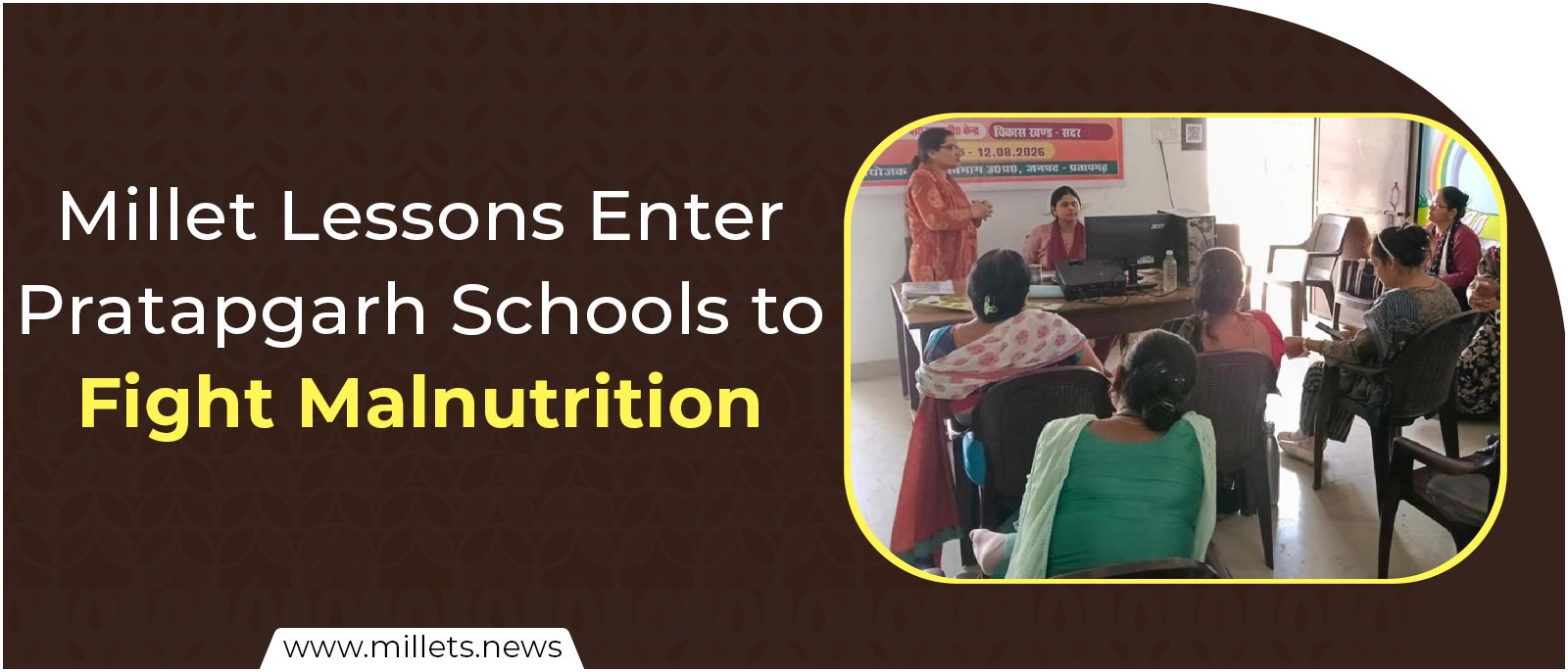
Government schools in Pratapgarh, Uttar Pradesh, are preparing to introduce millet-focused learning as part of an initiative connecting nutrition education with agricultural awareness. As many as 450 teachers have received specialised training to help students and their families understand the nutritional, agricultural and livelihood potential of Shree Anna, or millets.
The Agriculture Department organised the training between August 12 and 14 at block-level BRC centres, involving 50 teachers from each block. The programme covers educators serving primary Classes 1–5, upper-primary Classes 6–8 and composite schools, with millet lessons expected to reach classrooms after Independence Day.
Rather than limiting millet promotion to children, the programme positions teachers as a bridge between schools, households and farming communities. Educators have been asked to discuss millet with students and parents, creating awareness that can potentially influence both household food choices and attitudes toward cultivation.
During the training, agricultural experts introduced teachers to different millet crops, millet-based products and their nutritional and health attributes. The educators will subsequently incorporate this knowledge into their interactions with students and families while encouraging greater inclusion of millet-based foods in household diets.
The programme also has an agricultural objective. Pratapgarh Deputy Director of Agriculture Ashwini Kumar Singh said trained teachers would encourage farmers within their communities to consider millet cultivation. The district's geographical conditions are regarded as suitable for these crops, while government assistance is being provided to farmers at different stages.
Millet cultivation already has an established presence in Pratapgarh. Agriculture Department figures cited by Hindustan Times put the current cultivated area at 456 hectares, with estimated annual production of 2,265 quintals. Small and marginal farmers account for a significant proportion of those participating in millet cultivation.
The initiative therefore connects malnutrition reduction with local agricultural development. Greater awareness among children and parents can stimulate interest in millet consumption, while encouraging cultivation can strengthen the local supply required to support that demand. This demand-and-production connection could make school-based education particularly valuable.
Value addition is also beginning to strengthen the regional millet ecosystem. Officials highlighted a ₹95 lakh millet processing centre in Baharia block of neighbouring Prayagraj, which is enabling farmers to market products such as millet biscuits and cookies and potentially secure greater value from their harvests.
For the wider millet sector, Pratapgarh's approach demonstrates how schools can become platforms for more than nutrition interventions. Children can become important channels for introducing traditional grains into household conversations, while teachers can help communicate the agricultural and economic relevance of millet to farming families.
By linking education, nutrition, cultivation and value addition, the programme represents a community-oriented approach to millet promotion. If sustained effectively, it could help strengthen dietary awareness among younger generations while simultaneously expanding the local ecosystem supporting millet farmers.