 By Admin
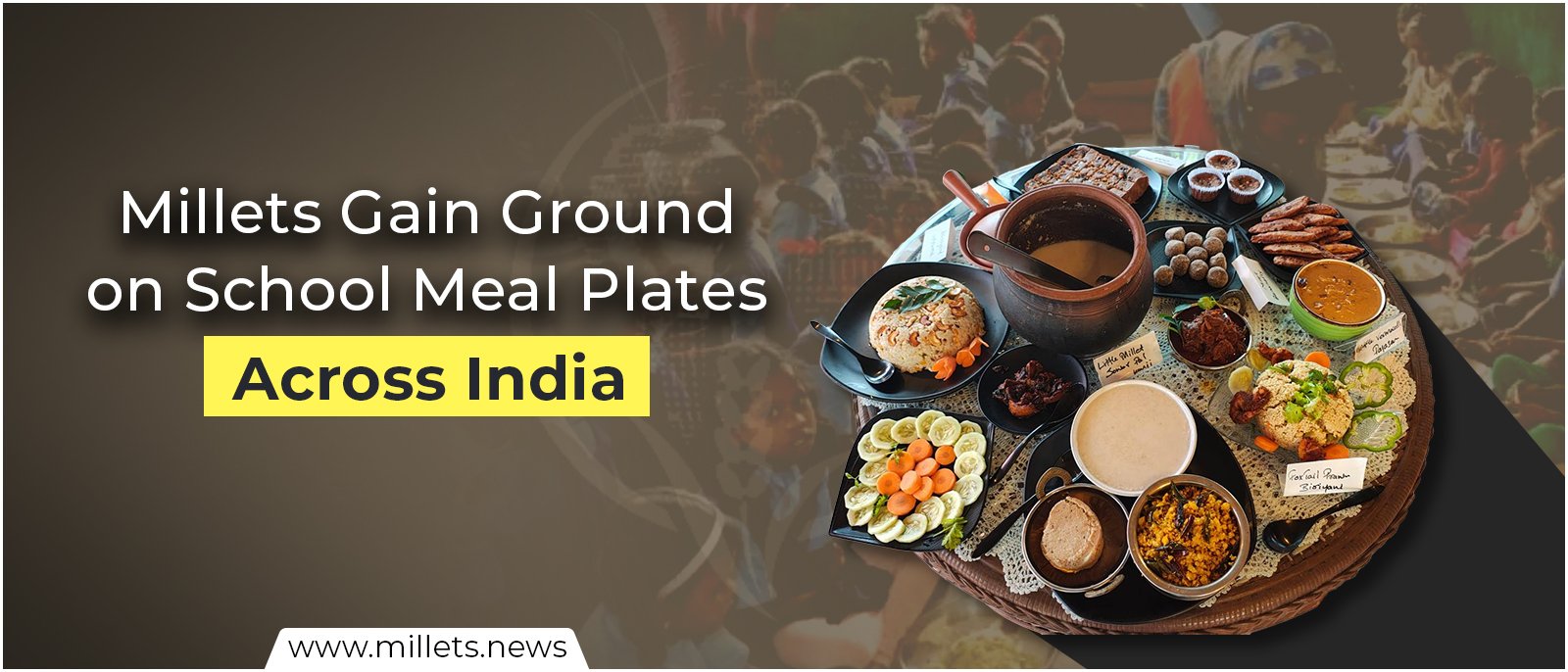
Millets are gaining a more visible place in India's school nutrition landscape as states experiment with regional foods designed to make meals both nutritious and familiar to children. From ragi and jowar dishes in Delhi to millet idli in Telangana and millet-enriched chikki in Andhra Pradesh, traditional grains are increasingly appearing in government-supported school food programmes.
Delhi provides one of the clearest examples of this transition. School-meal initiatives have experimented with ragi, jowar and bajra rather than depending exclusively on conventional rice-and-wheat combinations. Preparations have included ragi-based foods and jowar khichdi, demonstrating how grain diversification can be incorporated into dishes suitable for institutional meal programmes.
The approach reflects a wider national emphasis under PM POSHAN, with states encouraged to incorporate nutritious foods that are locally available and culturally appropriate. Instead of attempting to replace established school meals completely, the emerging model allows states to introduce alternative grains gradually while retaining foods and flavours that children already know.
Telangana is taking this principle into its school breakfast programme. Alongside familiar South Indian foods such as dosa, upma and idli, menus include millet idli, supported by accompaniments including sambar, chutney and vegetable kurma. The strategy illustrates how millet consumption can be encouraged by integrating the grain into established culinary traditions rather than presenting it as an unfamiliar substitute.
Andhra Pradesh has adopted another approach through peanut-millet-jaggery chikki. By incorporating millet into an established snack format, the state is diversifying ingredients without radically changing the eating experience for children. Such products could also create opportunities for millet processing and value-added food development if procurement expands over time.
These initiatives form part of a much broader transformation of India's school food system. Other states are experimenting with eggs, fruit and different regional preparations as policymakers place greater emphasis on dietary diversity, protein and micronutrients. The Union government has allocated ₹12,750 crore for PM POSHAN in 2026–27, compared with ₹10,600 crore in the revised estimate for 2025–26.
For the millet sector, school feeding represents an important opportunity beyond nutrition alone. Large institutional meal programmes can potentially generate consistent demand for millet grain and processed products, creating stronger connections between farmers, processors, government procurement systems and consumers. Regular exposure at school can also familiarise younger generations with traditional grains.
The effectiveness of millet inclusion, however, ultimately depends on implementation. Menu announcements need to translate into meals that are regularly available, nutritionally balanced, safe, palatable and accepted by children. Procurement reliability, preparation methods, infrastructure and food quality will therefore be just as important as selecting millet for the menu.
India's evolving school plate nevertheless represents an important development for mainstream millet consumption. Introducing ragi, jowar, bajra and millet-based foods through familiar regional recipes can connect nutrition policy with traditional grains while potentially creating sustained demand across one of the world's largest school-feeding systems.