 By Admin
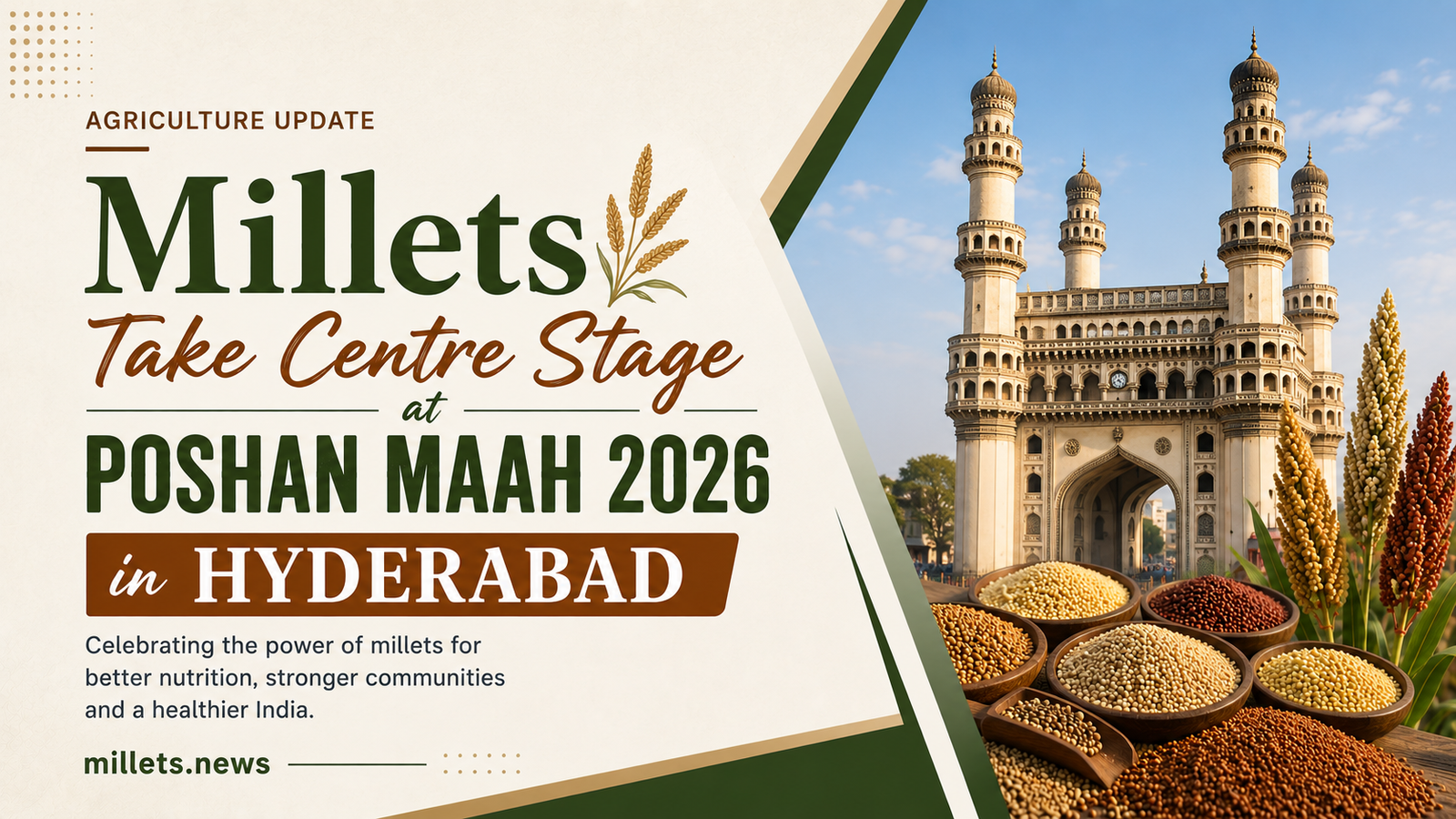
Millets emerged as an important component of the nutrition conversation as the Integrated Communication and Outreach Programme on POSHAN MAAH 2026 opened at A.V. College Grounds in Hyderabad on September 1.
Rajya Sabha member Dr. K. Laxman inaugurated the five-day programme, organised by the Central Bureau of Communication under the Ministry of Information & Broadcasting, Government of India. The initiative is designed to strengthen public understanding of nutrition and encourage healthier dietary practices.
During his address, Dr. Laxman stressed the importance of promoting millets alongside India's traditional dietary practices. Referring to the International Year of Millets 2023, he highlighted the grains' nutritional significance as well as their relevance to small and rain-fed farmers.
A millet-based nutritious food product displayed at the exhibition also attracted his attention. He used the example to encourage students to consider opportunities in food innovation and entrepreneurship, connecting better nutrition with India's expanding startup ecosystem.
The broader programme focuses on nutrition challenges including anaemia, underweight, overweight, obesity and inadequate growth. Dr. Laxman encouraged students and young people to become active participants in nutrition-awareness campaigns and take credible dietary information to families, children and disadvantaged communities.
He also referred to the scale of India's existing nutrition infrastructure, stating that around 14 lakh Anganwadi Centres and nearly nine crore children are covered through digital tracking, while approximately 12 crore children receive hot cooked meals through more than 11 lakh schools.
The five-day Hyderabad programme, running from September 1–5, includes around 40 nutrition information panels, expert talks, IEC stalls, demonstrations and traditional folk-art performances communicating messages about nutritious diets and healthy living.
For the millet sector, the event demonstrates how millets are increasingly being positioned at the intersection of public nutrition awareness, traditional food systems, rain-fed agriculture and food entrepreneurship.
Rather than promoting millets solely as agricultural commodities, initiatives of this kind can help introduce younger consumers to their dietary applications while encouraging entrepreneurs to develop accessible millet-based foods.