 By Admin
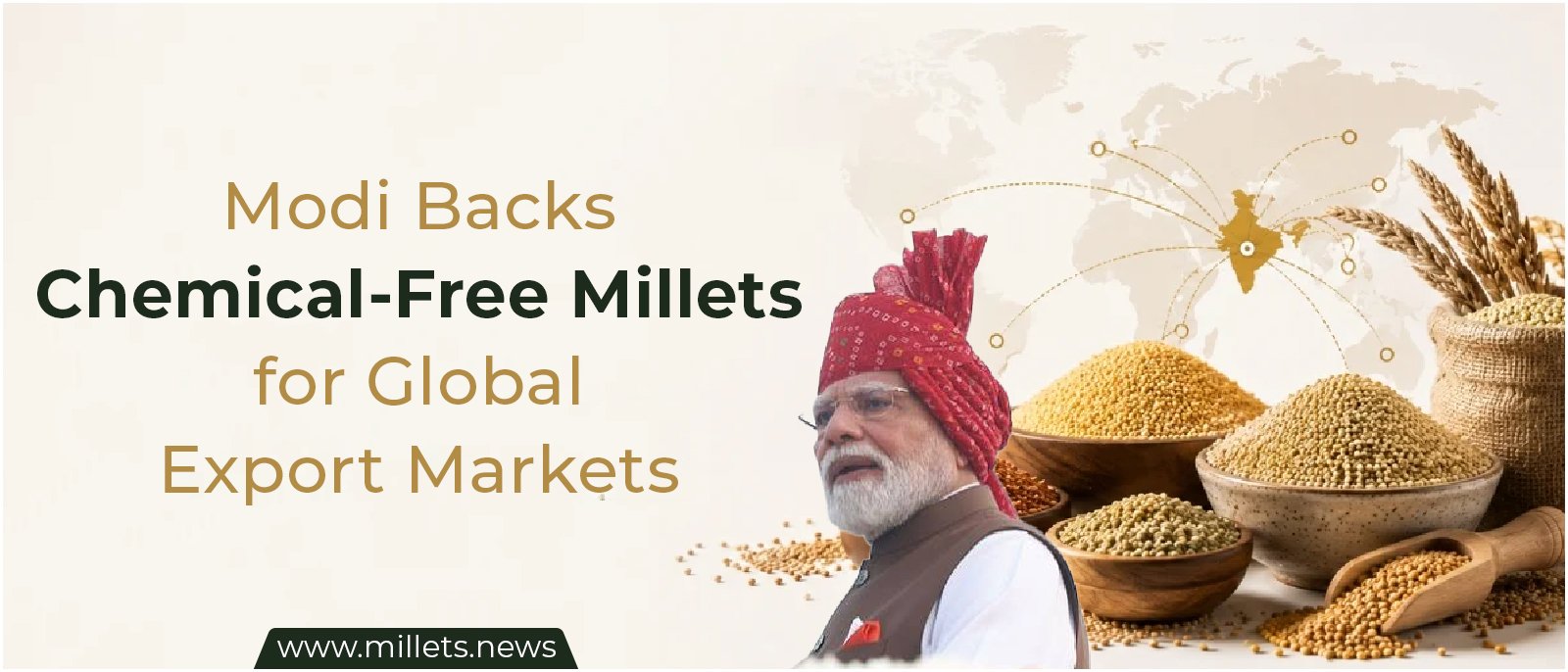
India is looking to connect chemical-free agriculture with a more ambitious export strategy, with millets emerging among the crops identified for greater international market development. Prime Minister Narendra Modi has called on farmers to adopt cleaner cultivation practices while strengthening the systems required to take Indian agricultural products from farms to consumers worldwide.
Speaking during his Independence Day address from the Red Fort, Modi positioned agriculture and food production as an important component of India's development over the coming years. His message extended beyond increasing agricultural output, emphasising the need to connect production with processing, value addition, branding and international trade.
Millets featured directly in this export-oriented vision. The Prime Minister highlighted India's traditional foods, millets, spices, fruits and flowers as products capable of reaching international consumers and developing into recognisable global brands.
Chemical-free cultivation was presented as another potential competitive advantage. Modi pointed to growing international demand for foods produced using cleaner agricultural practices and encouraged farmers to increase their focus on such production systems. Meeting international quality requirements, however, will remain essential for translating that demand into exports. /
For the millet sector, this creates an important connection between sustainable cultivation and commercial opportunity. Millets are already recognised for their relevance to resource-efficient agriculture, but expanding their international presence will require much more than increasing production.
Reliable aggregation, grading, storage, processing, certification and traceability will be important if millet businesses are to consistently meet overseas requirements. Strong logistics will also be necessary to connect farmers and processors with international buyers while maintaining product quality throughout the supply chain.
Food processing forms another major component of the strategy. Rather than exporting agricultural commodities only in raw form, greater domestic value addition could allow India to capture more economic value through processed and branded products before they enter international markets.
Free trade agreements could provide additional market access. Modi said India's FTAs are opening larger markets for farmers and agro-processors, but access alone will not guarantee commercial success. Indian products must also meet the quality, consistency and market expectations required by international buyers.
For millet farmers, the critical question will be whether stronger international demand translates into reliable procurement and better economic opportunities at farm level. Export-oriented millet development will therefore need to connect production incentives with processing infrastructure and dependable market channels.
The emerging policy direction presents millets not simply as traditional grains, but as potential participants in a more sophisticated farm-to-global-market value chain. Combining chemical-free cultivation, processing, certification, branding and international trade could help Indian millets build a stronger position in the global food economy.