 By Admin
Nandyal district authorities have called for stronger promotion of millets as part of a broader effort to improve nutrition, diversify agriculture and increase farmers’ incomes.
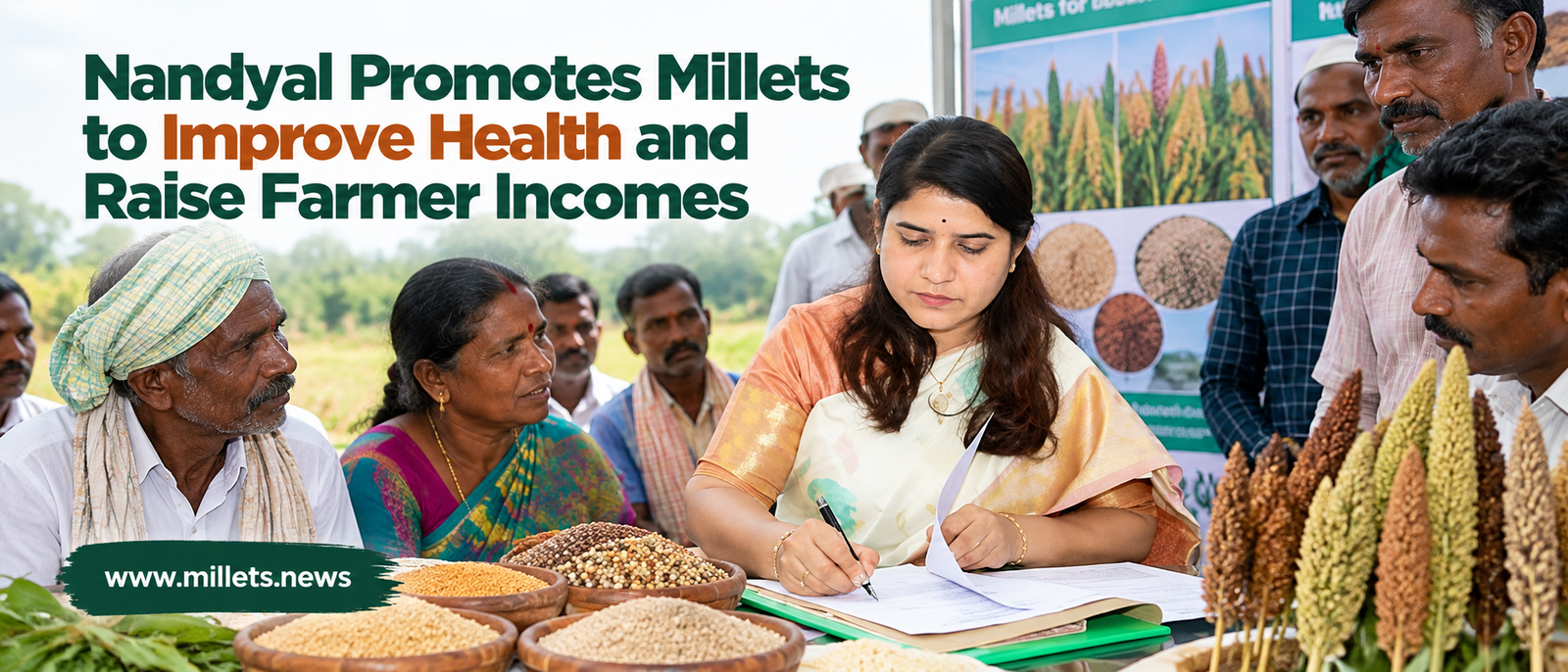
Speaking at a district-level Millets Mela organised under the National Food Security and Nutrition Mission, Collector Rajakumari Ganiya encouraged farmers to gradually reduce their dependence on paddy and consider cultivating more millets, pulses and oilseeds.
The Collector noted that approximately 70,000 hectares in Nandyal district were cultivated with paddy during the kharif season. Another 70,000 hectares were reportedly covered by jowar, maize and other crops. Greater diversification could help farmers manage water availability, market fluctuations and climate-related agricultural risks.
Millets were presented not only as resilient crops but also as foods capable of supporting improved dietary diversity. The district’s experience with millet-based foods supplied through Anganwadi centres was highlighted during the programme. According to the Collector, nutrition initiatives implemented over the previous two years had contributed to reductions in malnutrition and anaemia among children and pregnant women.
The event also emphasised that increasing millet production alone may not guarantee better returns for farmers. Processing, packaging, branding and reliable market connections are needed to raise the commercial value of millet crops and products.
Entrepreneurs were encouraged to use government support available for establishing food-processing businesses. A subsidy of 35% was highlighted, while officials reported that 48 food-processing units had been established in the district within three months. Such enterprises could create additional demand for locally cultivated crops while generating rural employment and business opportunities.
The district administration is also promoting oilseed cultivation, including groundnut and sesame, under the Central government’s oilseed mission. Oil palm cultivation is reportedly being introduced in the district as another component of agricultural diversification.
The Nandyal initiative demonstrates how millet promotion can connect farming, nutrition and rural enterprise. However, sustained progress will depend on farmer training, suitable seeds, dependable procurement, processing infrastructure and continued consumer demand.
Combining production support with institutional nutrition programmes and value-added processing could help millets become more economically attractive to farmers while improving access to diverse and nutritious foods. Key figures—including the area under different crops, the 35% subsidy and 48 processing units—are reported in indexed coverage of the original report.