 By Admin
Odisha's approach to millet revival is emerging as more than an agricultural programme. The Odisha Millets Mission, now known as Shree Anna Abhiyan, demonstrates how public policy can connect crop production with nutrition, markets, livelihoods and climate resilience. Instead of relying on a single intervention, the programme has developed an ecosystem involving farmers, government agencies, researchers and civil-society organisations.
A defining feature of the programme has been its gradual and adaptive expansion. Rather than immediately applying one model across the state, Odisha expanded the initiative in phases and incorporated lessons from implementation along the way. Procurement procedures, processing technologies and farmer incentives were adjusted as challenges emerged, allowing the programme to evolve according to conditions on the ground.
The Mission has also sought to make millet cultivation economically attractive by connecting farmers with procurement, processing and markets. Farmer Producer Organisations, community seed centres and machinery facilities have helped strengthen local value chains. Government guidelines further envision Millet Service Centres providing farmers with services ranging from inputs and machinery to processing, aggregation, marketing and value addition.
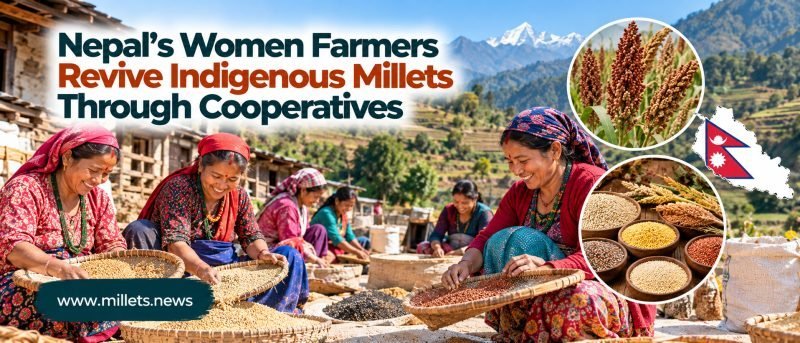
Women-led enterprises form another important part of the model. Women's self-help groups have participated in processing, marketing and millet-based food businesses, including initiatives under Millet Shakti. This approach enables millet promotion to generate opportunities beyond cultivation while giving rural women a stronger role in local agricultural economies.
Odisha has additionally connected millet promotion with public nutrition programmes. Millet foods have been incorporated into initiatives involving schools and Anganwadi centres, helping create institutional demand while encouraging dietary diversity. Government procurement and minimum-price mechanisms have complemented these efforts by providing farmers with greater market assurance.
The wider lesson from Odisha is that successful millet policy may depend on more than increasing acreage or distributing improved seed. The programme suggests that lasting change requires coordinated attention to production, markets, nutrition, entrepreneurship and social inclusion. Its experience offers other regions a useful example, although the authors caution that simply copying the programme without its collaborative and locally adaptive approach may not produce the same results.