 By Admin
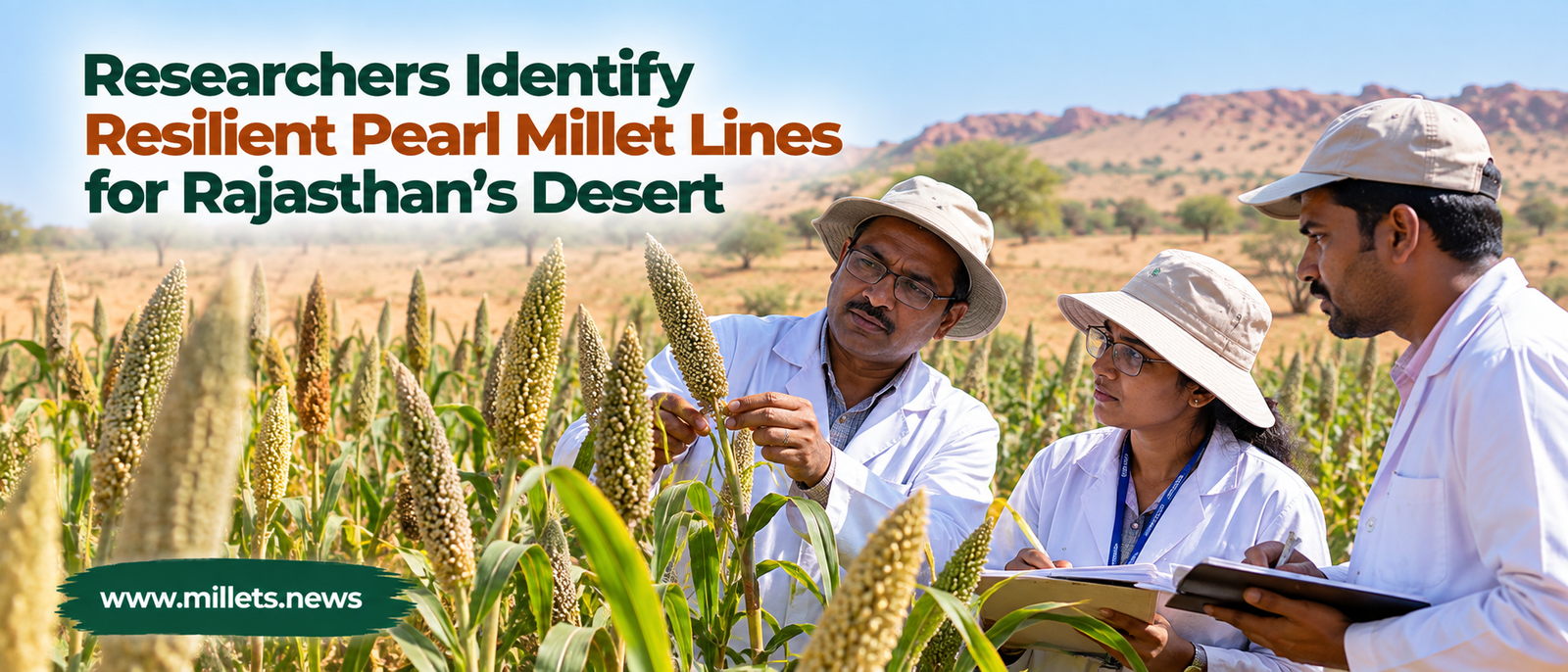
Scientists have evaluated 300 genetically diverse pearl millet lines to identify plants capable of surviving Rajasthan’s extreme heat, water scarcity and unpredictable rainfall. The two-year field study was conducted across Jodhpur, Bikaner and Nagaur, representing the state’s highly arid A1 agro-climatic zone.
Poor seedling establishment remains a major constraint on pearl millet production in dry regions. Young plants exposed to intense heat or sudden moisture stress may die before developing strong root systems, reducing the crop’s final yield. Researchers therefore examined both early-stage physiological resilience and performance at harvest.
The study measured relative water content, membrane stability and chlorophyll retention to understand how efficiently each genotype responded to environmental stress. Grain yield and harvest index were also assessed to determine whether early resilience resulted in meaningful agricultural productivity.
Three genotypes—IC-102797, NBPGR-38 and NBPGR-67—combined relatively high yields with stable performance across the testing environments. Other lines demonstrated particular strengths in maintaining cellular water levels or protecting plant membranes during stressful conditions. These genetic resources could provide valuable material for future breeding programmes.
The findings support a combined breeding strategy in which researchers screen seedlings for reliable physiological characteristics before conducting broader yield trials across multiple environments. Such an approach could accelerate the development of pearl millet varieties adapted to increasingly volatile dryland climates.
For farmers in Rajasthan and similar regions, improved varieties could strengthen crop establishment, stabilise grain and fodder production, and reduce vulnerability to irregular monsoons. The research also offers useful breeding insights for other climate-resilient cereals, including sorghum and finger millet.