 By Admin
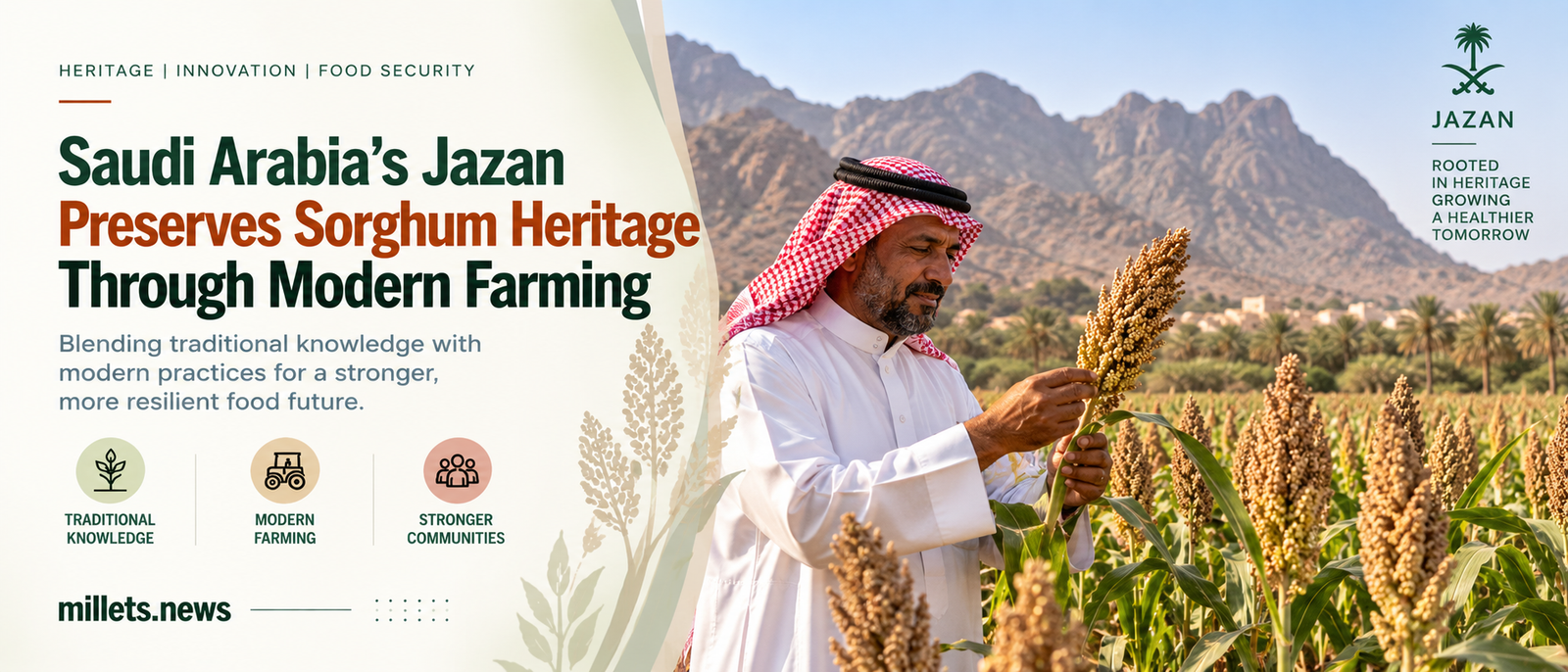
Farmers in Saudi Arabia's Jazan Region are preserving generations of agricultural knowledge while increasingly incorporating modern production and irrigation technologies into one of the Kingdom's distinctive farming landscapes.
Across Jazan's plains, valleys and highlands, agricultural activities have traditionally followed a seasonal calendar closely connected to rainfall patterns and different stages of crop development. These inherited practices continue to influence decisions about when farmers prepare land, sow crops and begin harvesting.
The agricultural cycle intensifies following rainfall, which prepares the landscape for a new growing season. Important seasonal periods extend from late August through mid-October, including a major window for sorghum planting.
Sorghum occupies a particularly important position in Jazan agriculture.
According to the Saudi Press Agency, it is the region's leading crop, cultivated across more than 60,000 hectares, with annual production exceeding 55,000 tonnes. Farmers also cultivate millet and sesame, reinforcing the diversity of crops associated with Jazan's traditional agricultural system.
Sorghum's importance extends beyond agricultural output. The crop is closely intertwined with the region's culinary traditions.
One seasonal practice involves the early harvesting of sorghum ears, which are used in preparing traditional foods associated with Jazan's cultural heritage. Recipes and preparation practices have been transmitted across generations, connecting present-day cultivation with longstanding food traditions.
The agricultural calendar itself represents accumulated local knowledge. Farmers historically observed rainfall, seasonal transitions and crop-development stages to determine appropriate periods for planting and harvesting.
Today, however, this traditional knowledge is increasingly operating alongside contemporary agricultural practices.
SPA reports that farmers are adopting modern production methods and irrigation technologies, creating a farming system that combines inherited expertise with technological advancement.
This combination is particularly relevant for sorghum and millet. Both crops have longstanding associations with farming systems operating under relatively challenging climatic conditions, making their continued cultivation significant within discussions surrounding agricultural resilience and crop diversification.
Jazan's experience also illustrates how modernisation does not necessarily require abandoning traditional crops or agricultural knowledge. Instead, new irrigation and production technologies can coexist with crops and farming practices embedded in regional heritage.
For the international millet and sorghum community, the Jazan example demonstrates another dimension of these grains: their role extends beyond agricultural commodities to encompass local food systems, seasonal knowledge and cultural identity.
Preserving that relationship while improving production efficiency could help ensure that traditional grains remain economically and culturally relevant for future generations.