 By Admin
The Agriculture Department of Sikkim is strengthening millet cultivation in Namchi district through practical farmer training focused on improved crop-management techniques. The programme, organised at Dara Khakra in Lingmoo Paiyong GPU, Yangang, introduced farmers to recommended cultivation practices for millet variety VL 379.
The initiative brought together local farmers, Farmer Producer Organisation members and officials from the Agriculture and Horticulture departments. Beyond classroom-based guidance, the programme incorporated practical field activities, helping participants understand how recommended agronomic practices can be applied directly under local farming conditions.
Officials also familiarised farmers with the National Food Security and Nutrition Mission on Nutri-Cereals (NFSNM Nutri-Cereals). The programme highlighted interventions available through the mission to support millet cultivation and strengthen the role of nutritious cereals within regional farming systems.
Sikkim officials highlighted the growing importance of millet production in the area. Nirmala Moktan, Additional Director of the Agriculture and Horticulture Department, noted that the locality has emerged as one of the higher millet-producing areas within the district, reflecting increasing farmer engagement with the crop.
Importantly, the programme encouraged farmers to look beyond primary production. Participants were urged to strengthen post-harvest management while exploring millet processing and value addition as pathways toward improved farm income and stronger market opportunities.
This value-chain approach is significant because increasing millet acreage alone does not necessarily guarantee better farmer returns. Efficient post-harvest handling, processing and product development can help producers capture additional value while creating opportunities to connect locally produced millet with expanding consumer markets.
Farmers were also given an opportunity to communicate their requirements and concerns directly to departmental representatives. Officials responded to the issues raised and assured participants of continued technical assistance through existing government schemes and agricultural programmes.
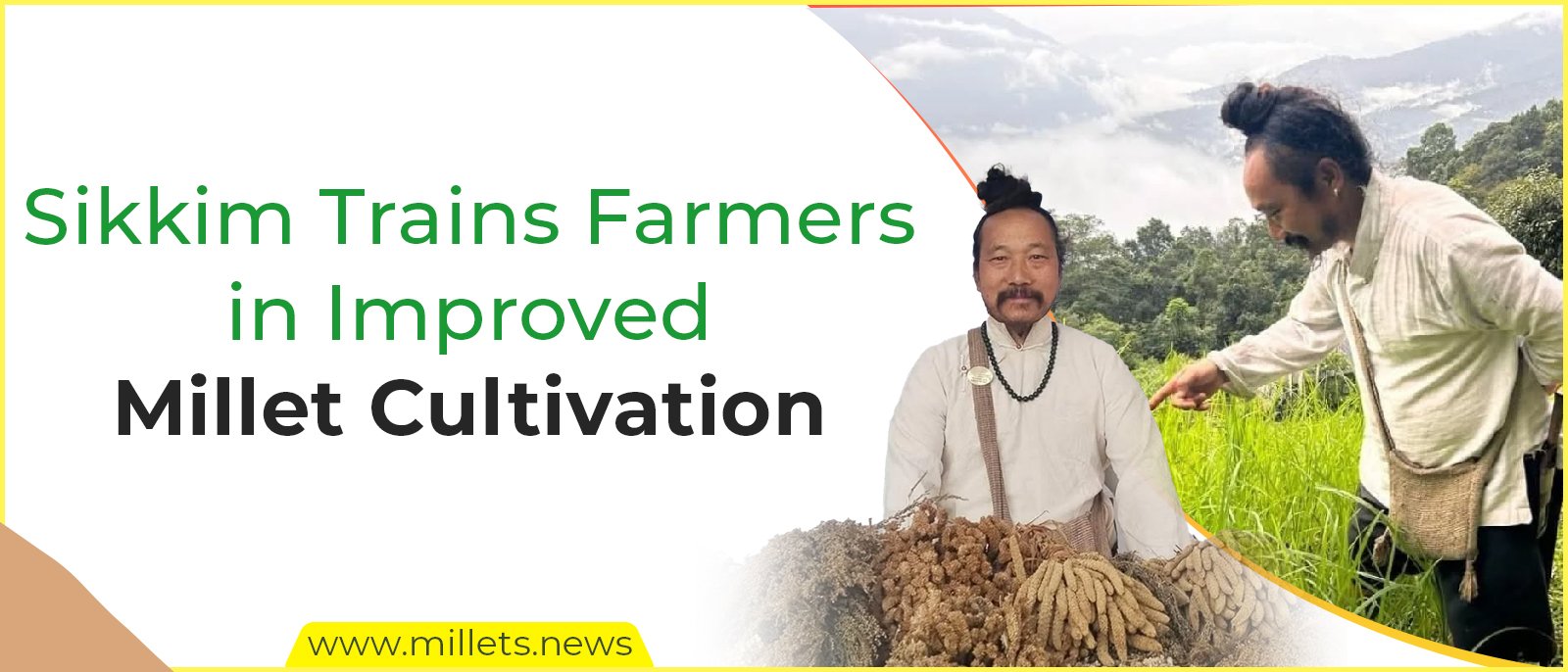
A particularly important component was the field demonstration of millet transplanting using VL 379. Farmers joined agricultural officials and departmental staff in the exercise, turning the programme into a hands-on demonstration rather than limiting it to theoretical recommendations.
The programme concluded with the distribution of agricultural inputs to participating farmers. Together, technical training, field demonstrations and input support illustrate an integrated extension approach aimed at improving farmers' capacity to cultivate millet effectively.
For Sikkim's millet sector, initiatives of this kind can help connect improved agronomy with value-chain development. Strengthening cultivation skills while simultaneously promoting processing and market opportunities could improve the economic attractiveness of millet and reinforce its position within the state's sustainable agricultural landscape.