 By Admin
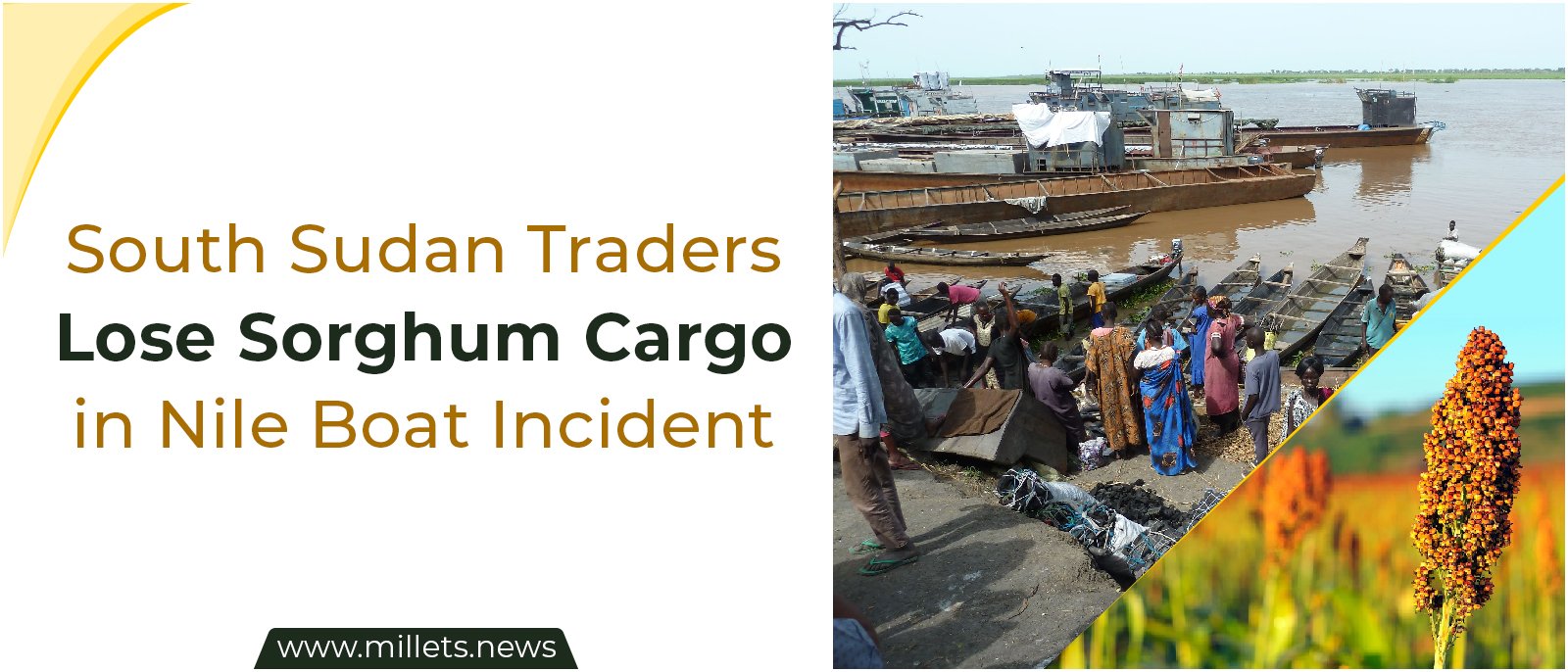
A river transport accident in South Sudan has resulted in the complete loss of a sorghum shipment destined for communities in Leer County, highlighting the logistical vulnerabilities surrounding food-grain movement in areas heavily dependent on waterways.
The incident occurred at Diel in Fangak County, Jonglei State, after a boat transporting sorghum from Rang in Upper Nile State toward Leer County was damaged. According to the Leer County Traders Union, the accident happened while the boat operator was attempting to bring the vessel to a stop.
Although the accident resulted in no reported deaths or injuries, traders said the entire consignment of sorghum was lost. The monetary value of the destroyed cargo had not been disclosed when the incident was reported.
For the affected traders, however, the loss extends beyond the commercial value of the shipment. Stephen Gai Yar, chairperson of the Leer County Traders Union, stressed that the grain was intended to help supply food to the local community, making the incident a food-access concern as well as a business setback.
The traders' organisation has appealed to the government for assistance following the loss. It has also requested support from humanitarian organisations and other potential partners to help affected businesses recover from the financial impact.
Sorghum has considerable importance across South Sudan's food economy, making disruptions to its movement particularly consequential for communities dependent on regional grain trade. In remote areas, getting agricultural commodities from producing regions to consumers can be as important as increasing production itself.
The incident also highlights the importance of the Nile as a commercial transport corridor. River traffic connects communities across Jonglei, Upper Nile and Unity states and becomes particularly important where reliable road connections are limited.
Recent developments demonstrate how vulnerable this supply network can be. Commercial river traffic to Unity and Upper Nile states only recently resumed following disruption along parts of the Nile corridor, with authorities working to restore the movement of commodities and passengers.
For sorghum value chains, such incidents demonstrate that food security depends on more than cultivation and harvest volumes. Safe transportation, storage, infrastructure and reliable market connections are essential for ensuring grain successfully reaches communities that depend on it.
The Leer incident therefore provides a wider lesson for millet and sorghum markets across vulnerable regions: strengthening production must be accompanied by investment in resilient agricultural logistics and dependable food-distribution networks.