 By Admin
Scientists have identified a promising combination of irrigation and nitrogen management for sorghum, potentially helping growers maintain grain quality while using water more efficiently as agricultural regions face increasing pressure on freshwater resources.
The peer-reviewed study, published in Scientific Reports, was conducted by Mehmet Alagöz and Mevlüt Türk from the Faculty of Agriculture at Isparta University of Applied Sciences in Türkiye. Their research examined how different combinations of nitrogen fertilization and irrigation affect sorghum seed quality and water-use efficiency.
The researchers evaluated far more than crop productivity alone. Their analysis covered crude protein, free amino acids, oil content, fatty-acid composition, phenolic compounds, antioxidant capacity and sugar content, providing a broad picture of how farm management can influence the nutritional and biochemical characteristics of sorghum grain.
The field experiment used five nitrogen application rates: 0, 80, 160, 240 and 320 kg N per hectare. These were tested against six irrigation regimes ranging from completely rainfed conditions to 125% irrigation.
Results showed that nitrogen management had significant effects on several quality parameters. Increasing nitrogen rates enhanced crude protein, total free amino acids, total phenolic compounds, antioxidant capacity and reducing sugars.
Water availability produced another interesting response. Several quality characteristics tended to increase under deficit-irrigation conditions and decline as irrigation increased. Oil content and secondary metabolites were also particularly elevated under water-deficit treatments.
The researchers found that the highest water-use efficiency and irrigation-water-use efficiency occurred under moderate irrigation rather than maximum water application. This suggests that applying more irrigation does not necessarily produce the most efficient outcome.
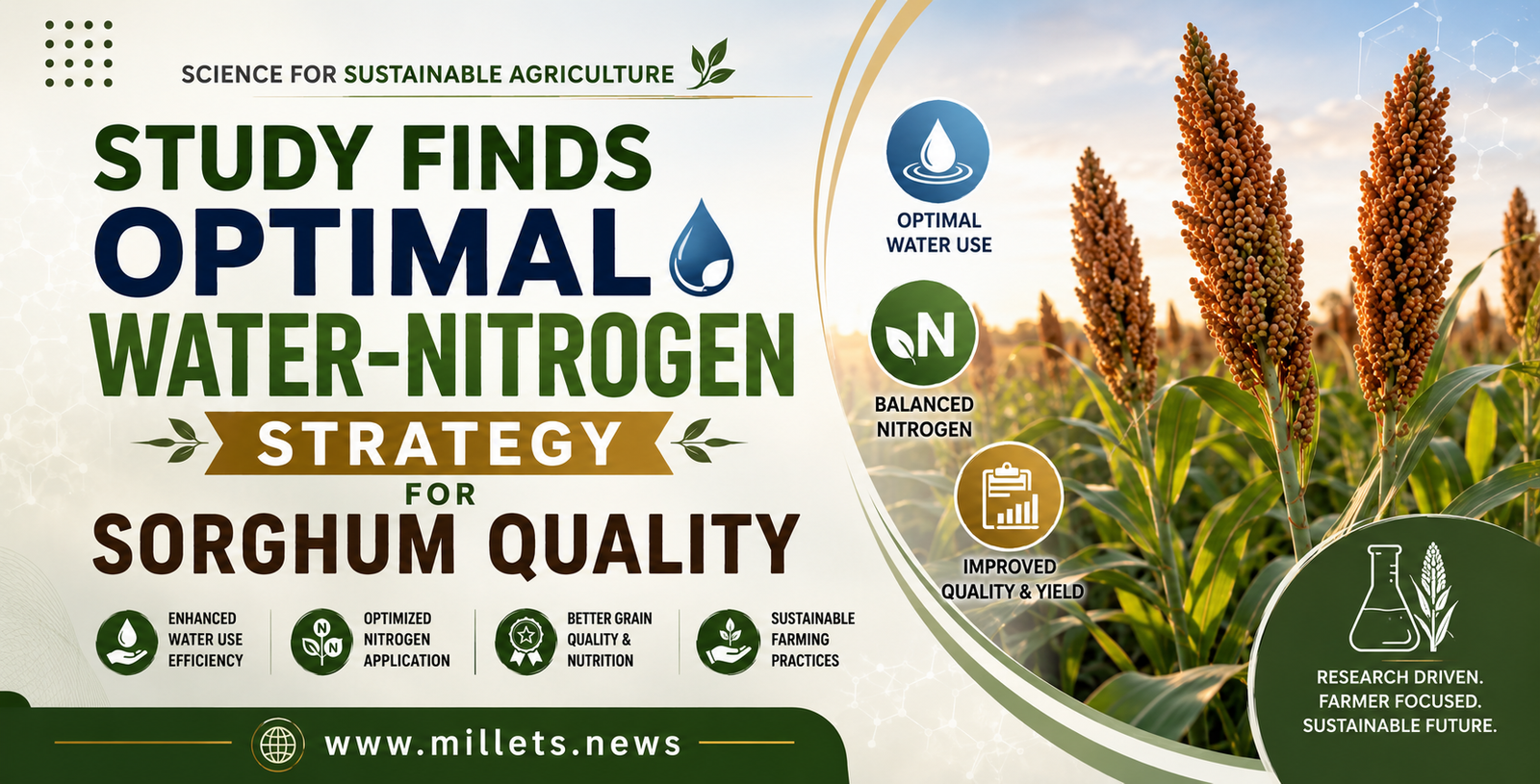
One of the clearest conclusions emerged from the interaction between water and nitrogen. The researchers identified 50% irrigation combined with 160–240 kg N per hectare as providing the strongest overall balance between sorghum seed-quality characteristics and efficient water use.
Sorghum's fatty-acid profile was comparatively stable. Linoleic, oleic and palmitic acids were the dominant fatty acids, while nitrogen and irrigation treatments produced only relatively limited changes in their overall composition.
The findings are significant because agricultural water management is becoming increasingly important under climate change and declining freshwater availability. Sorghum is already valued for its adaptability to water-limited environments, but improved agronomic management could further increase the efficiency with which the crop uses available resources.
The study also highlights an important dimension of climate-smart agriculture: maximizing irrigation is not always synonymous with optimizing production. Strategic deficit irrigation, when appropriately combined with nutrient management, may help farmers conserve water while maintaining desirable grain characteristics.
For the global sorghum sector, this research adds evidence that crop resilience depends not only on genetics but also on precision management of water and nutrients.
The findings could ultimately contribute to more resource-efficient sorghum production systems, although recommendations for farmers should account for local soils, climates, varieties and production objectives rather than applying the experimental rates universally.