 By Admin
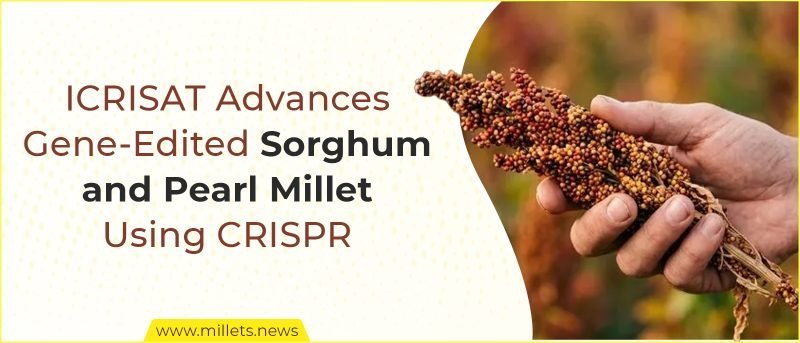
Sorghum genetic engineering could become considerably faster following a Texas Tech University research advance designed to overcome one of the crop's longstanding biotechnology bottlenecks.
Researchers at Texas Tech are using the 2026 Global Sorghum Conference in Lubbock to highlight advances in plant genomics, physiology and molecular crop improvement. Their work focuses on understanding how crops respond to stresses including drought, heat and pathogens and translating those discoveries into improved crop traits.
One particularly significant development comes from the laboratory of Gunvant Patil, associate professor in molecular crop improvement. Following a five-year research process, his laboratory identified two genes capable of reprogramming sorghum cells so that they regenerate approximately three times faster than the normal rate.
Cell regeneration is an important part of genetic transformation. Sorghum can be challenging to engineer because of factors including genetic diversity among varieties and its production of phenolic compounds, which can interfere with Agrobacterium-mediated gene delivery.
Patil's team has already used the genes to transform sorghum through at least two cycles, with the researcher describing the resulting data as promising. A patent application has also been submitted. If the intellectual-property process proceeds as anticipated, the technology could subsequently become available for academic and industry licensing and research collaborations.
The significance extends beyond simply accelerating laboratory procedures. Researchers have identified numerous genes that may contribute to useful crop characteristics, but validating those candidates through genetic transformation can require considerable time, technical expertise and resources.
A faster regeneration system could therefore allow researchers to test candidate genes more efficiently and determine whether predicted traits actually translate into meaningful improvements in sorghum.
Texas Tech's broader genomics programme is also investigating how plants perceive environmental signals such as water and nutrient shortages and how those signals activate biological responses that help crops tolerate adverse conditions. Luis Herrera-Estrella, director of Texas Tech's Institute of Genomics for Crop
Abiotic Stress Tolerance, leads work examining these mechanisms and developing gene-editing technologies for crop adaptability and nutritional characteristics.
Plant physiologist Haydee Laza complements this research through work examining plant communication and food-production ecosystems in semi-arid environments such as the High Plains.
Together, the research illustrates how genomics, molecular biology and plant physiology are converging to address challenges facing sorghum production as water availability becomes more constrained and temperatures increase.
Importantly, Texas Tech states that there are currently no commercially available genetically engineered sorghum varieties. The new regeneration technology should therefore be described as a research advance rather than a newly commercialised sorghum variety.