 By Admin
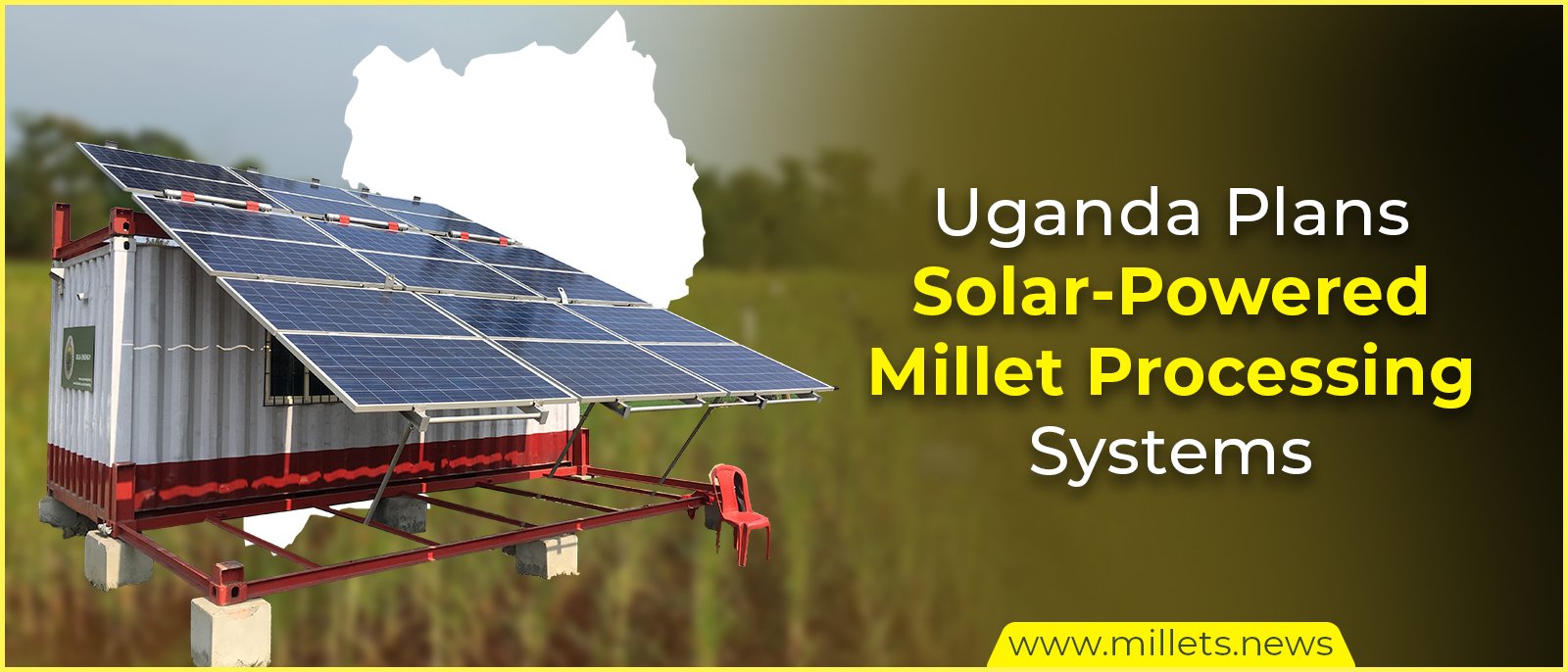
Uganda is moving to demonstrate how solar energy can strengthen rural agricultural processing, with eight renewable-powered milling and hulling systems planned across four enterprises. The initiative is being implemented through GIZ in collaboration with Uganda’s Ministry of Energy and Mineral Development under the Energising Development Uganda programme.
The project has direct relevance to the millet value chain because the proposed equipment will process millet, maize, rice and roasted soya. Four solar-powered hullers, three large solar mills and one solar micro hammer mill are planned, creating infrastructure capable of supporting different agricultural processing requirements.
The eight systems will be distributed across four selected enterprises: Bumalema Traders Ltd in Mbale District, Bugiri Crop Kings Ltd in Bugiri District, Youth for Life Tree Planting in Lira District, and Dhero Group Ltd in Jinja District. The geographical spread could demonstrate how decentralised solar processing performs across different rural business environments.
A central objective is to reduce the dependence of rural micro, small and medium enterprises on costly diesel engines and unreliable electricity supplies. Energy expenses can significantly influence the economics of grain processing, particularly for smaller enterprises operating outside areas with dependable grid infrastructure.
Solar-powered machinery could provide processors with a more predictable source of energy while reducing operating expenses and greenhouse gas emissions. Greater reliability could also improve the availability of milling services for surrounding farming communities, helping crops move more efficiently from harvested grain into products suitable for consumption and markets.
The technical systems will extend beyond photovoltaic panels alone. The contractor will supply and install components including PV modules, hybrid inverters or charge controllers, lithium-ion batteries, motor controllers, mounting structures and electrical protection equipment, creating integrated systems capable of supporting agro-processing machinery.
Capacity building is also incorporated into the project. Operators at participating enterprises will receive practical training in the operation and maintenance of the equipment. This component is important because the long-term success of decentralised renewable-energy infrastructure depends not only on installation but also on local technical knowledge and effective maintenance.
For Uganda’s millet sector, the project demonstrates how clean energy can become part of agricultural value-chain development. Millet's resilience in the field does not automatically translate into strong farmer or processor returns; efficient hulling, milling, storage, packaging and market access are also necessary to build commercially viable value chains.
The initiative could therefore provide lessons extending beyond Uganda. Across millet-producing regions of Africa, unreliable electricity and expensive fuel can constrain rural processing. Combining solar power with decentralised millet-processing infrastructure offers one pathway toward lowering those barriers while supporting rural enterprises, local value addition and more sustainable food systems.