 By Admin
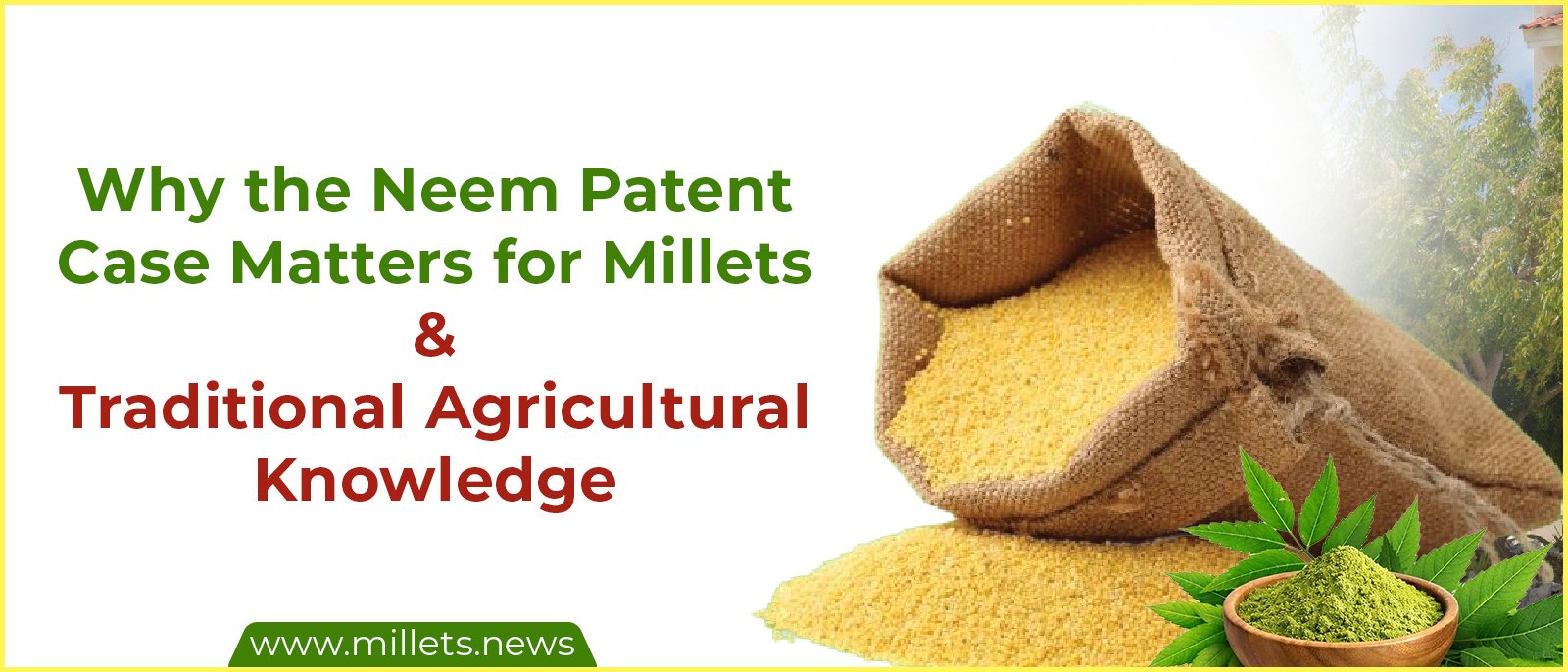
The landmark neem patent case continues to serve as a powerful reminder of the importance of protecting traditional knowledge in agriculture. As global demand for natural products, climate-resilient crops, and indigenous farming practices increases, experts believe the lessons from the neem dispute are becoming increasingly relevant for crops such as millets and other native food systems.
Traditional knowledge has been developed and preserved by farming communities over generations. It includes seed selection, cultivation techniques, soil management, pest control, food processing, and sustainable agricultural practices that have helped communities adapt to changing environmental conditions for centuries.
The successful challenge against patents related to neem-based products demonstrated that long-standing community knowledge cannot be claimed as a new invention simply because it has been documented or commercialized elsewhere. The case became an international example of how countries can defend indigenous knowledge from biopiracy while promoting equitable access to biological resources.
Today, similar concerns are emerging as traditional grains such as millets gain international recognition for their nutritional value, climate resilience, and contribution to sustainable agriculture. Indigenous communities across India, Africa, and other regions possess valuable knowledge about cultivating diverse millet varieties under different climatic conditions, conserving local seed diversity, and producing nutritious traditional foods.
Experts emphasize that protecting this knowledge requires more than legal safeguards.
Proper documentation, community participation, biodiversity conservation, and fair benefit-sharing mechanisms are essential to ensure that local farmers receive recognition whenever their knowledge contributes to research, innovation, or commercial development.
Millets represent more than nutritious grains—they are part of centuries-old agricultural traditions that support sustainable farming, conserve natural resources, and strengthen food security. Preserving the cultural and scientific knowledge associated with these crops is becoming increasingly important as countries invest in climate-smart agriculture and resilient food systems.
Strengthening policies that recognize farmers' rights, encourage conservation of indigenous crop varieties, and prevent unauthorized commercialization of traditional knowledge will help protect agricultural heritage for future generations. These efforts can also encourage innovation while ensuring that local communities remain central to the development of sustainable food systems.
As global interest in millets continues to expand, the conversation surrounding traditional knowledge is expected to become even more significant. Protecting indigenous wisdom not only preserves cultural heritage but also supports biodiversity, resilient agriculture, and long-term food security in a changing climate.