 By Admin
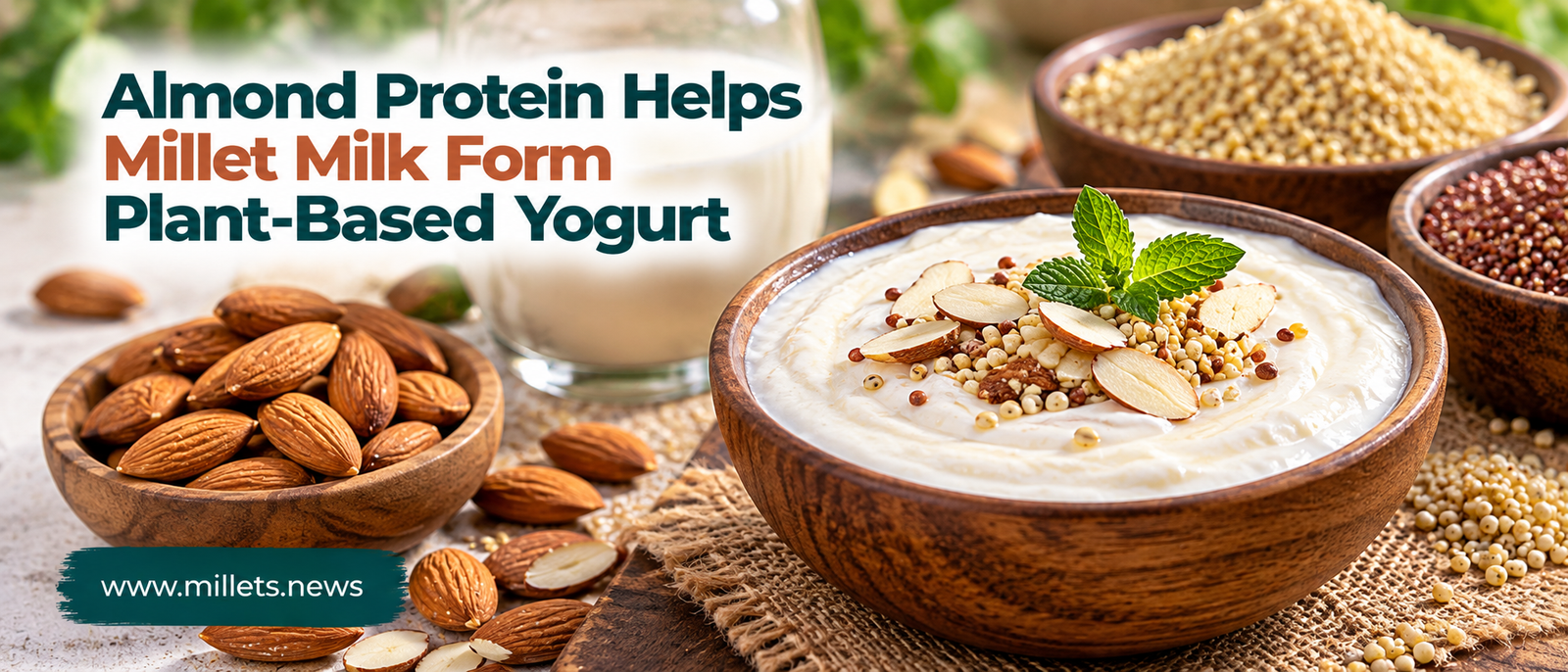
Researchers have demonstrated a new approach for transforming proso millet milk into a stable, set-style plant-based yogurt by supplementing it with almond protein.
Producing yogurt from cereal-based beverages can be technically difficult because they lack the protein structures that help conventional dairy yogurt form a stable gel. Proso millet milk presents an additional challenge because relatively little of its protein is readily extractable into the beverage.
Researchers from Konkuk University investigated whether almond protein isolate could strengthen this weak millet matrix. They prepared millet-based formulations containing different almond protein concentrations ranging from zero to 2%, together with xanthan gum, inulin and sucrose. The mixtures were then fermented using a vegan starter culture.
The results showed that adding almond protein substantially changed the yogurt's structure. The untreated millet control remained poorly connected and fluid, while formulations containing moderate amounts of almond protein developed more cohesive, self-supporting networks.
Water retention improved dramatically. The control recorded a water-holding capacity of just 17.65%, compared with 99% at 0.5% almond protein and 97.92% at 1%.
However, more protein was not necessarily better. At a 2% concentration, researchers observed aggregation, fractures and greater water separation. This indicates that achieving the appropriate balance of protein and polysaccharide interactions is more important than simply maximising protein content.
The 1% almond protein formulation also performed particularly well in structural recovery tests and received the highest overall acceptability score among the experimental formulations from the trained sensory panel.
The findings are significant for millet value addition because plant-based milk is already being investigated as a potential application for millets. A 2026 scientific review specifically identified millet beverages and their further processing into value-added products as an emerging area of food research.
This latest study goes a step further by demonstrating how food-protein engineering could address one of the practical challenges involved in converting millet beverages into fermented products with yogurt-like texture and stability.