 By Admin
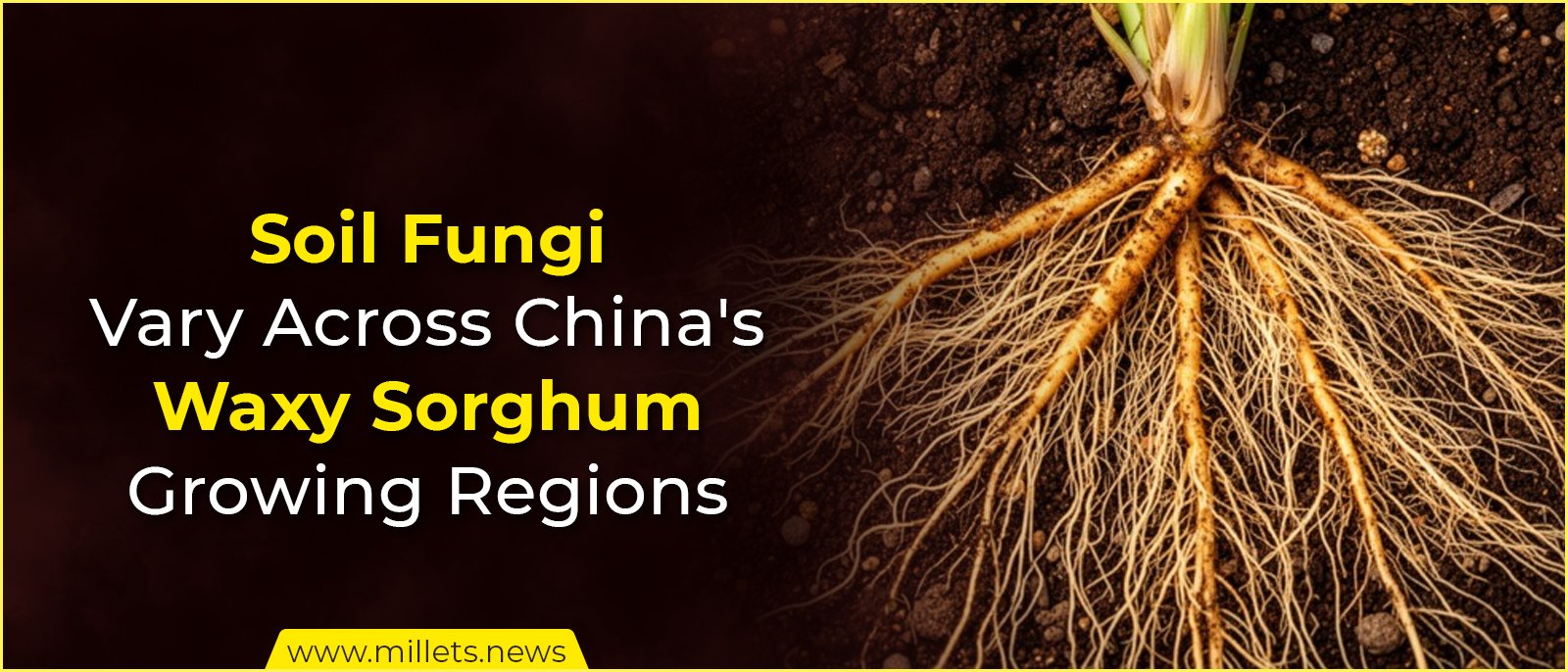
A new study published in Frontiers in Microbiology has revealed differences in root-associated fungal communities across major waxy sorghum production locations in China's Guizhou province.
The research focuses on arbuscular mycorrhizal fungi, a group of soil microorganisms that form associations with plant roots and can contribute to nutrient acquisition.
Waxy sorghum (Sorghum bicolor var. glutinosum) is an important agricultural crop in Guizhou, where it is cultivated for the production of Jiang-flavour baijiu, a traditional Chinese distilled beverage.
Although sorghum grain characteristics can vary across production environments, comparatively little research has examined how root-associated mycorrhizal fungal communities differ among these growing locations.
To investigate this relationship, researchers collected rhizosphere samples from three waxy sorghum production bases.
The rhizosphere is the narrow region of soil surrounding plant roots, where microorganisms interact with root secretions, nutrients and environmental conditions.
Researchers used high-throughput 18S rDNA sequencing to examine the composition of arbuscular mycorrhizal fungal communities.
They also analysed soil characteristics, grain quality indicators and climate records to investigate potential environmental associations.
The findings showed that fungal alpha diversity did not differ significantly among the three surveyed production locations.
Alpha diversity describes the variety of organisms present within an individual sample or community.
However, the composition of the fungal communities differed between locations.
This indicates that growing sites may contain broadly similar levels of fungal diversity while supporting different combinations of fungal organisms.
Among the identified fungal groups, Paraglomus was the predominant classified genus in most samples.
The researchers used statistical methods, including canonical correspondence analysis, to examine relationships between fungal communities and environmental conditions.
Their analysis identified associations involving soil properties, climatic conditions and topographic characteristics.
Because several environmental variables were strongly correlated, the researchers examined these relationships collectively rather than attributing changes to individual factors.
An additional exploratory analysis suggested relationships between core fungal communities and soil properties, as well as between soil properties and grain quality indicators.
These observations may help scientists better understand the complex interactions occurring in sorghum-growing soils.
However, the researchers emphasised that their study was observational.
Each region was represented by one production base and one weather station, limiting the ability to generalise findings across wider agricultural regions.
The results therefore cannot establish that particular environmental conditions directly caused the observed fungal differences.
Similarly, the findings do not demonstrate that changes in mycorrhizal communities directly improve sorghum productivity or grain quality.
Further research involving replicated field trials and controlled experiments would be needed to investigate such possibilities.
For sorghum agriculture, the study provides an initial scientific reference for understanding variation in root-associated fungal communities across production environments.
Soil microorganisms are an important component of agricultural ecosystems, and studying their relationships with crops may help researchers identify questions relevant to soil management and sustainable cultivation.
The findings could guide future investigations into how soil conditions and microbial communities interact with sorghum plants.
The research also highlights the importance of examining crop performance within the broader context of soil biology and environmental variation.
By documenting site-associated differences in mycorrhizal fungal communities, the study contributes new information to sorghum rhizosphere research.
Its primary value lies in establishing an observational baseline that can support more detailed studies of soil–microbe–crop relationships in the future.