 By Admin
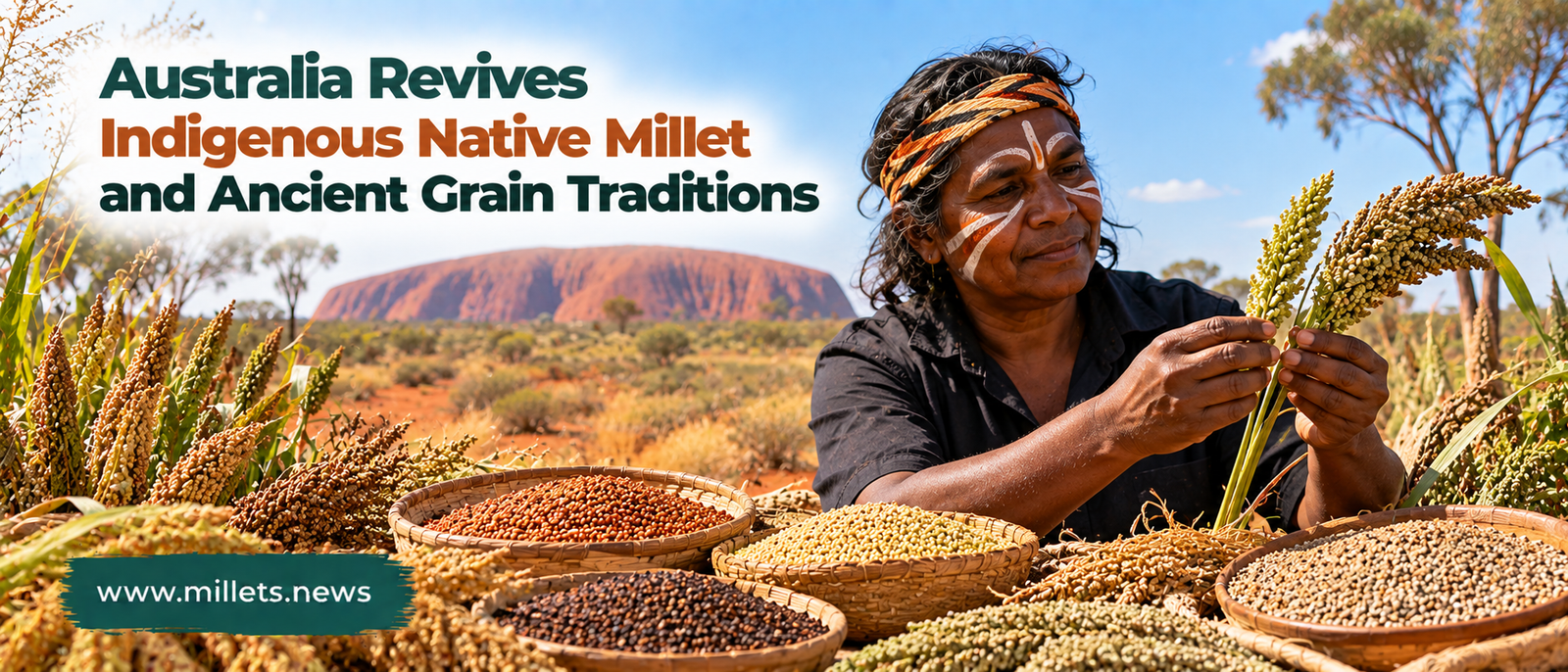
Australian native millet is gaining renewed research attention as scientists and Indigenous communities explore how an ancient grain tradition could contribute to contemporary food systems.
A new review published in CABI Reviews examines Panicum decompositum, a perennial C4 grass that occurs widely across Australia and historically formed part of Aboriginal food systems. Aboriginal Nations managed native grasslands for grain production for tens of thousands of years, demonstrating sophisticated knowledge of landscapes, plants and food production.
Native millet was among the grains collected, processed and consumed by Aboriginal communities. These grain systems were closely connected with Country and formed part of broader Indigenous ecological and cultural practices.
The review explains that colonisation significantly disrupted these systems. Aboriginal communities were displaced from Country, while traditional seed economies and food-production practices were interrupted. Introduced ration-based diets subsequently changed dietary patterns, with long-term implications for Indigenous food systems and health.
Researchers are now examining how native millet could be revitalised in ways that recognise both its agricultural potential and the knowledge of the communities that traditionally managed it.
Unlike conventional annual cereals, Panicum decompositum is a perennial C4 grass. Its adaptation to Australian environments makes it particularly interesting from the perspective of locally adapted grain production.
The revival of native millet is therefore about more than introducing another grain to consumers. It raises questions about Indigenous ownership and participation, conservation of native plant diversity, culturally appropriate food production and how traditional ecological knowledge can inform future agricultural systems.
The Australian example also broadens the global millet story. While finger millet, pearl millet, foxtail millet and sorghum receive considerably more international attention, native millet demonstrates that Indigenous grain traditions extend across diverse landscapes and cultures.
Revitalising these traditions could help preserve agricultural knowledge while creating new opportunities to understand native grains as part of Australia's food heritage and future food systems.