 By Admin
Traditional Indian desserts are receiving a millet-inspired transformation as chefs explore ways to make familiar festive dishes more diverse while preserving their regional character.
A Free Press Journal feature examining six Indian rice-based preparations ranked among TasteAtlas's global favourites presents several alternatives involving millets. The featured dishes include phirni, kheer, Sakkarai Pongal, Pongal, Ven Pongal and doodhpak.
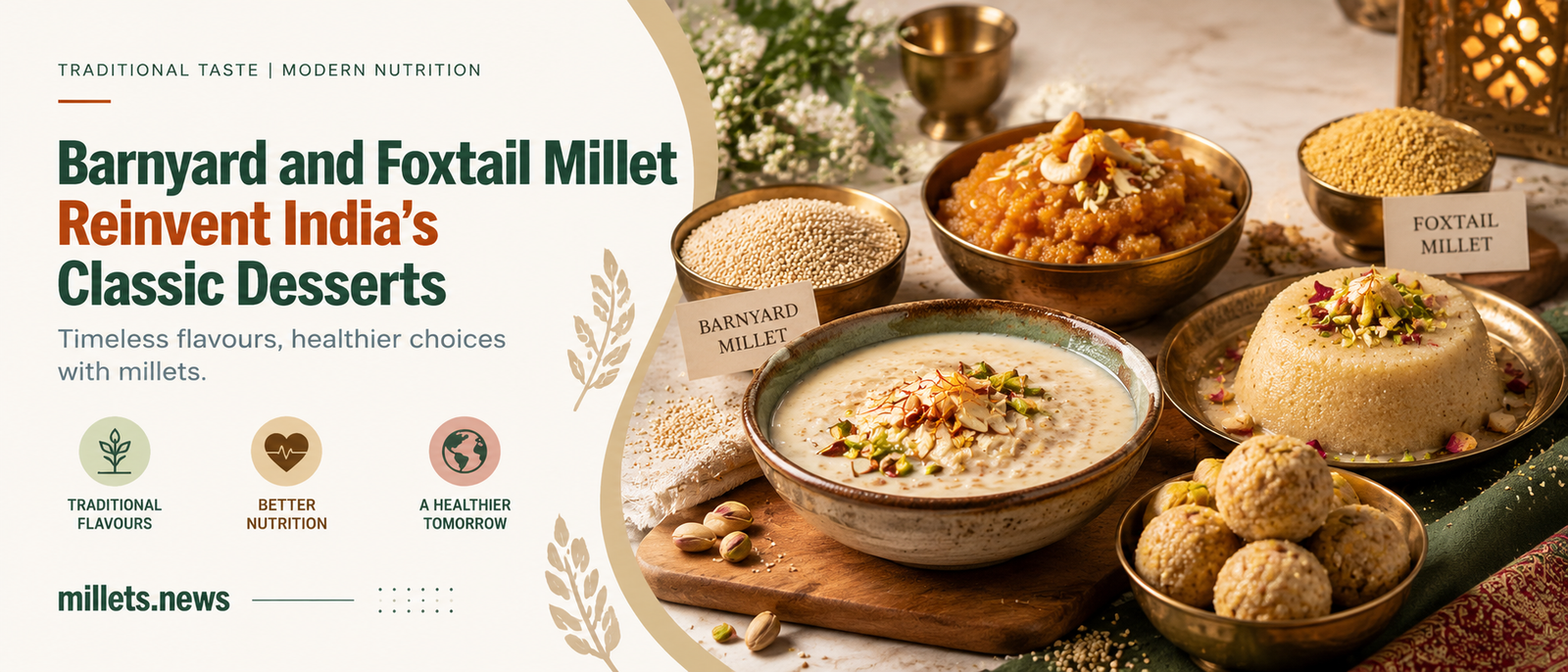
One of the strongest millet adaptations comes from Uttarakhand. Chef Rohit Dubey of Pilibhit House, IHCL SeleQtions, proposes preparing Jhingore ki Phirni using jhingora, or barnyard millet, instead of conventional rice. The grain is slowly cooked with milk and flavoured with cardamom and nuts, creating a millet interpretation of the traditional creamy dessert.
Another prominent example is Thinai Payasam, suggested by Chef Suresh of Marriott Executive Apartments Hyderabad. Thinai refers to foxtail millet, which replaces polished rice in this version of the traditional kheer or payasam.
The preparation combines cooked foxtail millet with coconut milk and date paste, with cardamom, dry ginger, cashews and raisins providing additional flavour. The approach demonstrates how millets can move beyond savoury preparations and become part of contemporary desserts.
Millets also appear in the proposed adaptation of Gujarat's traditional doodhpak. Chef Amit Rohilla of The Leela Gandhinagar recommends combining a small quantity of basmati rice with millets and slowly cooking the grains in low-fat or almond milk. Jaggery or dates can provide sweetness, while saffron, cardamom, nutmeg and nuts retain the dessert's characteristic festive profile.
The other dishes in the feature are not predominantly millet-based. Sakkarai Pongal is adapted with black rice, while other Pongal preparations retain rice and moong dal with modifications to sweeteners and fats.
For Millets.news, therefore, the article should focus specifically on the barnyard millet phirni, foxtail millet payasam and millet-enriched doodhpak, rather than suggesting that all six desserts have been converted to millets.
The culinary concept also has broader relevance. Research examining millet substitution in popular Indian foods has found that different millet varieties can work successfully in several preparations traditionally based on polished rice, although sensory performance varies according to the millet and recipe.
These chef-led dessert adaptations illustrate an important pathway for expanding millet consumption: incorporating the grains into foods that consumers already recognise.
Rather than requiring entirely new eating habits, barnyard millet and foxtail millet can become ingredients in established preparations such as phirni and payasam. Such culinary innovation could help connect India's traditional grains with contemporary consumers while preserving familiar flavours and festive food traditions.