 By Admin
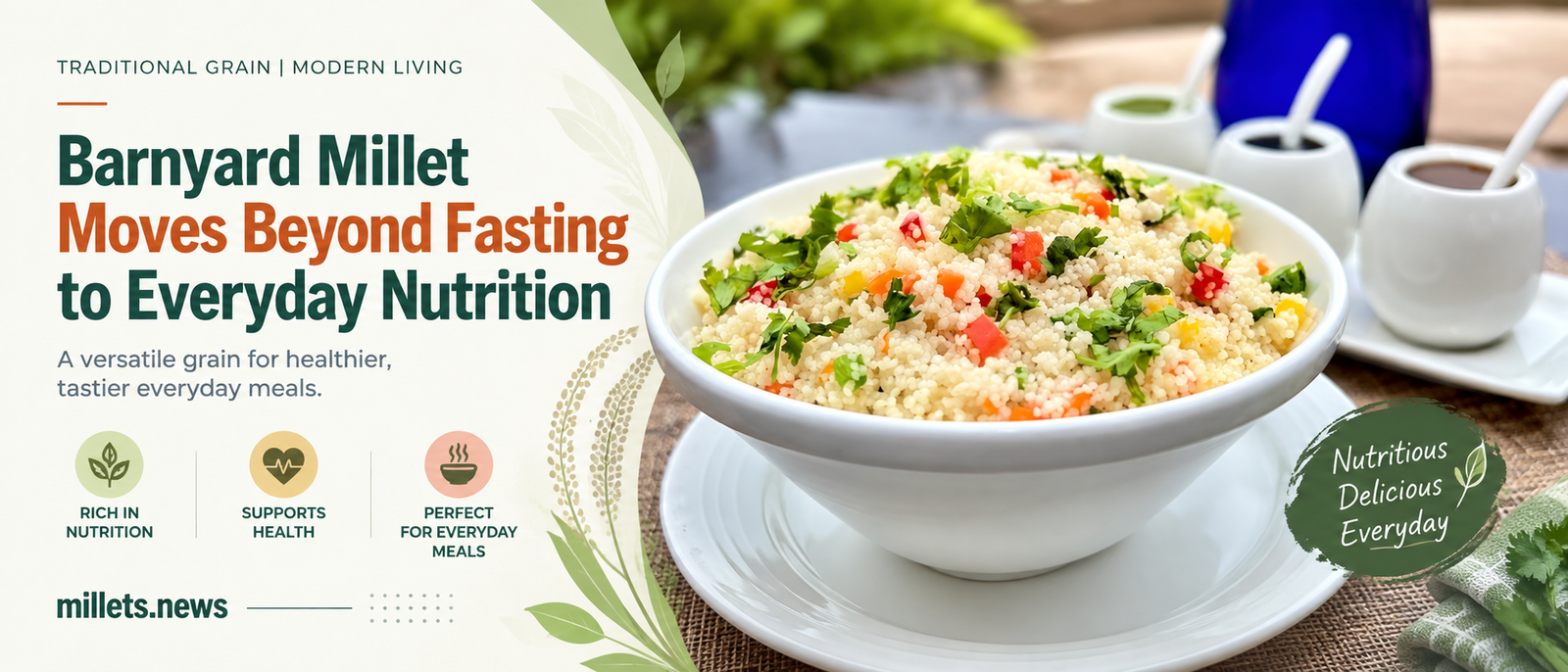
Barnyard millet, widely known in India as samak rice, sama ke chawal or vrat ke chawal, has long occupied a distinctive place in traditional fasting cuisine. But its culinary versatility and nutritional characteristics are also making it relevant beyond religious occasions.
Hindustan Times highlights samak rice in the context of Janmashtami, when many people avoid conventional cereals and consume foods traditionally permitted during fasting. Despite its popular name, samak rice is barnyard millet rather than conventional rice.
The grain is also consumed during festivals and fasting occasions such as Navratri, Ekadashi and Mahashivratri. Its rice-like culinary characteristics allow it to be incorporated into familiar preparations without requiring complicated cooking techniques.
Two preparations highlighted in the report demonstrate this versatility. Samak pulao combines barnyard millet with vegetables, spices, nuts, coconut and makhana, while samak khichdi provides a simpler preparation using potatoes, tomatoes, spices and coriander.
This adaptability is particularly significant for wider millet adoption. Familiar dishes such as pulao and khichdi can provide consumers with accessible ways to introduce lesser-used millet varieties into their diets.
Nutritionist and author Kavita Devgan describes barnyard millet as a source of protein and minerals including calcium, magnesium and potassium. She also highlights its naturally gluten-free character.
The article additionally discusses resistant starch and potential benefits relating to blood glucose management, cholesterol, digestive health and dietary iron. These should be presented cautiously by Millets.news as nutrition-related attributes or potential benefits, rather than claims that barnyard millet prevents or treats medical conditions. The original article itself includes a medical-information disclaimer.
One particularly relevant characteristic is its gluten-free status. Barnyard millet can therefore be incorporated into gluten-free dietary patterns, although people diagnosed with coeliac disease still need to ensure that millet products have not been cross-contaminated with gluten-containing grains during processing.
Beyond nutrition, the story demonstrates how traditional millet consumption can evolve from occasion-specific eating into regular dietary integration.
Barnyard millet's ability to function in preparations commonly associated with rice provides an important consumer-adoption opportunity. Rather than asking households to completely reinvent their meals, the grain can be incorporated into familiar formats such as khichdi, pulao and other grain-based dishes.
For the millet sector, this represents an important pathway towards mainstream consumption: connecting traditional food knowledge, convenient preparation and contemporary nutrition awareness.