 By Admin
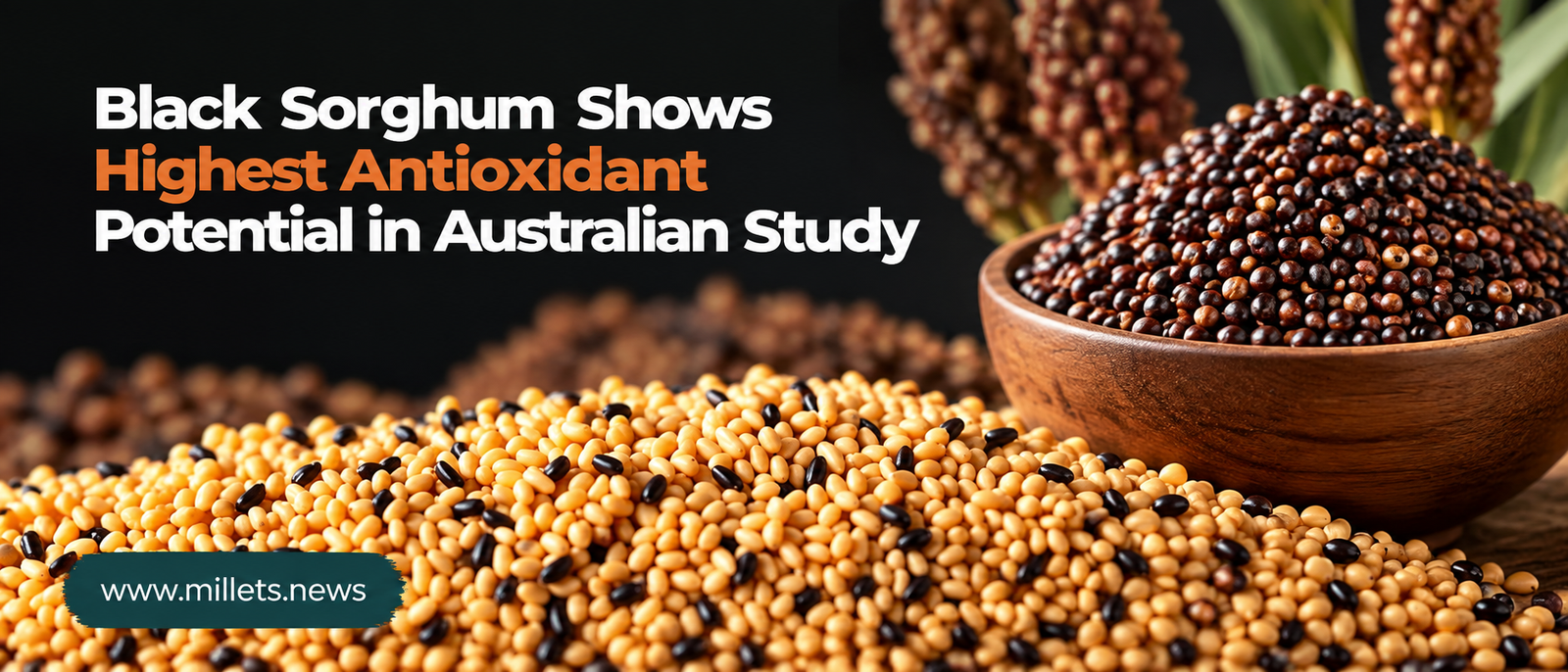
Australian researchers have uncovered substantial differences in the antioxidant chemistry of sorghum varieties, with deeply coloured black and brown grains emerging as particularly rich sources of phenolic compounds.
The research team, led by scientists at Charles Sturt University, examined 13 sorghum genotypes sourced from field trials in New South Wales, glasshouse trials in Queensland and commercial seed suppliers. The collection included white, red, brown and black grains.
Among them, the black-pericarp variety Shawaya Short Black-1 recorded the highest total phenolic content at 11.08 mg gallic acid equivalents per gram. A white genotype recorded only 0.16 mg/g, representing roughly a 70-fold difference. Brown sorghum B14A111 was also high at 8.16 mg/g.
Laboratory antioxidant tests produced a similar pattern. Black and brown varieties generally demonstrated substantially greater antioxidant activity than lighter-coloured grains. Shawaya Short Black-1 led two of the three antioxidant assays used by researchers, while the brown genotype performed best in another.
Using high-resolution analytical techniques, the scientists tentatively identified 80 phenolic compounds across the sorghum samples. These included phenolic acids, flavonoids, proanthocyanidins and other classes of plant compounds.
Researchers also identified high-molecular-weight condensed tannins concentrated particularly in black and brown varieties. Some compounds detected during the analysis had not previously been reported in sorghum.
Grain colour was therefore strongly associated with differences in phenolic composition, although genetics was not the only influence. The researchers also observed differences associated with growing location, highlighting the interaction between genotype and environment.
The findings could be useful for sorghum breeding and food-product development. Pigmented varieties with distinctive phenolic profiles may provide opportunities for developing functional food ingredients, although laboratory antioxidant activity should not automatically be interpreted as evidence of specific health benefits in humans.
The research adds to longstanding evidence that black sorghum can contain high concentrations of anthocyanins and other antioxidant compounds, while providing a much broader comparison across Australian-grown germplasm.