 By Admin
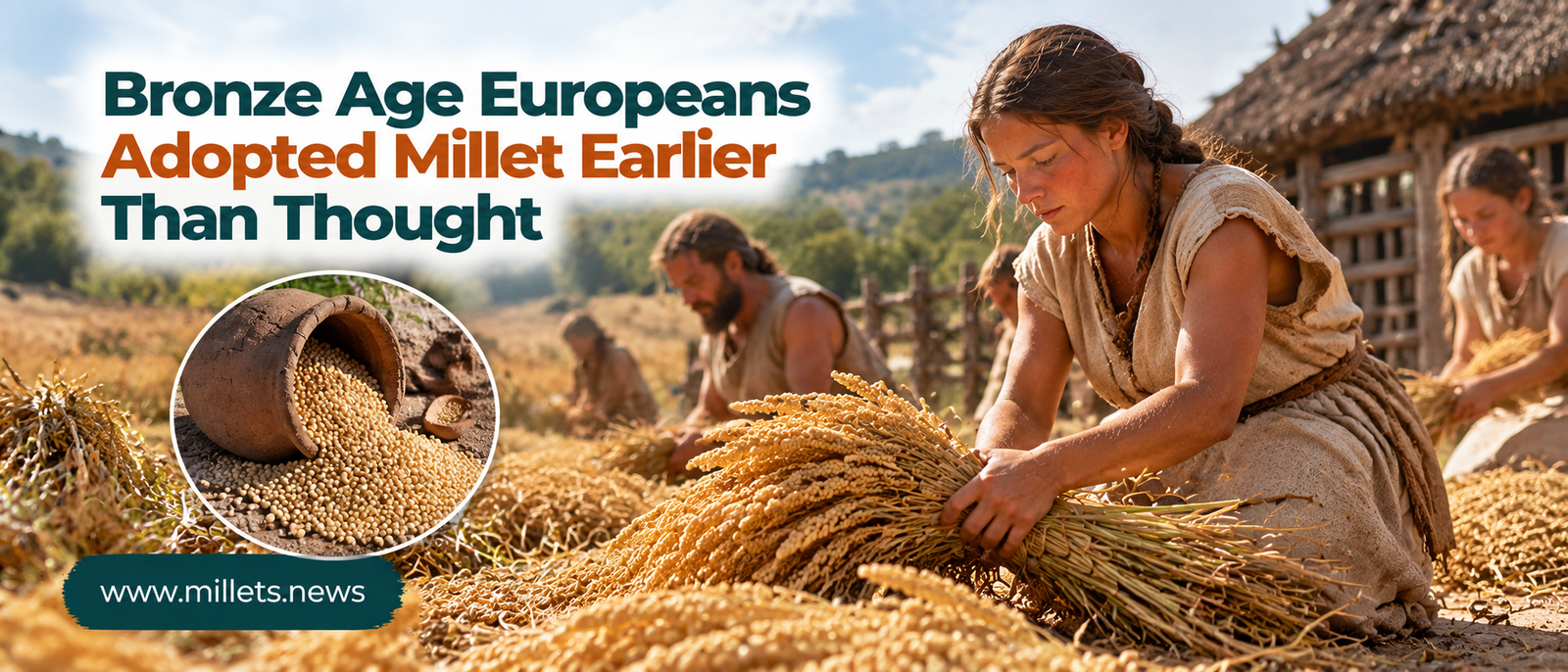
New archaeological research has revised the timeline for millet consumption in Bronze Age Central Europe, showing that communities in southeastern Poland were eating broomcorn millet around 1590 BCE, more than 100 years earlier than previously estimated.
Researchers led by Margaux Depaermentier and Giedrė Motuzaitė Matuzevičiūtė of Vilnius University used a multi-proxy bioarchaeological approach to investigate how millet entered local food systems. Their analysis combined carbon, nitrogen, oxygen and strontium isotope measurements with radiocarbon dating, archaeological evidence, biological sex determination and previously published genetic information.
The results suggest that millet was not immediately adopted as a major staple. Instead, it initially appeared in the diets of a relatively small number of people before becoming more widely consumed.
Analysis of tissues formed at different stages of life provided particularly revealing evidence. Some of the earliest millet consumers appear to have grown up eating diets based primarily on established crops such as wheat and barley, before incorporating millet later in life.
The researchers also found little evidence that millet's arrival resulted simply from a new migrant population bringing the crop into the region. Millet consumers and non-consumers had broadly similar archaeological and genetic backgrounds, while isotope evidence indicated that the earliest consumers were compatible with local origins.
Instead, environmental conditions may have played an important role in millet's adoption.
Broomcorn millet has a short growing cycle and can perform under relatively dry conditions and on poorer soils. Researchers propose that Bronze Age communities could therefore cultivate parts of the landscape that were less suitable for traditional cereals such as wheat and barley.
Interestingly, millet consumption was not confined to one sex, age category or apparent social group. This supports the idea that its adoption represented a broader change in agricultural strategy rather than a food restricted to a particular section of society.
The findings provide a new perspective on how ancient European communities incorporated unfamiliar crops into established farming systems. Rather than representing a sudden agricultural transformation, millet appears to have entered diets gradually before becoming more important.
For modern agriculture, the research also offers an interesting historical parallel: communities thousands of years ago appear to have valued millet partly because its agricultural characteristics allowed them to make productive use of more challenging environments.