 By Admin
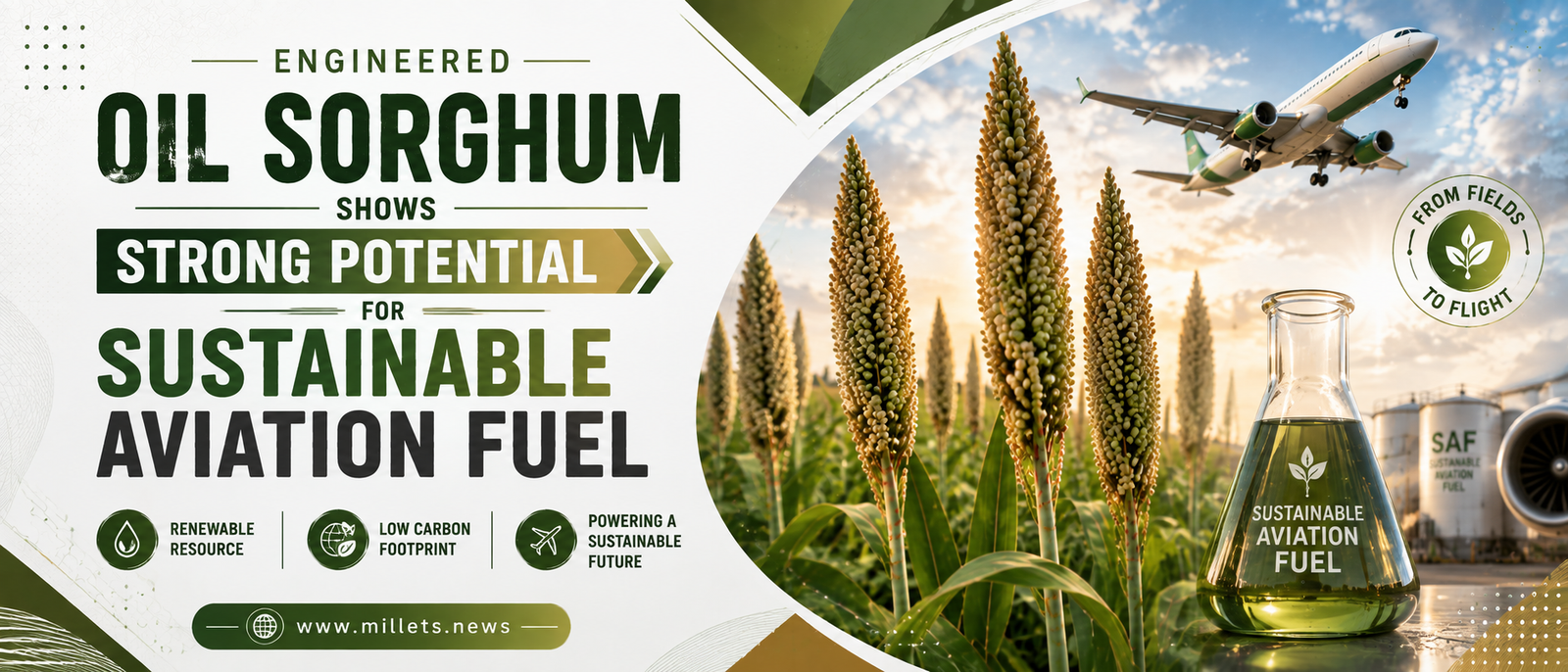
Researchers from the Center for Advanced Bioenergy and Bioproducts Innovation (CABBI) have successfully field-tested genetically engineered oil sorghum designed to accumulate high levels of plant oils in its leaves and stems. The innovation aims to provide a renewable source of feedstock for producing Sustainable Aviation Fuel (SAF) while maintaining the advantages of a high-biomass crop.
The study evaluated four engineered sorghum lines across multiple locations in Illinois and Nebraska over two growing seasons. Compared with conventional sorghum, the modified plants accumulated dramatically higher levels of oil in their vegetative tissues, with some lines achieving more than twenty times the oil content of standard varieties.
Researchers also assessed biomass production, nutrient use, and agronomic performance under different environmental conditions. While certain engineered lines produced slightly lower biomass than conventional sorghum, others maintained comparable yields while delivering substantially greater oil production, making them attractive candidates for commercial bioenergy applications.
The findings indicate that engineering sorghum to store oils in its vegetative tissues could provide a sustainable pathway for producing renewable aviation fuel without relying solely on conventional oilseed crops. Scientists note that further research will focus on improving agronomic practices and advancing high-performing hybrids for future large-scale cultivation.