 By Admin
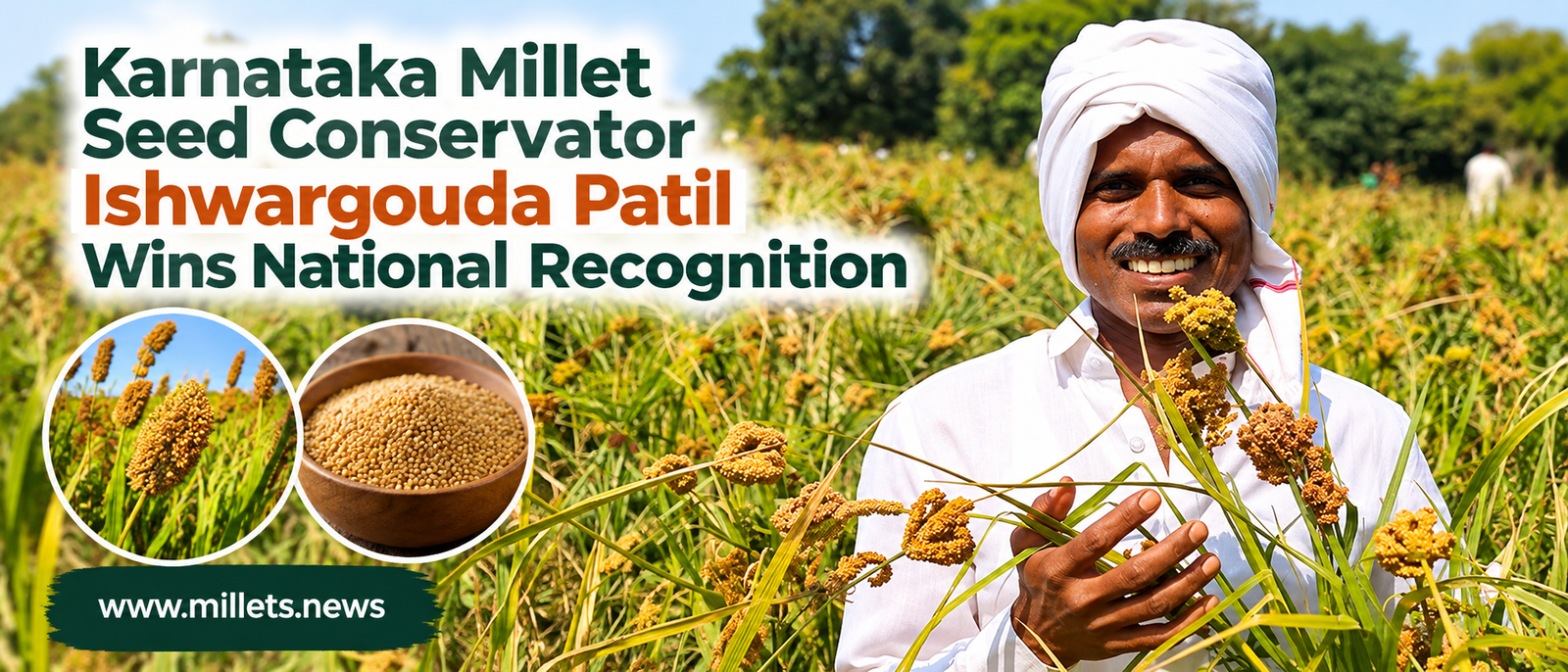
A farmer from Karnataka's Dharwad district has earned national recognition for his efforts to preserve traditional millet varieties and promote indigenous agricultural knowledge.
Ishwargouda Patil, from Mattigatti village in Kundgol taluk, has been selected for the National Plant Genome Savior Farmer Award, which recognises farmers contributing to the conservation of India's agricultural biodiversity.
The recognition highlights the importance of farmer-led seed conservation at a time when many traditional crop varieties face declining cultivation.
Patil has worked to conserve indigenous millet seeds, including locally known varieties of proso millet and browntop millet.
These crops form part of the traditional agricultural heritage of Karnataka and contribute to the diversity of grains available to farming communities.
His work also includes promoting Guli Ragi, a traditional method of finger millet cultivation.
The practice represents an example of agricultural knowledge developed and maintained by farmers over generations.
By encouraging the preservation of traditional seeds and cultivation methods, Patil's efforts help maintain agricultural resources that may otherwise be lost as farming systems change.
The award is associated with the Protection of Plant Varieties and Farmers' Rights Authority, which recognises farmers and communities for their contributions to conserving plant genetic resources.
According to available reports, the honour includes a cash award of ₹1 lakh and a citation.
The award presentation is scheduled to take place in New Delhi on November 12, 2026.
The recognition comes alongside an award for Sahaja Seeds, a farmer-owned seed enterprise associated with Sahaja Samrudha in Karnataka.
The organisation has been recognised for supporting the conservation of more than 250 traditional crop varieties.
Together, these recognitions draw attention to the role of individual farmers and community-based organisations in protecting indigenous seeds.
Traditional millet varieties can be important sources of agricultural diversity, but conserving them requires continued cultivation, careful seed selection and reliable storage.
Farmer-led seed-saving initiatives can help maintain locally adapted crop varieties while preserving knowledge about cultivation practices and their use in traditional diets.
For the wider millet sector, Patil's recognition demonstrates that agricultural progress is not limited to developing new crop varieties.
Protecting existing genetic diversity and traditional farming knowledge is also an important part of strengthening resilient agricultural systems.
The award highlights the contribution of farmers who maintain seed diversity and make traditional crop resources available to future generations.