 By Admin
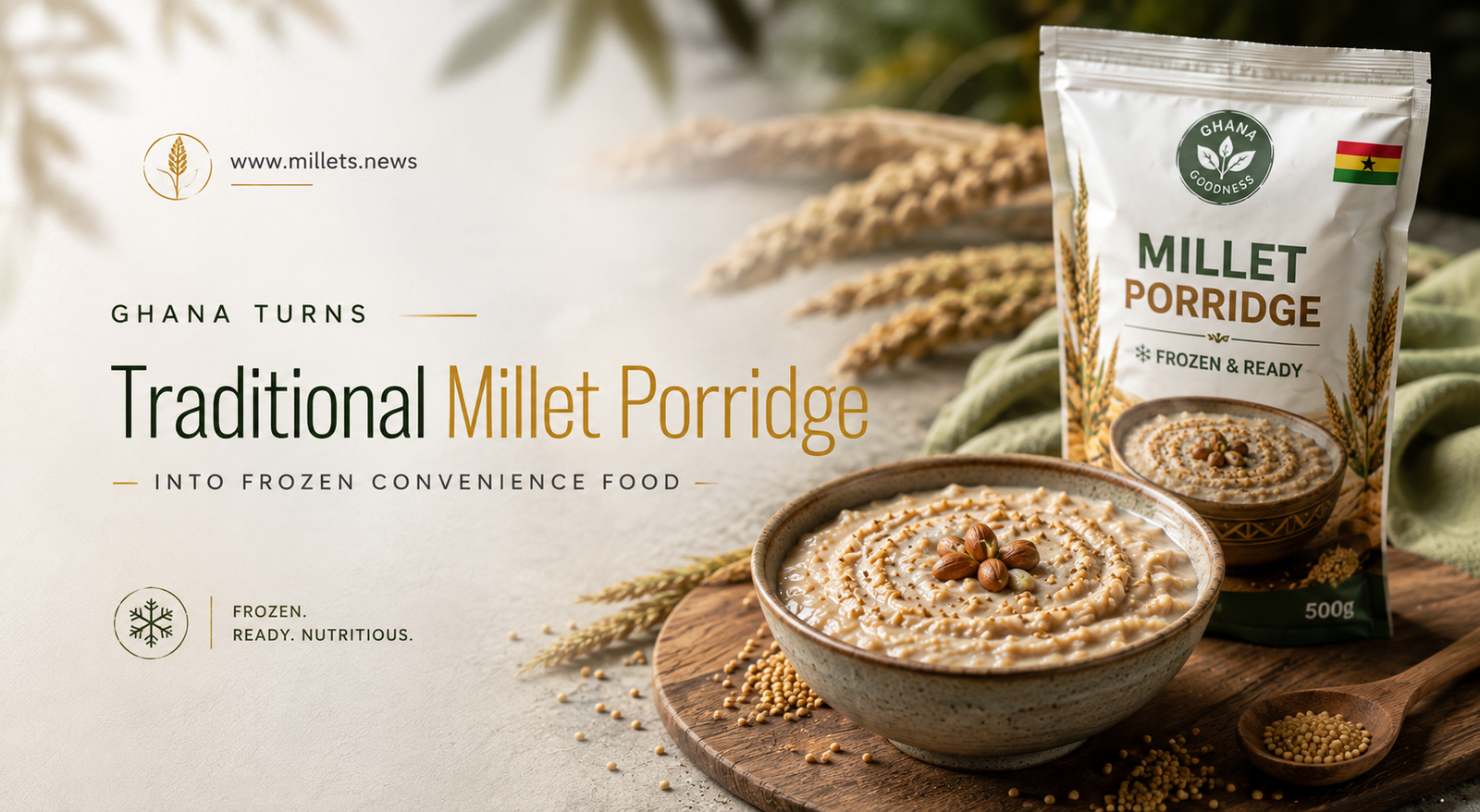
A traditional Ghanaian millet breakfast is entering the convenience-food market as local manufacturer Hakama Company Ltd. introduces a frozen version of Hausa Koko designed to simplify preparation for modern consumers.
Hausa Koko is a traditional West African porridge commonly prepared from millet and spices. Conventional preparation involves several stages, including soaking and milling the grain, fermentation and cooking.
Hakama's Meera Hausa Koko takes a different approach by processing the product into a frozen, ready-to-use paste. Consumers can boil water, add a portion of the paste and mix it to prepare the porridge in approximately 10 minutes, according to the company representative quoted in coverage of the product.
The innovation was showcased at the “This Is Ghana” Exhibition, organised by Citi FM and Channel One TV as a platform for Ghanaian enterprises and locally manufactured products.
One of the product's notable characteristics is its preservation method. According to Hakama's representative, the Hausa Koko paste contains no preservatives and is therefore maintained in frozen form.
A container is priced at approximately 50 Ghanaian cedis and is said to provide around 10 servings. The company is also taking orders for delivery in Accra and Kumasi, expanding access beyond conventional street-vendor consumption.
For the millet industry, the development illustrates how indigenous grain foods can be adapted to contemporary lifestyles without abandoning their cultural identity.
Hausa Koko already occupies an important position in Ghanaian food culture. Ghana News Agency describes it as a millet porridge with particular significance during Ramadan, when it is commonly consumed after fasting.
Millet prices have also had a direct impact on the Hausa Koko economy. Previous Ghanaian reporting documented how rising millet costs increased prices for Hausa Koko and Brukina, another popular millet-based product, demonstrating the connection between millet markets and Ghana's traditional-food businesses.
Hakama's frozen format therefore represents more than product repackaging. It demonstrates a potential pathway for millet value addition, where traditional foods are standardized and processed into convenient formats capable of reaching new consumers and distribution channels.
The development also reflects a broader opportunity for African food entrepreneurs: combining indigenous grains, traditional culinary knowledge, modern processing and convenience-oriented product design.