 By Admin
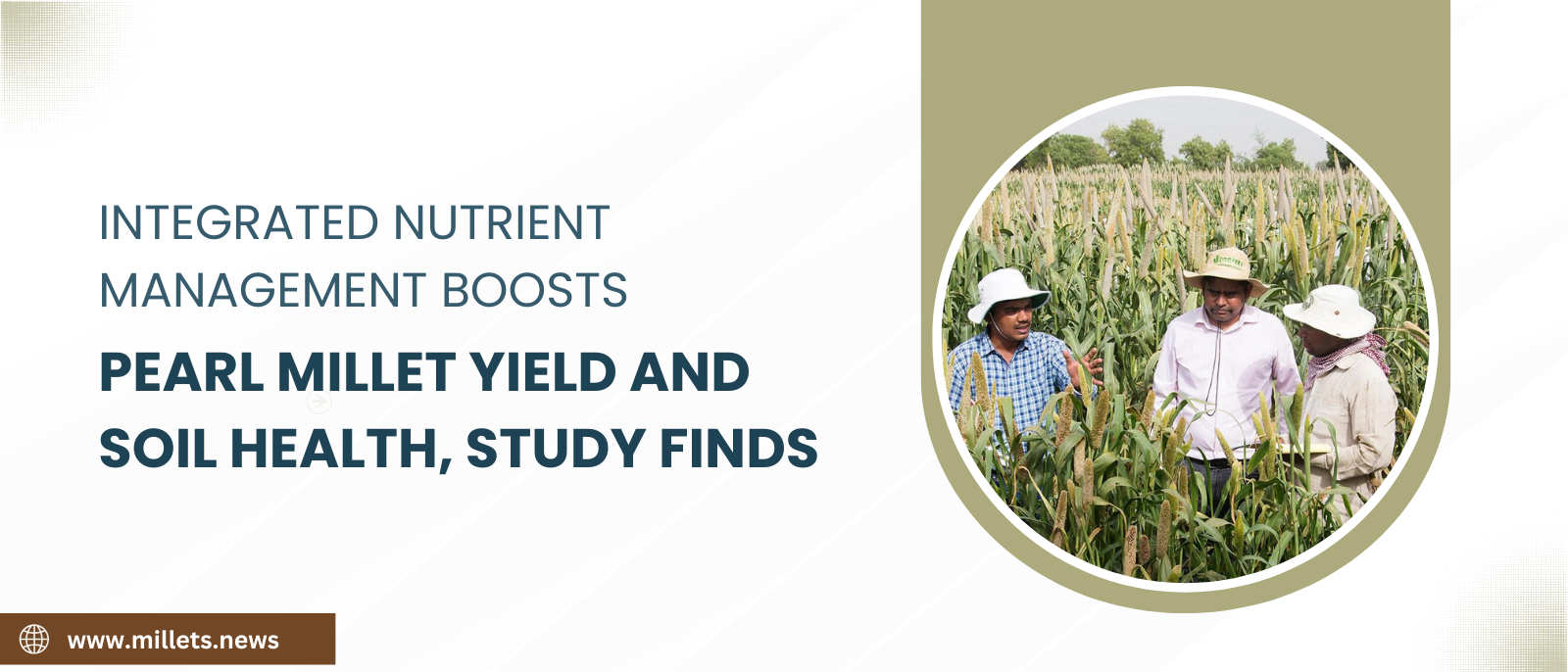
Researchers from CCS Haryana Agricultural University and collaborating institutions have demonstrated that integrating organic manure with balanced fertilizer application can significantly improve both crop productivity and soil health in pearl millet–wheat cropping systems.
The two-year field experiment evaluated different nutrient management practices, including combinations of chemical fertilizers, farmyard manure (FYM), and legume integration. The study found that applying 75% of the recommended fertilizer dose together with 25% nitrogen supplied through farmyard manure produced pearl millet and wheat yields comparable to full chemical fertilizer application while improving long-term soil quality.
Replacing pearl millet with mung bean during one cropping cycle further enhanced productivity by increasing pearl millet equivalent yields and improving soil nutrient availability. The inclusion of legumes also stimulated beneficial soil microorganisms, increased organic carbon levels, and enhanced enzyme activity associated with healthier and more fertile soils.
Researchers observed higher levels of available nitrogen, phosphorus, and potassium in treatments that combined organic and inorganic nutrient sources. These practices also improved microbial biomass and soil biological activity, demonstrating the long-term benefits of integrated nutrient management for sustainable agriculture.
The findings suggest that combining farmyard manure, balanced fertilizer application, and legume-based crop diversification can help farmers maintain high yields while improving soil fertility and reducing dependence on chemical fertilizers in pearl millet production systems.