 By Admin
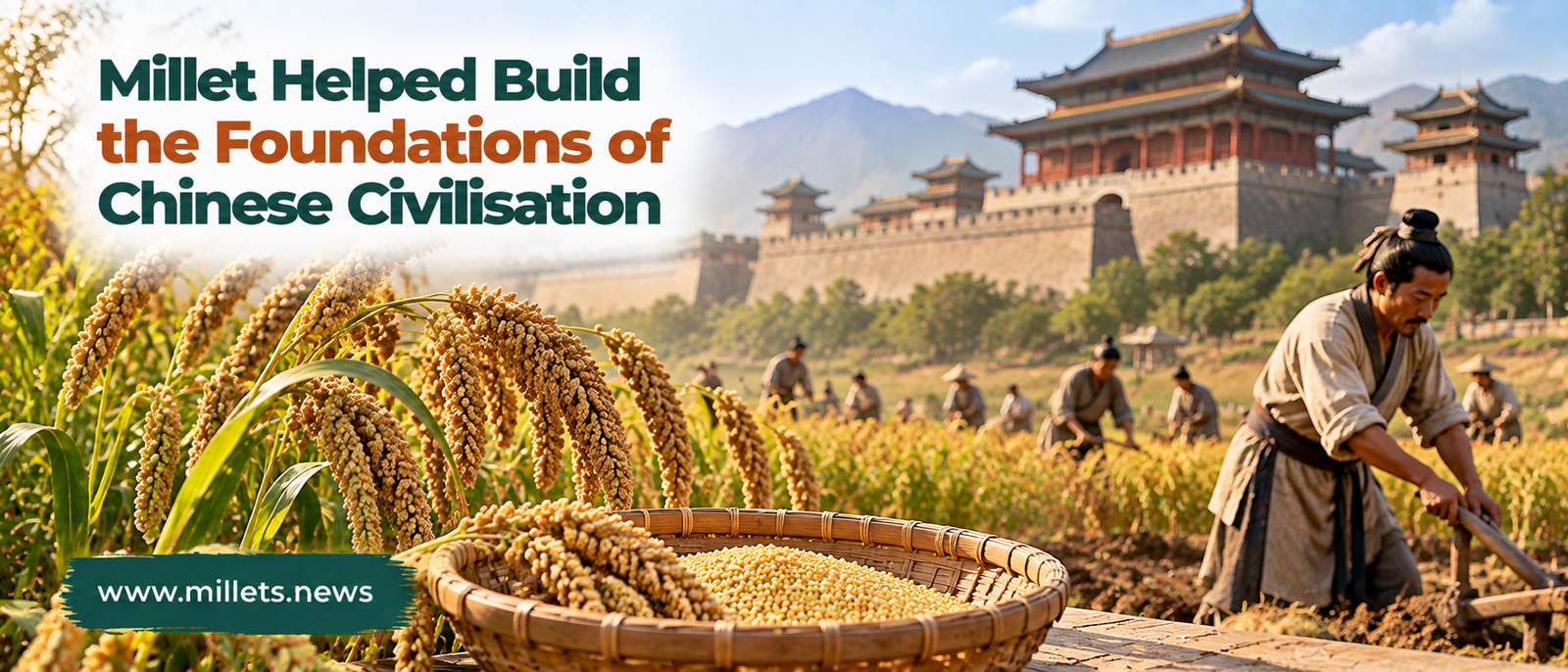
Millet played a far greater role in China's early development than its position in the country's modern diet might suggest. Archaeological evidence indicates that millet agriculture emerged in northern China around 10,000 years ago, while rice agriculture developed in the warmer and wetter regions of southern China.
Northern China's comparatively dry conditions were well suited to millet. Communities around the Yellow River gradually incorporated the crop into increasingly organised agricultural systems, helping support the transition from hunting and gathering towards settled farming.
The Peiligang culture, dating approximately from 7000 BC to 5000 BC, represents an important stage in this transition. Archaeological evidence indicates that these communities practised agriculture while continuing to process wild plant resources. Millet subsequently became increasingly important to societies developing across northern China.
The domestication process itself was gradual. Research cited by SCMP suggests it may have unfolded over 2,000 to 3,000 years, as human management of landscapes and plants eventually developed into practices such as tilling, weeding, sowing and saving seeds.
Millet agriculture expanded considerably into neighbouring regions between approximately 5,000 and 7,000 years ago. Research published in Cell Genomics in 2025 also indicates that the movement of millet-growing populations contributed to this expansion.
Millet-based agriculture continued to support major cultures such as the Yangshao culture, which existed approximately between 5000 BC and 3000 BC and experienced important technological and social developments.
The crop remained significant much later. Archaeological research from the Shang dynasty, which lasted from around 1600 BC to 1046 BC, found foxtail millet in 93.24% of analysed crop remains, demonstrating its substantial presence in ancient agricultural systems.
Millet's relative importance eventually declined as China's food system changed. Wheat became more competitive as grain-processing technology improved, while the introduction of faster-growing rice varieties and improvements in transportation helped rice become increasingly accessible across the country.
Although millet now occupies a smaller place in China's diet, archaeological evidence shows that foxtail and broomcorn millet were central crops in northern China's agricultural history. Their cultivation supported communities that contributed to the emergence and development of early Chinese civilisation.