 By Admin
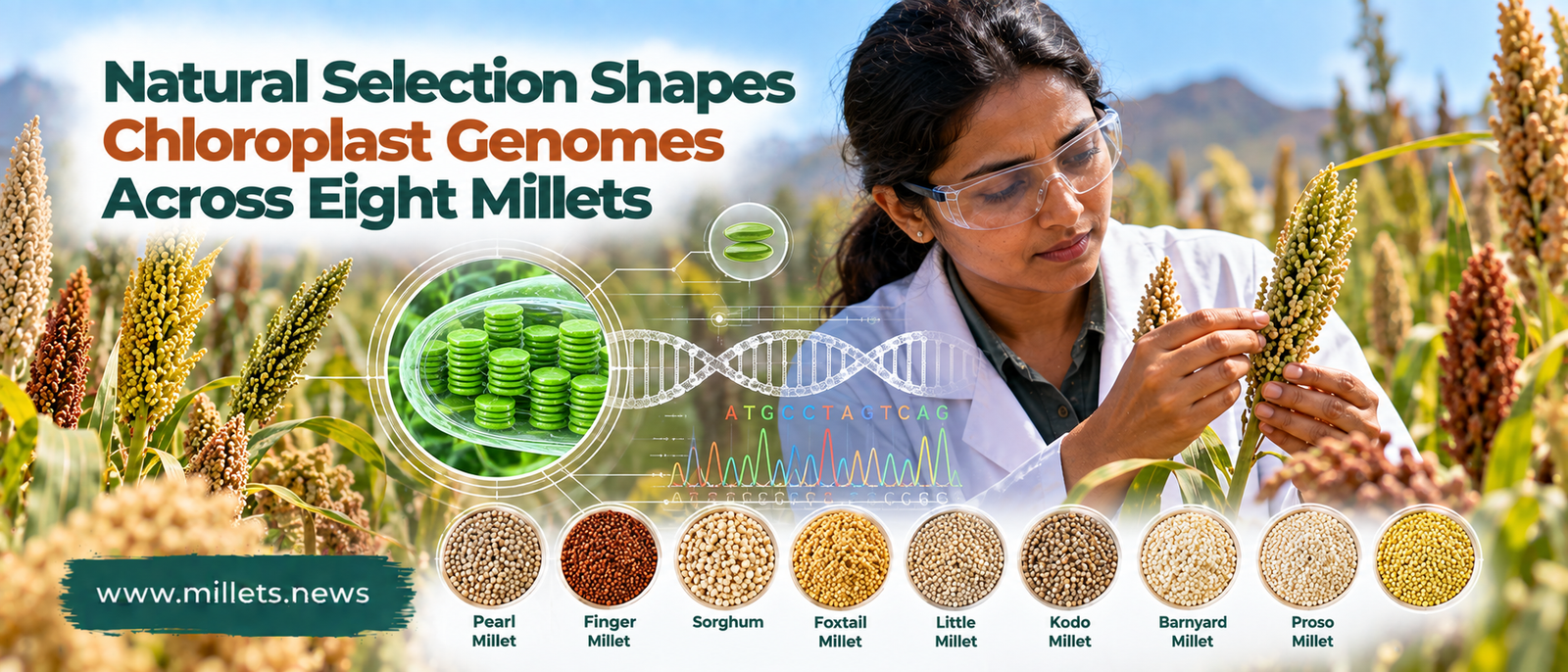
A comparative genomic study has provided new insights into how natural selection has influenced the chloroplast genomes of eight important millet species.
Researchers analysed barnyard millet, finger millet, proso millet, little millet, kodo millet, pearl millet, foxtail millet and sorghum, focusing on codon usage bias—the tendency of organisms to favour certain synonymous codons when encoding proteins.
The researchers used several genomic measures, including relative synonymous codon usage, effective number of codons, GC content and neutrality analysis, to investigate whether mutation or natural selection was primarily responsible for the observed patterns.
Across all eight millet species, chloroplast genes showed a pronounced preference for codons ending in adenine or thymine (A/T). GC content at the third codon position was approximately 29–30%, while 30 frequently used codons identified in each genome ended in A or T.
Although some preferred codons were shared across all eight species, other optimal codons differed between individual millets. This combination of shared and species-specific patterns provides information about both common evolutionary characteristics and differences among millet lineages.
The researchers' analyses indicate that natural selection has had a stronger influence on chloroplast codon usage than mutational pressure. A broader 2026 study of 48 grasses similarly reported that natural selection predominantly shaped chloroplast codon patterns across Poaceae, providing useful wider context for the millet-specific findings.
The findings could have practical implications for millet biotechnology. Understanding chloroplast codon preferences can provide useful reference information when researchers investigate gene expression and codon optimisation in future crop-improvement work. The authors also identify potential applications in phylogenetic research and studies aimed at improving millet traits.
For millet science, the research adds another genomic resource for understanding crops increasingly studied for their ability to perform under challenging growing conditions.