 By Admin
A centuries-old folktale from western Odisha is bringing renewed attention to Gurji, a traditional landrace of little millet that has sustained communities through generations of drought and changing climates.
Native to Nuapada district and the former Khariar region, Gurji (Panicum sumatrense) is a hardy little millet known for thriving in dry, rocky uplands where water-intensive crops such as rice often struggle. The grain matures quickly, requires minimal rainfall, and has long been valued for its nutritional richness, including high fibre and mineral content.
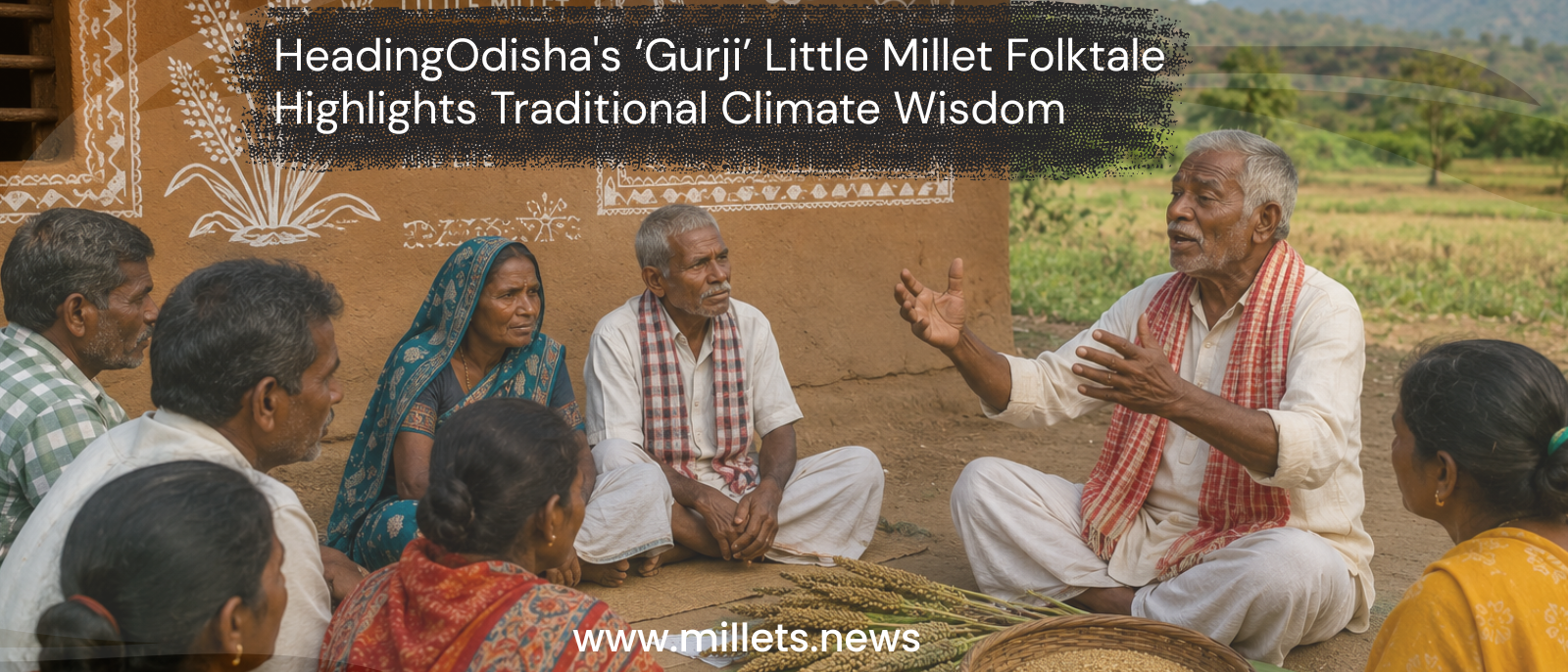
According to local oral tradition, the grain was first noticed by a king after observing his horses feeding on a wild grass deep inside the forest. Curious about the plant, he introduced it as fodder for the royal stables. Years later, when severe drought caused widespread crop failures, the same resilient grain was distributed to farmers, who successfully cultivated it on rainfed lands and used it to prepare porridge, pitha, and other traditional foods.
Although historians note that the story cannot be independently verified, it remains an important part of the cultural heritage of western Odisha. Local scholars believe the tale reflects how traditional farming communities learned from nature and exchanged seeds and agricultural knowledge through generations.
Today, Gurji continues to be grown in a limited number of villages despite being overshadowed by rice and commercial crops. During the Nuakhai harvest festival, families still prepare traditional millet dishes from the new harvest and offer them as part of cultural and religious celebrations.
Researchers and development practitioners say the story carries renewed significance as climate change increases drought frequency and rainfall variability. Traditional millets such as Gurji are once again being recognized for their ability to produce reliable harvests under water-scarce conditions while supporting nutrition, biodiversity, and sustainable farming systems.
The enduring folktale serves as a reminder that indigenous knowledge, preserved through oral traditions, can continue to inform modern approaches to climate-resilient agriculture and food security.