 By Admin
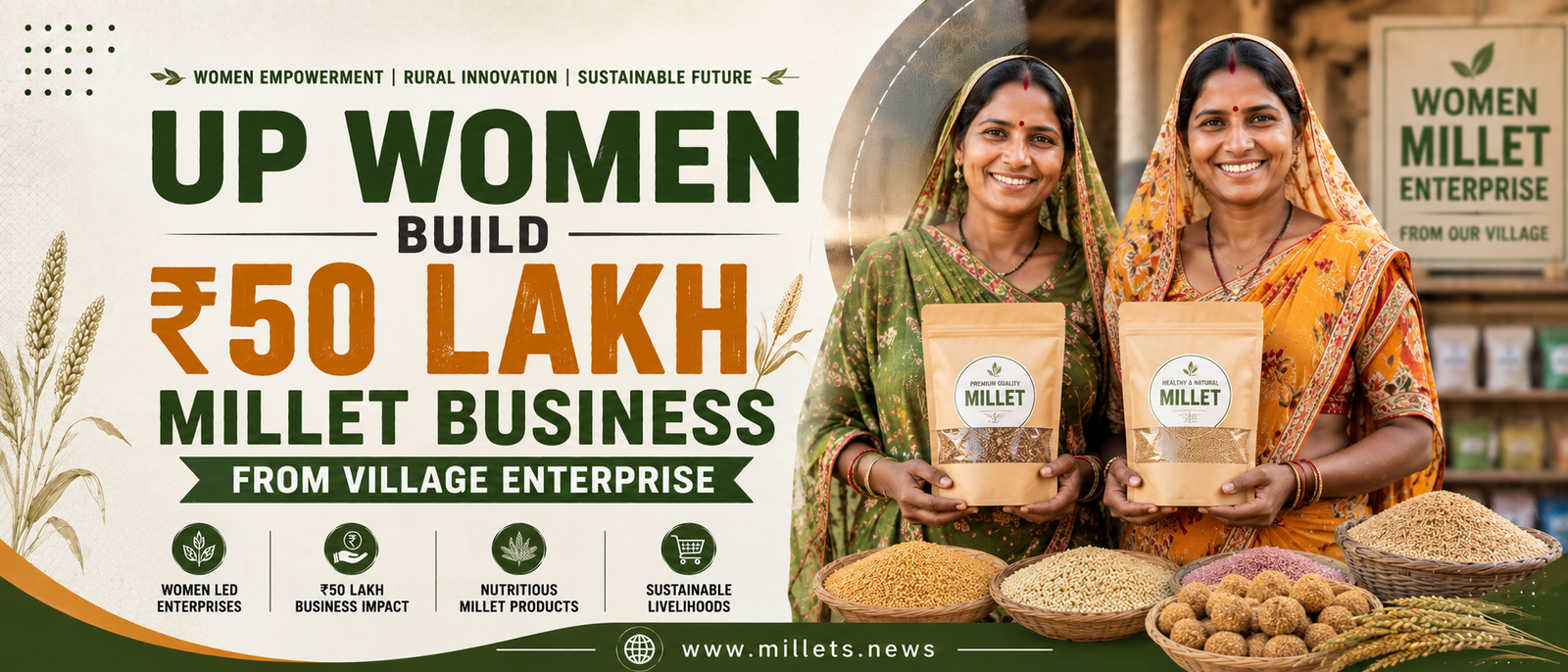
A group of rural women in Uttar Pradesh’s Gonda district is demonstrating how millet value addition can translate traditional grains into meaningful entrepreneurial opportunities. What began as a small initiative for financial independence has developed into a commercial millet enterprise generating more than ₹50 lakh in annual turnover.
The enterprise is led by Neha Tiwari and Jyoti Mishra through the 12-member Nityam Mahila Swayam Sahayata Samuh. Based around Chandpur village and Parsapur, the women process locally available grains and sell packaged products under the Nityam Bhog brand.
The initiative traces its origins to 2023, when Neha joined the National Rural Livelihood Mission (NRLM). Access to self-employment financing helped the group overcome its initial capital constraints and establish a small grain-processing operation.
The women now undertake activities including cleaning, milling and packaging themselves. Their raw materials and products span several traditional cereals and pulses, including bajra, ragi, sawa, kodo, kakun and jowar, alongside maize, barley and gram.
Rather than limiting sales to their immediate village, the group developed packaged multigrain and millet flours in 500-gram, 1-kilogram and 2-kilogram formats. These products have reached markets including Gonda, Balrampur, Bahraich, Ayodhya and Lucknow.
The commercial growth has been substantial. According to Jyoti Mishra, the enterprise now generates approximately ₹50 lakh to ₹60 lakh in annual turnover, with profits distributed equally among group members. She also reports particularly strong demand for millet products during winter.
Digital commerce has expanded the enterprise beyond conventional local markets. Nityam Bhog products are available on Amazon through the Arga brand, giving the village-based operation access to consumers outside its immediate geographic area.
The economic impact extends beyond turnover figures. Femina reports that some members began operating bank accounts in their own names, while increased income has supported household needs and children's education. Members who previously had limited exposure outside their homes are now managing orders and negotiating in markets.
Government support has played an important enabling role. Through NRLM, the women received access to loans, business training, market linkages and digital platforms, helping transform a self-help initiative into a functioning rural enterprise.
The group is also considering further diversification. Future plans mentioned by Jyoti include introducing additional products such as papad and pickles, potentially expanding the enterprise beyond its existing grain portfolio.
For India's millet sector, the Gonda experience illustrates why value addition and local processing matter. Selling cleaned, milled, branded and conveniently packaged millet products allows rural enterprises to participate in a larger part of the value chain rather than limiting themselves to primary agricultural production.
The model also brings together several important components of millet-sector development: women-led entrepreneurship, traditional grains, rural processing, branding, digital commerce and institutional support.
Nityam Bhog's growth from a 12-member village self-help group into a ₹50-lakh-plus enterprise demonstrates how millet can function not only as a nutritious traditional grain, but also as a platform for rural enterprise creation and women's economic participation.