 By Admin
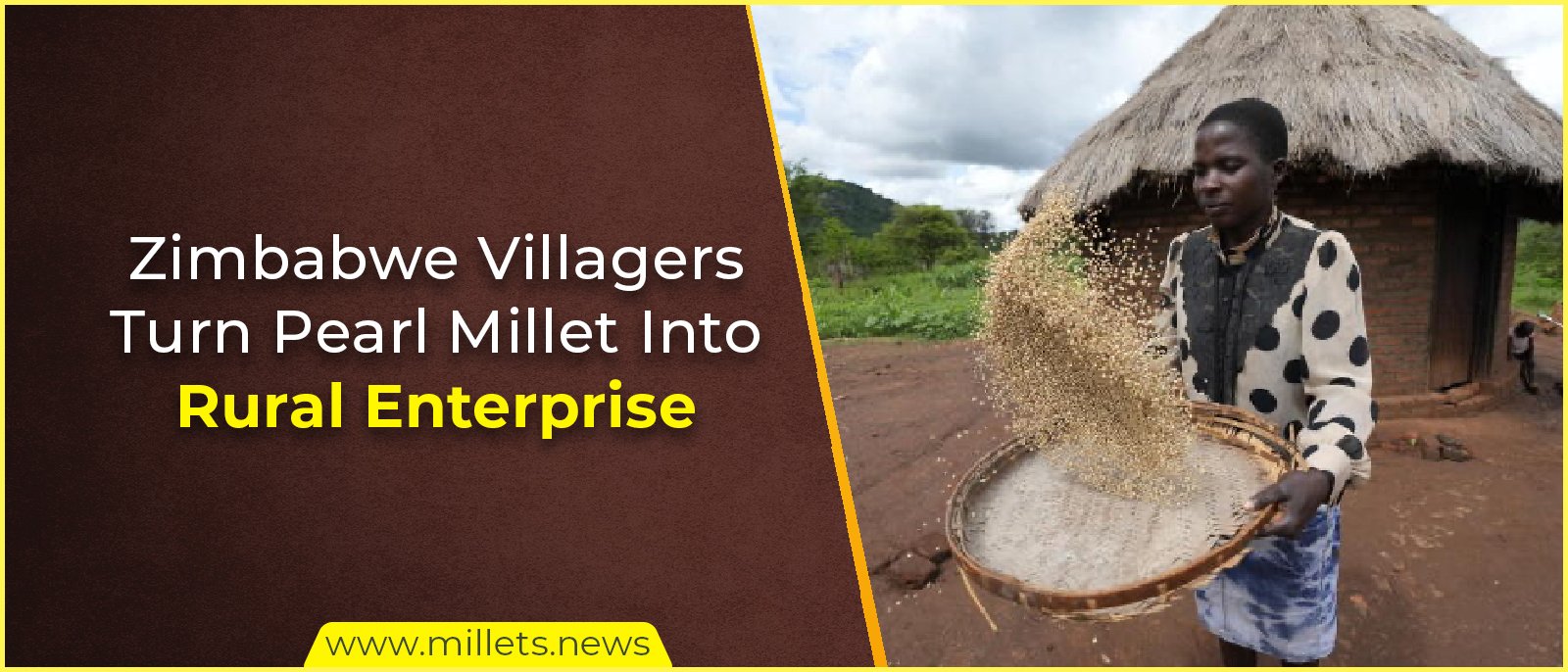
A community in Zimbabwe’s Binga District is demonstrating how local processing can transform traditional crops into engines of rural economic development. In Lusulu, villagers are moving beyond selling or consuming agricultural produce in its raw form by processing and packaging crops through locally installed machinery. The initiative is helping reposition farming as a commercial livelihood rather than solely a means of subsistence.
At the centre of the transformation is Binga Heritage, a community-owned company established by local villagers to add value to their agricultural production before it reaches the market. Farmers can bring harvested crops to local processing facilities, where produce is milled, processed and packaged into higher-value products. This allows more of the economic value generated after harvest to remain within the community.
Millets and sorghum occupy an important place in the emerging enterprise. Binga Heritage is already producing premium pearl millet and sorghum mealie meal, together with animal fodder and other agricultural products. By converting small grains into market-ready foods, the initiative demonstrates how traditional climate-adapted cereals can become foundations for diversified rural businesses.
The processing infrastructure was developed through collaboration involving the Government, Mennonite Central Committee and Kulima Mbobumi Training Centre. Equipment supplied to the community includes a small-grain thresher, grinding mills, a stockfeed grinder, groundnut shellers, peanut butter machines and a honey press. The combination allows villagers to develop several complementary value chains rather than depending on a single commodity.
Community ownership has been integral to the project from the beginning. Beneficiary Maaya Munsaka explained that participating villagers each contributed 100 kilograms of different agricultural produce to help launch operations. Income generated through the enterprise is already helping some families meet important household expenses, including their children's education.
The initiative is also being positioned as part of a broader climate-change adaptation strategy. Strengthening local processing can improve the economic value of crops produced in challenging environments while giving households additional income opportunities. This is particularly relevant for pearl millet and sorghum, which have long played important roles in farming systems across dry regions of southern Africa.
Women are another important focus of the programme. Mechanised post-harvest processing reduces the amount of time required for labour-intensive activities traditionally undertaken manually. According to project officials, this can free women for other household and economic activities while allowing them to participate more extensively in value addition and enterprise development.
Lusulu's experience illustrates a critical principle for the international millet sector: climate-resilient crops require equally resilient value chains. Producing pearl millet is only the beginning; accessible threshing, milling, packaging, branding and market connections determine how much value farming communities ultimately capture from their harvests.
By combining traditional small grains with modern processing and community ownership, Binga Heritage offers a practical model of millet-led rural industrialisation. Replicating such approaches across dryland regions could help transform pearl millet and sorghum from subsistence staples into commercially valuable crops capable of supporting jobs, household incomes and more resilient rural economies.